Xene Gallery

恺加王朝肖像画中的权力与美学:波斯19世纪油画艺术的色彩革命

探索恺加时代大型油画如何通过融合波斯传统与欧洲技法,重新定义伊朗王室与社会的视觉身份。

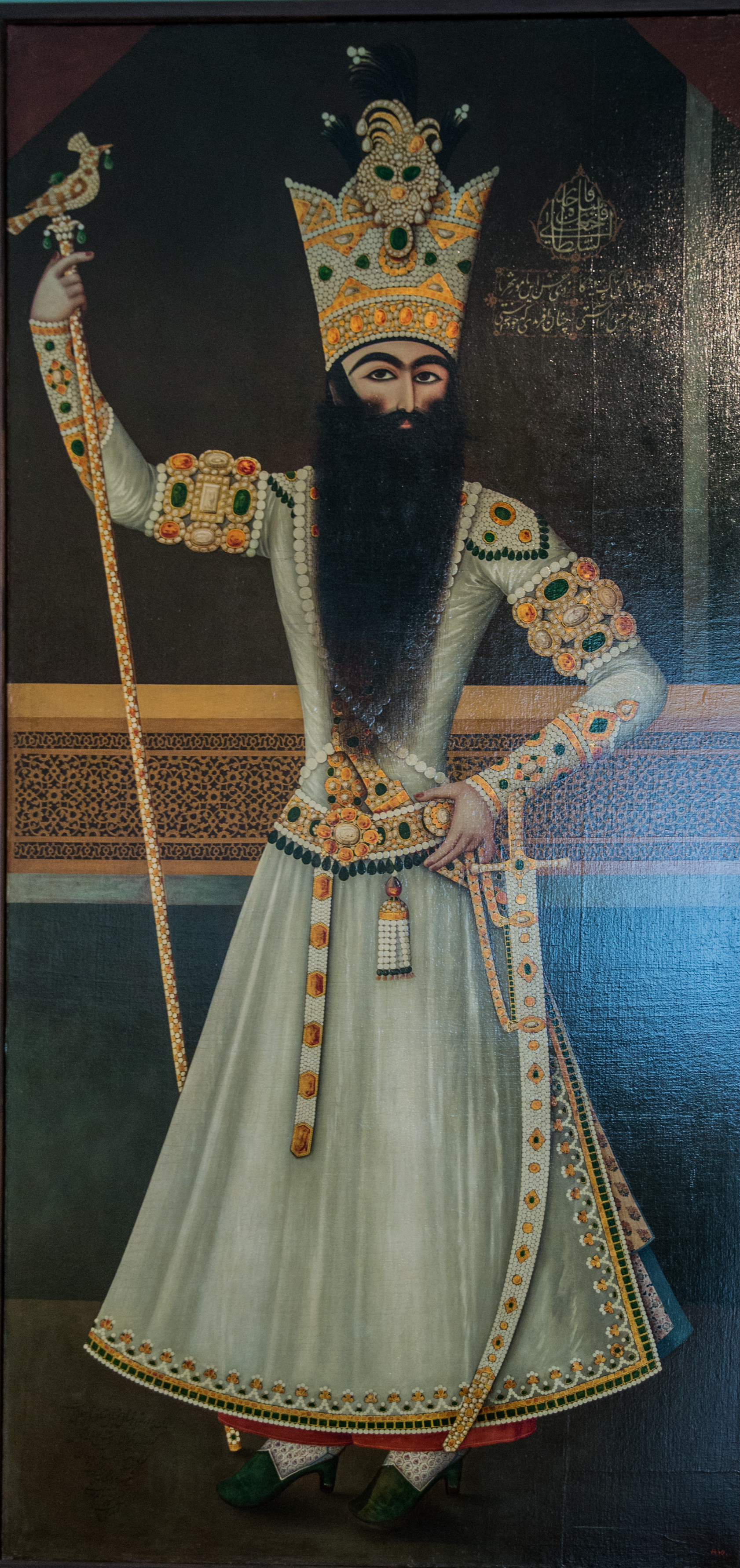
Painting, portrait of Nadir Shah seated on a carpet, oil on canvas, probably Tehran, 1780s or 1790s This painting is a portrait of Nadir Shah Afshar, one of the most important figures in Iranian history of the last 300 years. Nadir Shah was a brilliant military commander of humble origins who rose through the ranks due to his talent. He was a key figure in the restoration of order in Iran after the Afghan invasion of his country in 1722. At first, he worked in the name of members of the previous dynasty, the Safavids. In 1736, however, he declared himself Shah, and he ruled with considerable success until his assassination in 1747. He established a large and effective army that had few rivals in Asia. With it he repulsed the Ottomans and Russians from Iranian territory and conducted a successful invasion of the Mughal empire in what is now Pakistan and northern India. He defeated the Mughal army in 1739 and seized the capital, Delhi. Among the loot he acquired was the Mughal emperor's jewels, which are still kept in the Central Bank of Iran in Tehran. This is one of only two portraits of Nadir Shah in oils that survive, but they both seem to date from the late 18th century, several decades after his death. The Shah is shown wearing weapons and other accoutrements (armbands, belt, hat band etc.) that are jewelled with precious stones understood to be from the Mughal treasure. The carpet on which he sits is also Mughal. Painting, oil pigments on canvas, portrait of Nadir Shah. Frame height: 179cm Frame width: 116.5cm Weight: 60kg (Rough estimate of weight framed and glazed) Frame depth: 7.5cm
Image: Unknown author Unknown author · Public domain

恺加王朝肖像画(Qajar Portraiture)是指伊朗在恺加王朝(1789-1925)期间兴起的独特绘画艺术形式,尤以19世纪前期的布面油画最为杰出。这种艺术形式打破了传统波斯细密画的尺度限制,采用欧洲传入的布面油画(Oil on Canvas)技法,将传统的装饰精神与西方的写实比例相结合,常见于皇家宫廷壁画和私人收藏,是展示权力和社会地位的核心媒介。

什么是恺加王朝肖像画的主要视觉特征?

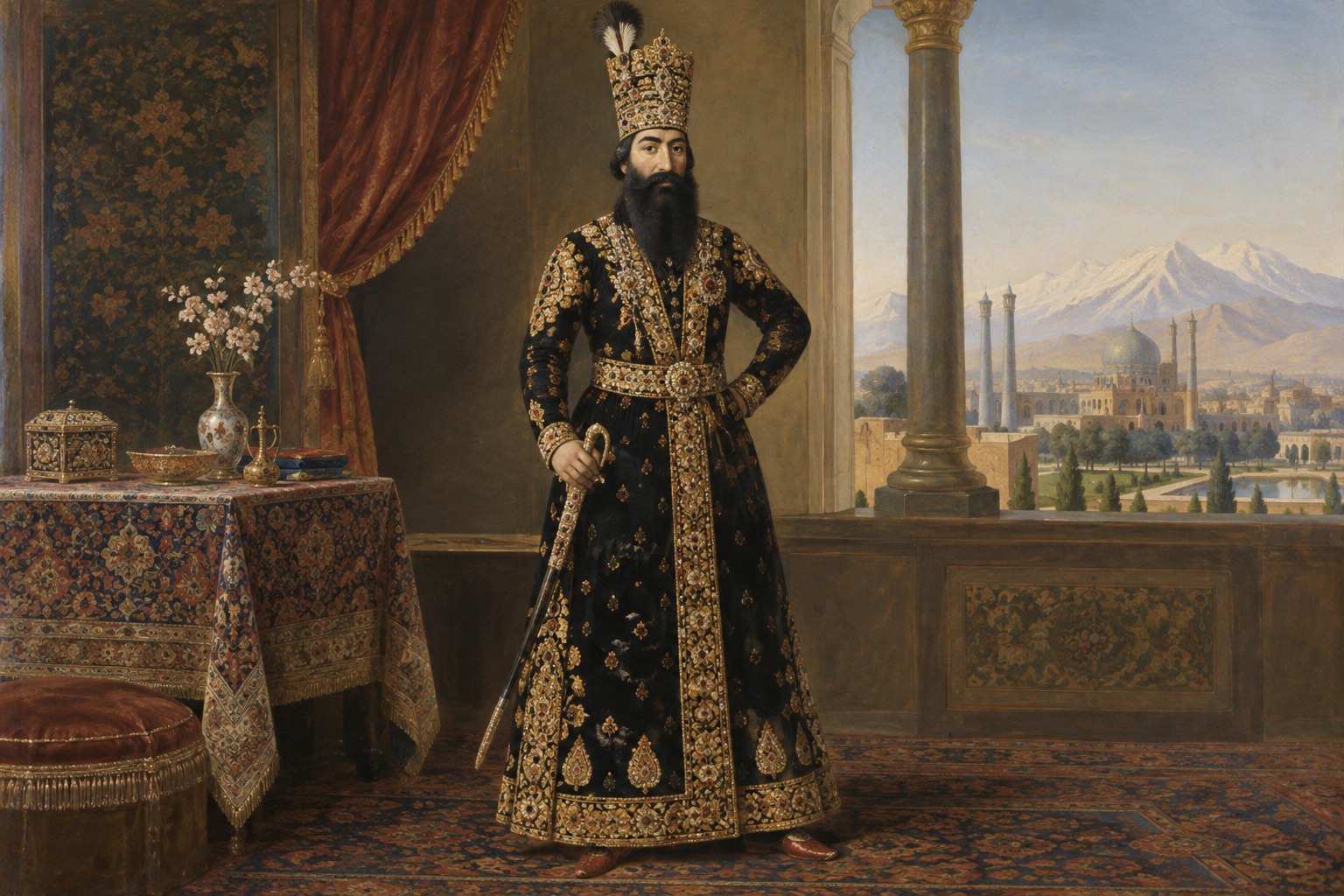
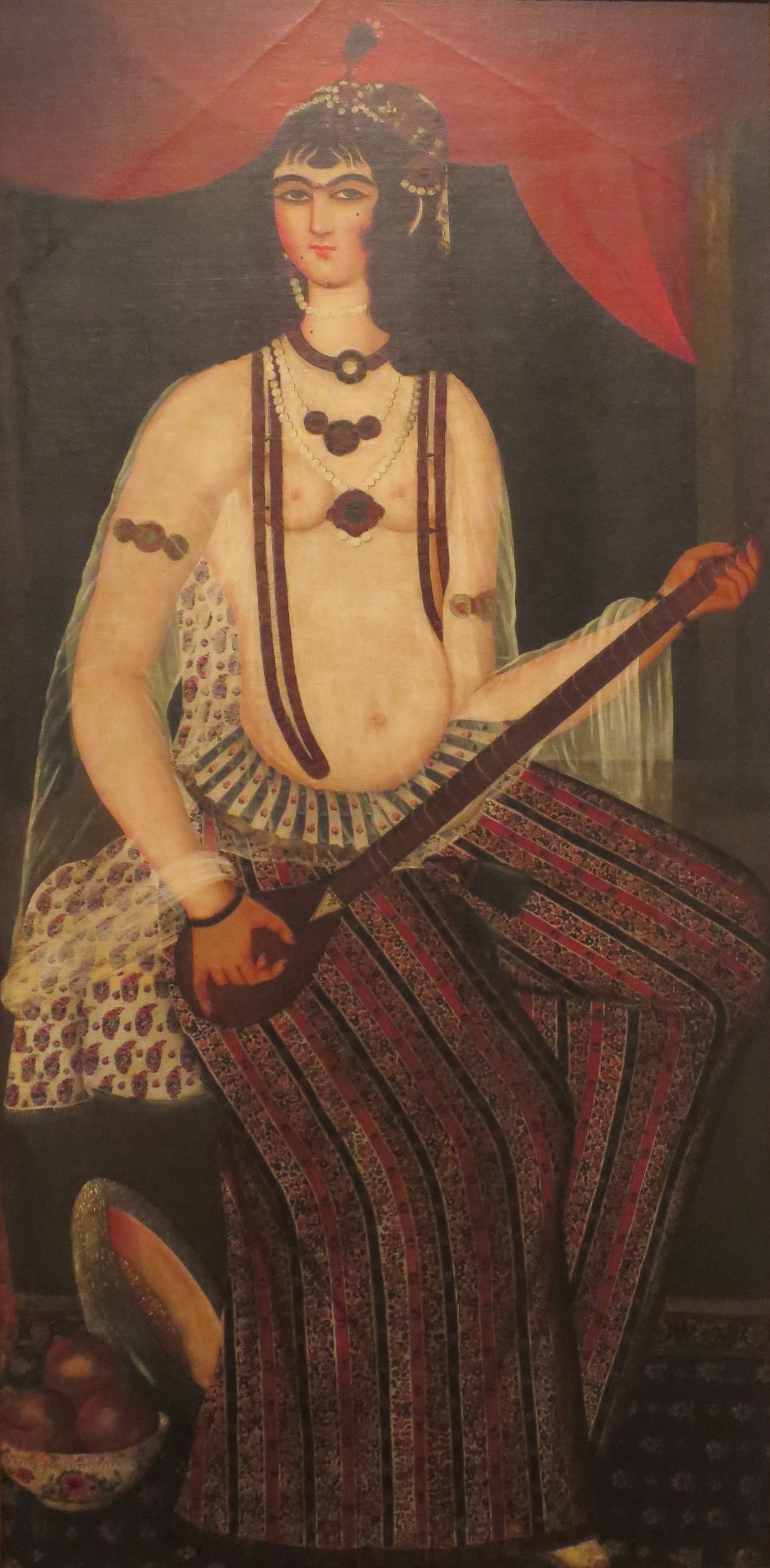
恺加王朝肖像画最明显的特征是其宏大的规模强烈的装饰性。19世纪早期的艺术作品通常呈现人物的等身像,背景往往是华丽的建筑室内或开敞的露台。正如在[3]和[6]中所述,王室成员常被描绘为站在刻有精美花纹的穿孔格窗(Pierced Window)前,这种设计不仅增加了画面的深度感,还强调了伊斯兰建筑的经典元素。
在色彩运用上,恺加画家偏爱沉稳而深邃的色调。为了表现贵族的身份,画面中会大量使用金粉和金油。这种技法与厚重的油彩层叠加,再涂上清漆(Varnish)保护,使得画作在光线下散发出金属般的光泽[5]。这种对光影的处理虽然借鉴了西方,但在人物的面部表情和服饰纹章上,依然保留了鲜明的波斯传统色彩。
19世纪伊朗肖像画的材料与技法演变

萨非王朝(Safavid)到桑德王朝(Zand),再到恺加鼎盛时期,写实技法经历了重大转型。早期的作品多见于纸本水墨和水粉(Gouache),并辅以金饰增加质感[7]。然而,恺加王朝的统治者如法特赫·阿里·沙(Fath-Ali Shah)对展示皇室威仪有极高要求,这促使艺术家们转向了耐用性更好、表现力更强的布面油画。
恺加肖像画核心创作指标
主流画布尺寸
50x70cm 至 等身

根据馆藏记录及市场流通作品统计[5]

主要绘画介质
布面油画 / 金粉

结合了天然提取颜料与贵金属[5]

核心流行时期
19世纪前50年

艺术风格从理想化向写实化转变[4]

伊朗王朝肖像风格对比表
特征项目萨非王朝 (17世纪)恺加王朝 (19世纪)
主流媒介纸本、壁画、水墨 [7]布面油画、金油 [1]
空间感平面化、二维线性感透视窗户、明暗对比 [3]
典型对象骆驼与幼崽、狩猎图 [7]国王、王妃、贵族肖像 [8]
装饰风格精细的曲线勾勒重彩、金粉涂抹、珠宝写实 [5]
比较显示了恺加时代如何吸收欧洲影响并在媒介上实现从纸向布的跨越。

为什么穆罕默德·沙·恺加的肖像具有里程碑意义?

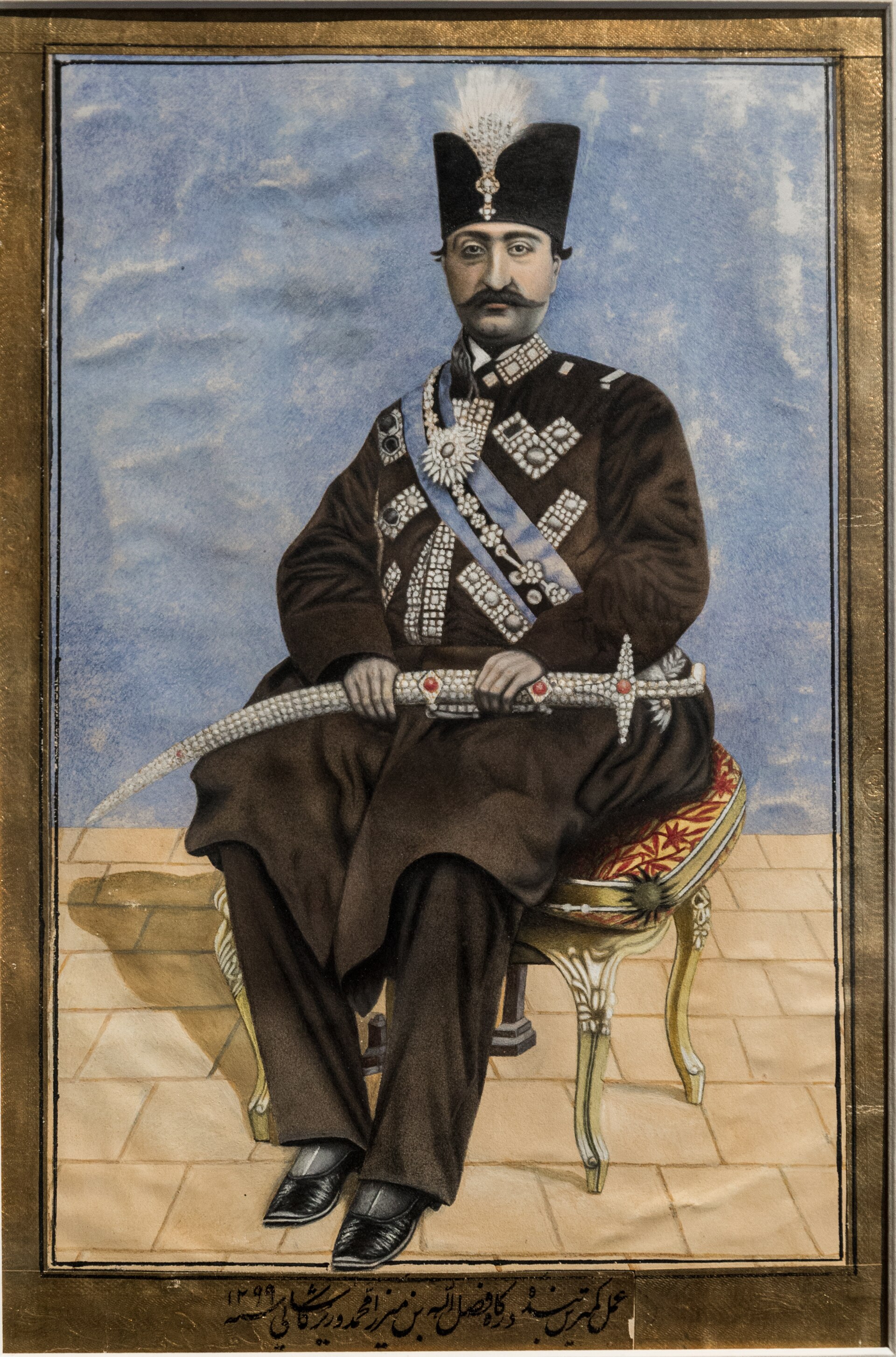
穆罕默德·沙·恺加(Mohammad Shah Qajar,1834-1848年在位)时期的肖像画标志着波斯写实主义的巅峰。其宫廷画师萨尼·马尔克(Sani al-Mulk)约在1840年创作的皇帝像,展示了一位身着华丽波斯服饰同时融合欧洲剪裁风格的君主[4]。

Painting, portrait of Nadir Shah seated on a carpet, oil on canvas, probably Tehran, 1780s or 1790s This painting is a portrait of Nadir Shah Afshar, one of the most important figures in Iranian history of the last 300 years. Nadir Shah was a brilliant military commander of humble origins who rose through the ranks due to his talent. He was a key figure in the restoration of order in Iran after the Afghan invasion of his country in 1722. At first, he worked in the name of members of the previous dynasty, the Safavids. In 1736, however, he declared himself Shah, and he ruled with considerable success until his assassination in 1747. He established a large and effective army that had few rivals in Asia. With it he repulsed the Ottomans and Russians from Iranian territory and conducted a successful invasion of the Mughal empire in what is now Pakistan and northern India. He defeated the Mughal army in 1739 and seized the capital, Delhi. Among the loot he acquired was the Mughal emperor's jewels, which are still kept in the Central Bank of Iran in Tehran. This is one of only two portraits of Nadir Shah in oils that survive, but they both seem to date from the late 18th century, several decades after his death. The Shah is shown wearing weapons and other accoutrements (armbands, belt, hat band etc.) that are jewelled with precious stones understood to be from the Mughal treasure. The carpet on which he sits is also Mughal. Painting, oil pigments on canvas, portrait of Nadir Shah. Frame height: 179cm Frame width: 116.5cm Weight: 60kg (Rough estimate of weight framed and glazed) Frame depth: 7.5cm
Painting, portrait of Nader Shah seated on a carpet, oil on canvas, probably Tehran, 1780s or 1790s · Unknown author Unknown author · Public domain

这些肖像画不仅是艺术品,更是外交工具,通过这种大型油画,恺加王朝向外部世界传达了波斯的复兴与现代化的决心。

伊朗艺术史研究员
恺加肖像画中的典型象征元素
  • 水烟(Hookah): 象征着休闲的贵族生活和社交礼仪[8]。
  • 珍珠与珠宝: 精细描绘的皇冠和臂章显示了国库的丰盈。
  • 鹦鹉与宠物: 常出现在女性或宫廷肖像中,象征富足与异国情调[1]。
  • 花果静物: 有时画作边缘会辅以桃、梨、西瓜等静物,象征繁荣昌盛[5]。
  • 刺绣服装: 展现了当时波斯精湛的丝绒和金银线刺绣工艺。

如何辨别不同画家的艺术风格?

恺加时期涌现了多位大师,每人的笔触各具特色。米尔扎·巴巴·奈卡什-巴希(Mirza Baba Naqqash-bashi)以描绘抽水烟的淑女(Portrait of a Lady Smoking with a Hookah)闻名,其作品展现了极致的丝缎质感 [8]。相比之下,萨尼·马尔克则更注重人物的面部神态捕捉,他的作品开启了波斯绘画中人物心理刻画的新纪元。

恺加艺术核心元素出现频率分布调查
该图表显示了在19世纪典型的恺加肖像作品中,各类符号与技法的普遍性。

传统金属工艺与肖像画的视觉关联

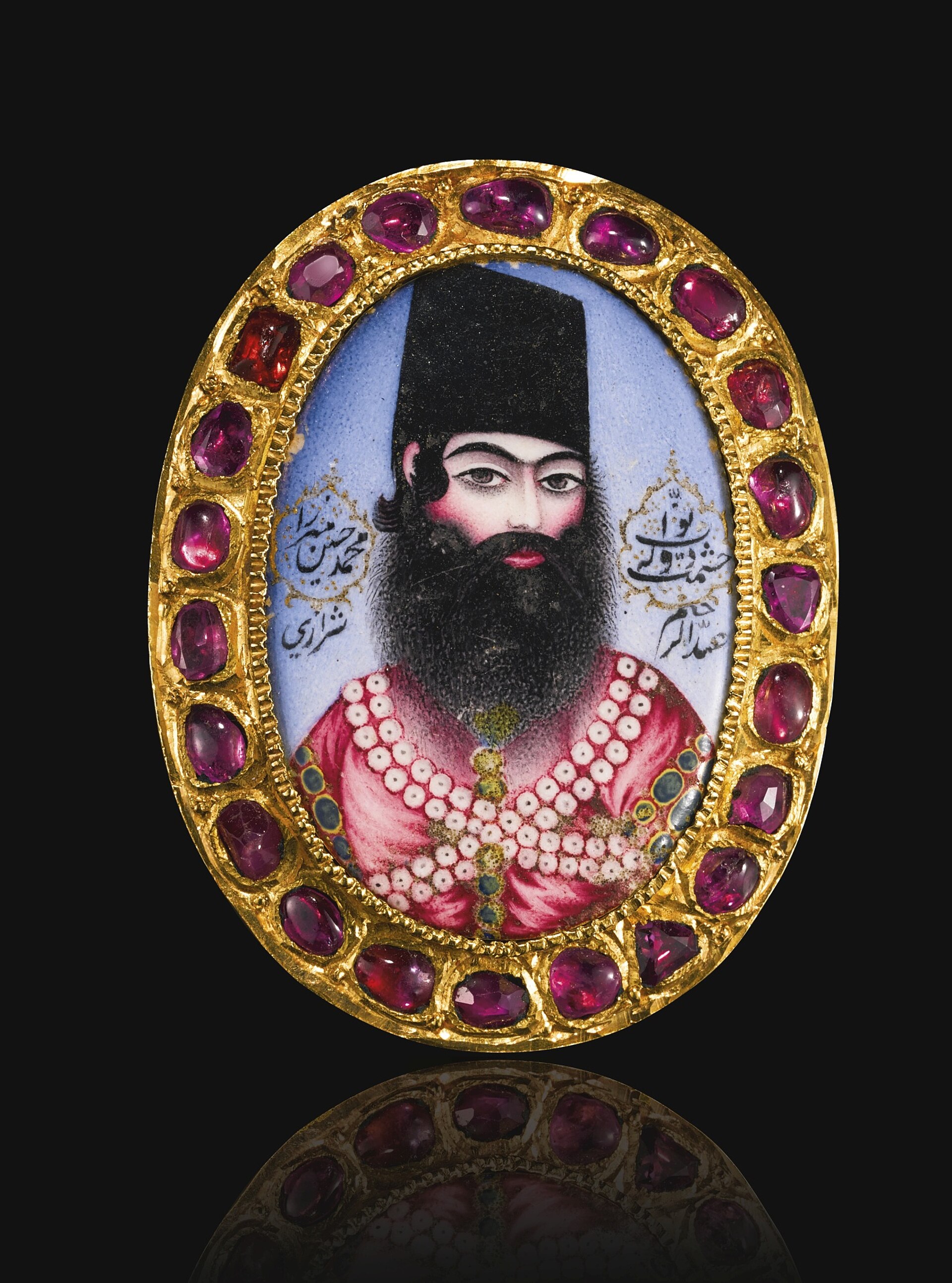
在恺加肖像画中,金属工艺(Metalwork)并非只是背景。画师精细刻画的镶钻短剑、金质水烟壶以及王座上的鎏金装饰,实际上是在画布上还原了德黑兰和伊斯法罕工匠的高超技艺。这种跨界的美学统一,使得恺加画作成为研究19世纪伊朗综合工艺最直观的资料库。

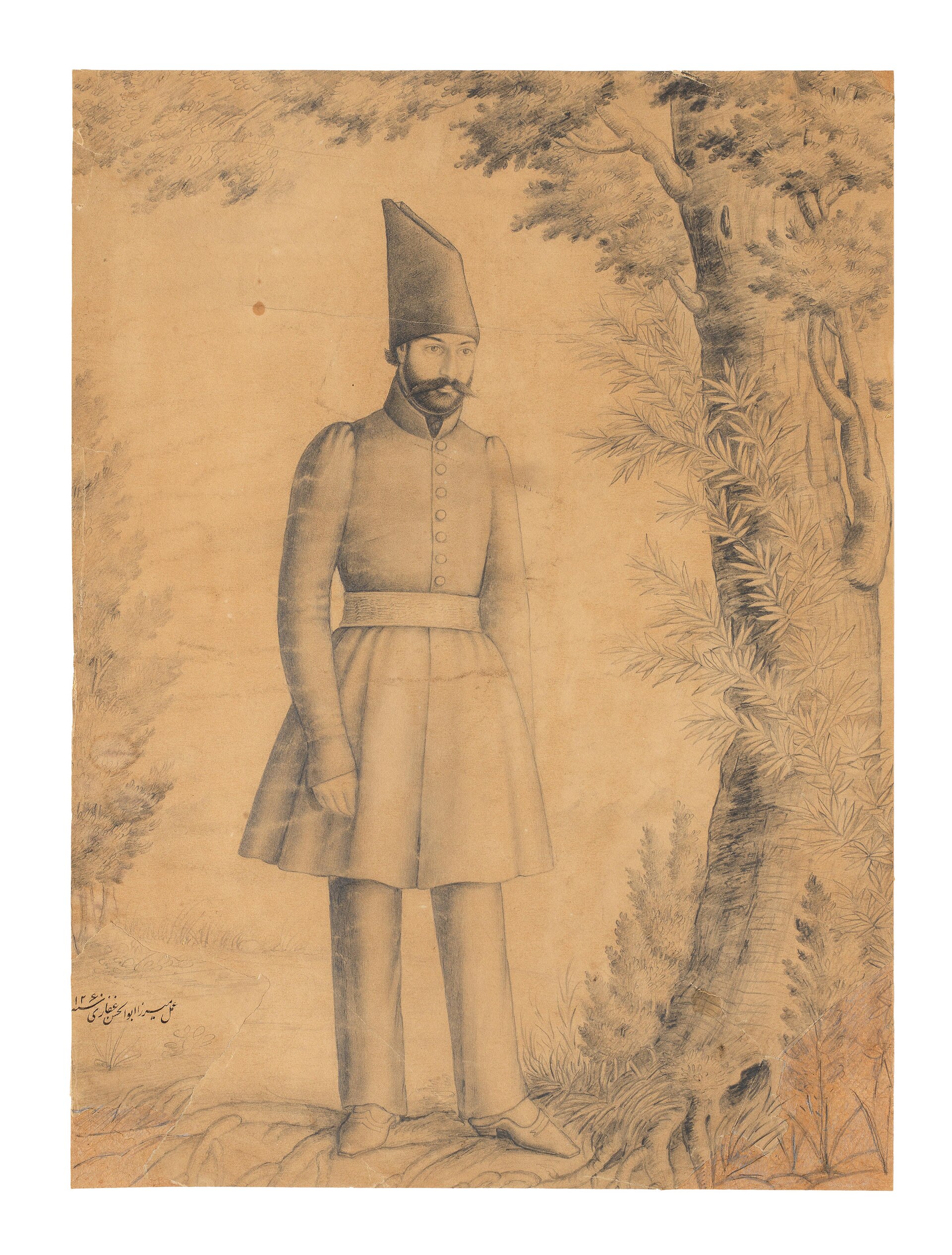
Nasser-ed-Din Shah Qajar Watercolor on paper 24.3*32.8 cm Abol-Hassan Ghaffari, Rajab 1270 [March 1854] Louvre Museum, Paris Islamic Section MAO 777
Nassereddinshah Qajar - Saniolmolk · Mirza Abolhassan Khan Ghaffari · Public domain

波斯女性在恺加绘画中扮演了什么角色?

在恺加艺术中,女性肖像展现了一种独特的东方之美。画家不仅仅记录了她们的容貌,更详尽地描绘了如头巾、披肩和带有金线的精美裙装。通过如[1]中提到的母子图,我们可以观察到当时社会对于家庭、亲情以及女性社会地位的视觉呈现。这些作品通常具有极强的叙事性,背景中的花卉或水果与人物的柔美线条相呼应。

Munajjum Bāshi, royal astronomer to the Qajars. Gouache painting by a Persian artist, Qajar period Image 19 x 15 cm. Persian inscription
Munajjum Bāshi, royal astronomer to the Qajars. Gouache painting by a Persian artist, Qajar period · wellcomecollection.org · CC0

关于恺加王朝肖像画的常见问题

恺加王朝的肖像画通常是有署名的吗?
并非所有作品都有署名。虽然穆罕默德·哈桑·阿夫沙尔等名家会在作品上署名,但仍有大量精美的宫廷作品属于‘佚名’(Artist unknown)。研究者通常根据画风、笔触和特定的珠宝细节来判断其创作归属。
为什么很多恺加肖像中都有鹦鹉的存在?
正如《母子与鹦鹉》一画所示,鹦鹉在伊朗艺术中兼具异国情调与富贵的象征。它不仅是当时王室喜爱的宠物,也常作为打破室内静止感的生动元素出现,增加画面的趣味性与昂贵感。
恺加油画使用了哪些特殊的颜料?
除了常规的油彩,艺术家们常使用天然矿物粉末。最显著的特征是金粉(Gold Powder)的大量使用,甚至直接在清漆层中混入金粉,使服饰和珠宝部分在灯光下能够反射真实的金属质感。
这些画作目前主要收藏在哪里?
主要馆藏分布在伊朗国家博物馆、德黑兰的格列斯坦宫。此外,芝加哥大学特藏研究中心以及大都会艺术博物馆也收藏有极具代表性的恺加肖像画及相关版画。
恺加绘画风格对后来的波斯艺术有何影响?
它开创了波斯艺术从符号化向现实主义转型的先河。通过引入透视法和三维建模感,恺加艺术为20世纪伊朗现代艺术的兴起奠定了美学基础,特别是在人物解剖比例的精确度上有了质的飞跃。
Lutf Alī Khān Zand. Gouache painting by a Persian artist, Qajar period Image 19 x 15 cm. Persian inscription
Lutf Alī Khān Zand. Gouache painting by a Persian artist, Qajar period
A Persian physician. Gouache painting by a Persian artist, Qajar period Image 5 x 11 cm. Lettering in Persian in margin
A Persian physician. Gouache painting by a Persian artist, Qajar period

Sources

  1. [1]Print of Portrait of a Mother and Child with a Parrot· University of Chicago Special Collections Research Center
  2. [2]Mohammad Shah Qajar Life and Art· Wikipedia
  3. [3]Still Life of Fruit, Qajar, Persia, Mid 19th Century· Instagram Arts Archive
  4. [4]Analysis of Early 19th Century Iranian Oil on Canvas· Instagram - Art History Collection
  5. [5]Zand and Qajar portrait transitions on paper and gold· Persian Art History Facebook Community