Materials and methods
Persian crafts bring together different materials and processes. Distinguish shaping, engraving, inlay and enamel rather than treating them as interchangeable decoration. Confirm the materials, dimensions and condition of an individual work before comparing it.
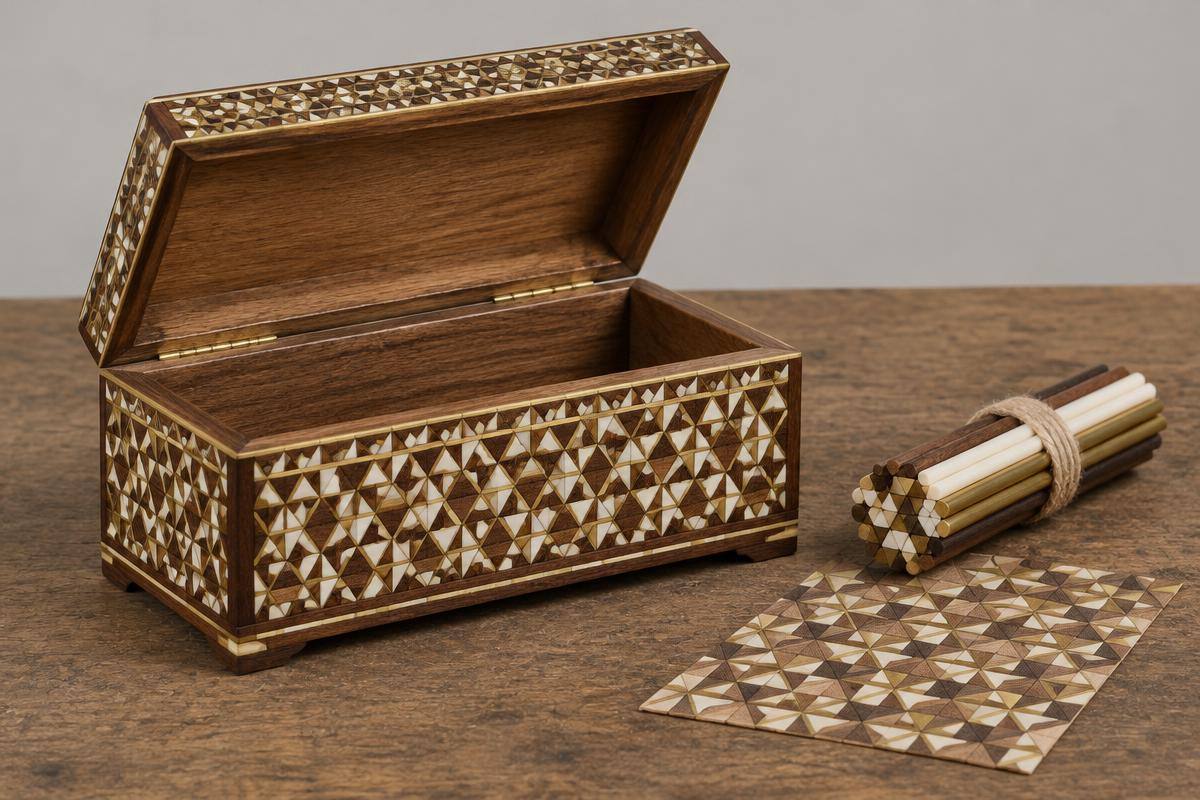
Khatam: Persian Marquetry, Explained
The star-mosaic inlay of Isfahan and Shiraz — how it is made, how to read it, how to judge it.
AI-generated educational illustration; not a gallery product or authenticated historical object
Read the guide →
Mina Kari: Persian Enamel on Metal
The cobalt blue of Isfahan — vitreous enamel fired onto copper, gold and silver.
Read the guide →
Qalamzani: Persian Metal Engraving and Chasing
Hammer, punch and pitch — the hand-worked relief that defines Persian copper, brass and silver.
Read the guide →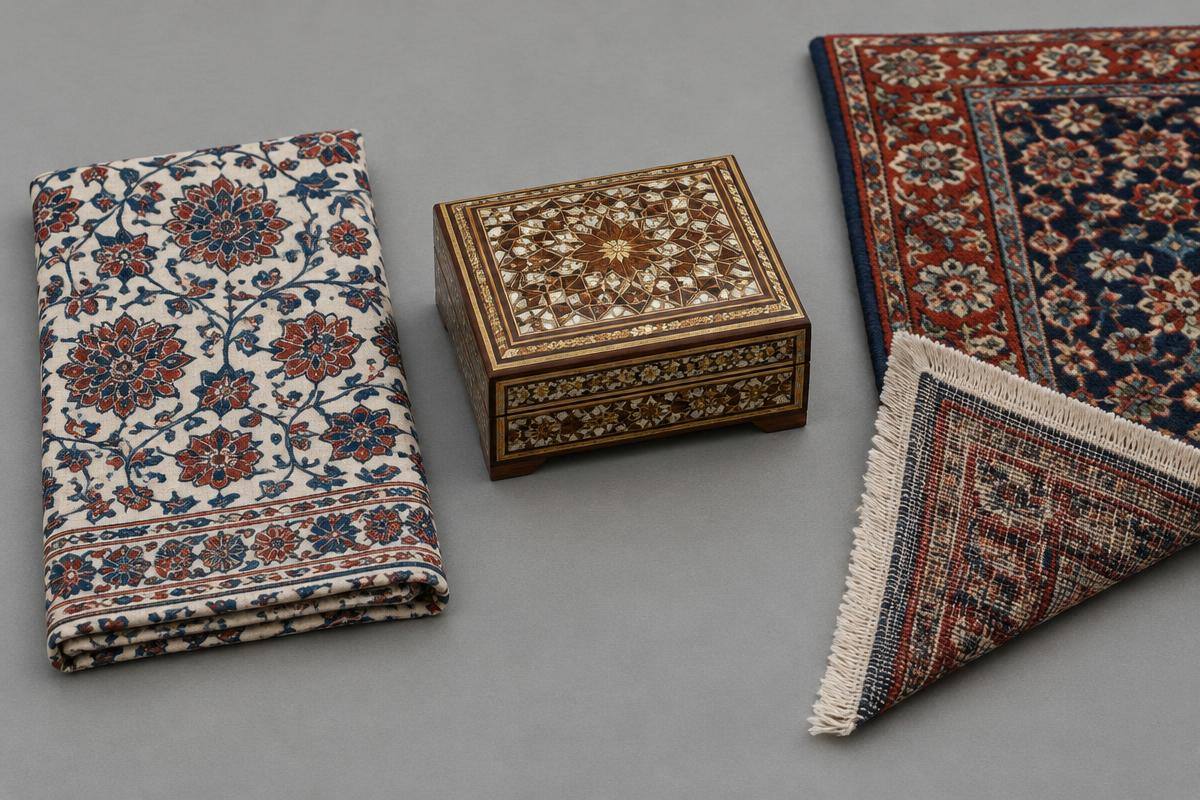
Persian Handicrafts: A Field Guide
The major Iranian crafts, what distinguishes each, and where they are made.
AI-generated educational illustration; not a gallery product or authenticated historical object
Read the guide →


Comparing craft techniques
Qalamzani shapes decoration by working the metal surface; mina-kari adds vitreous enamel; khatam assembles small elements into mosaic marquetry. A single object may combine techniques, so identify the support and each decorative layer separately.
- Khatam: Persian Marquetry, Explained
- Khatam (khatam-kari) is a Persian marquetry technique in which thin rods of wood, brass and bone are bundled into a bar with a star or polygon in cross-section, glued, sliced into wafer-thin sheets, and laid over a wooden object. Every visible star in a khatam surface is the end grain of a rod, not a painted or carved motif.
- Mina Kari: Persian Enamel on Metal
- Mina kari is Persian vitreous enamelling on metal, often copper. Glass-based enamel is fused to a prepared metal surface by firing; painted decoration may then receive further firings. Isfahan is closely associated with the craft and its blue-and-white designs. Firing schedules, pigments and construction vary between workshops, so a colour or photograph alone cannot establish how an individual object was made.
- Qalamzani: Persian Metal Engraving and Chasing
- Qalamzani is the Persian technique of decorating metal by striking shaped punches (qalam) with a hammer to raise, sink and texture the surface. It is chasing and repoussé rather than cutting: the metal is displaced, not removed, so the design reads in relief on the front and in negative on the back.
- Persian Handicrafts: A Field Guide
- Persian handicrafts are the traditional Iranian crafts still made by hand in workshop and household settings — among them engraved and enamelled metalwork, knotted carpets and kilims, khatam marquetry, tilework, turquoise inlay, termeh weaving, block-printed ghalamkar, lacquer painting and pottery. Most of these traditions are still transmitted by apprenticeship rather than through formal schooling.
Looking closely
Begin with form and proportion, then examine the surface, joins, rim and underside. Lighting and camera angles can hide damage or change colour. Ask for detail photographs and information about repairs; a traditional motif does not establish an object's age.
Preparing an inquiry
Identify the work or page and describe your questions. For a commission, subject, approximate scale, setting and material preferences are useful starting points. For an antique, request condition and provenance documentation rather than relying on resemblance to historical examples.
Before cleaning or displaying a work
Do not polish an unidentified finish or use a household cleaner on enamel, inlay or patina. Loose parts, cracks and lifting decoration need assessment before cleaning. Keep records of condition and previous repairs alongside photographs.