Xene Gallery

Cómo limpiar una alfombra persa en casa paso a paso con éxito

Guía práctica para proteger fibras naturales de lana, eliminar impurezas y conservar piezas artesanales en el hogar.

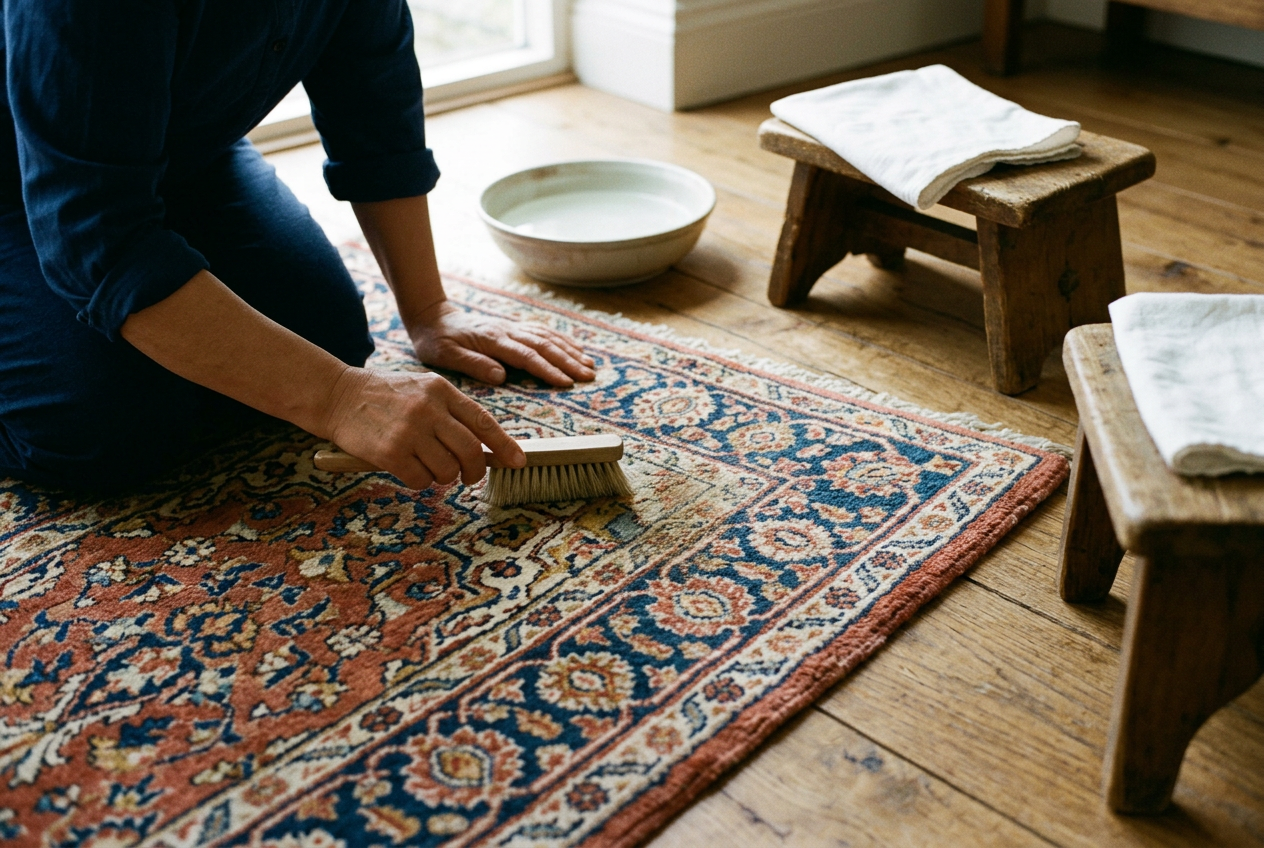
Detalle de una alfombra artesanal de lana con motivos tradicionales extendida sobre un suelo pulido
Image: AI-generated editorial image · Xene Gallery

Para comprender cómo limpiar una alfombra persa en casa paso a paso de forma segura, el método consiste en retirar la suciedad sólida mediante aspiración suave sin cepillo rotatorio, tratar manchas con humedad mínima y paños de algodón neutros, propiciar un secado horizontal completo y reinstalar la pieza sobre una base estabilizadora en un suelo totalmente seco para proteger la lana de la fricción.

¿Por qué las alfombras de lana exigen un método doméstico especializado?

Las alfombras orientales y las piezas tejidas a mano —como los modelos handloom confeccionados en lana pura [3]— destacan por su resistencia histórica y la riqueza de sus texturas. Sin embargo, su estructura tejida es vulnerable ante tratamientos químicos abrasivos, el calor directo y el encharcamiento. Una limpieza inadecuada puede decolorar tintes artesanales y deteriorar la trama original que sostiene cada hilera de nudos.

El mantenimiento regular en el hogar no persigue sumergir el tapiz en agua, sino gestionar la acumulación de partículas en suspensión, ácaros y restos orgánicos que desgastan los hilos por fricción. Al aplicar un protocolo riguroso, el propietario salvaguarda el brillo natural de la lana y prolonga la vida útil de su inversión decorativa.

¿Cómo limpiar una alfombra persa en casa paso a paso?

Llevar a cabo este procedimiento requiere paciencia, productos neutros y una manipulación delicada que evite someter la urdimbre a tensiones innecesarias. A continuación se detalla la secuencia recomendada para higienizar la pieza en estancias domésticas:

Secuencia metódica de limpieza en cinco fases
  1. Diagnóstico y despeje: Retire la alfombra del suelo y examine si presenta deshilachados, pérdida de tinte o ataques de polilla antes de comenzar [1, 2].
  2. Aspirado de baja succión: Aspire suavemente ambas caras de la alfombra siguiendo siempre la dirección del pelo, evitando cepillos batidores mecánicos que puedan arrancar la lana [3].
  3. Tratamiento puntual de manchas: Absorba líquidos inmediatamente con toallas de algodón blanco mediante ligeras presiones; no frote en círculos para no abrir los nudos.
  4. Secado integral horizontal: Permita que la pieza se airee en un entorno sombreado y bien ventilado, impidiendo que permanezca húmeda en su núcleo.
  5. Acondicionamiento del piso y base: Limpie a profundidad la superficie del piso, verifique que no quede rastro de agua e instale una base antideslizante adaptada [2].

¿Cómo influyen la forma y las dimensiones en el protocolo de lavado?

La morfología de cada pieza determina el nivel de esfuerzo y el espacio requerido para su mantenimiento. El universo de los tapices abarca desde alfombras rectangulares tradicionales hasta versiones redondas, de pasillo, cuadradas o con perímetros irregulares [3]. Cada formato distribuye el tránsito y el polvo de forma dispar.
Tonbak, a Persian percussion instrument.
TOM.BAK · https://www.flickr.com/photos/dynamosquito · CC BY-SA 2.0
Morfología de la alfombra y consideraciones de mantenimiento
Formato del tapizZona típica de usoFactor crítico de limpiezaRecomendación práctica
Rectangular tradicionalSalones y comedoresDesgaste central por pisadas continuasRotar 180 grados periódicamente para igualar exposición
Alfombra de pasilloCorredores y vestíbulosAlta densidad de polvo y fricción aceleradaAspirado bisemanal y ajuste estricto de base de agarre [2]
Redonda o cuadradaRincones de lectura o mesas auxiliaresMarcas puntuales por peso de mueblesRevisión regular de deformaciones en bordes periféricos
Formatos irregularesEspacios de diseño contemporáneoFragilidad en ribetes y extremos asimétricosEvitar sacudidas bruscas que desgarren costuras [3]
Pautas de cuidado adaptadas a las configuraciones geométricas más habituales en el hogar [2, 3].

Dimensiones textiles: piezas pequeñas frente a grandes formatos

Las alfombras pequeñas, generalmente con un largo menor a 160 cm [3], permiten un manejo versátil en interiores, facilitando su ventilación en terrazas protegidas. En contraposición, las piezas de gran escala —como formatos de 200x300 cm o superiores [3]— exigen desplazar mobiliario pesado, demandan un secado in situ meticuloso y requieren una fijación precisa para que el reverso no resbale sobre baldosas o parqué [2].

Cifras clave en la conservación y formato de alfombras
Origen de Valentia
138 a. C.

Fundación romana de Valencia vinculada al aprecio patrimonial [1]

Escala pequeña
< 160 cm

Longitud estándar para tapices de fácil manipulación casera [3]

Recorte de seguridad
2 cm

Margen perimetral para ocultar y ajustar la malla antideslizante [2]

Formato espacioso
200x300 cm

Medida clásica de alfombras de lana que exige secado horizontal estricto [3]

“Una base antideslizante prolonga la vida útil de los textiles al reducir el desgaste por fricción constante contra el piso y previene caídas accidentales.”

— Guía técnica de manoExperta [2]

¿Por qué es crucial colocar una base antideslizante tras la limpieza?

Concluida la fase de higienización y aspirado, muchos propietarios cometen el descuido de tender su tapiz directamente sobre el pavimento pulido. Esta práctica acelera el desgaste del reverso y crea riesgos de resbalones involuntarios. Implementar una base de soporte resulta determinante para preservar la integridad de la pieza [2].
Soudeh asked me to generate portraits mosaic of attendants of 3rd Iranian Flickr Gathering in Hamadan. I know, I'm too late ;) We were 33 persons, from 7 to 58 years, from Tehran, Isfahan, Mashhad, Hamadan, Tabriz, Paris (France), and Vienna (Austria). My other photos of this gathering can be found here and all gathering photos can be found here. This photo was added to flickr explore (interestingness) of 27 August 2006. About Hamadan (from this sorce by HORIZON, originally from WikiPedia): more information: en.wikipedia.org/wiki/Hamedan Hamedan is the capital city of Hamadan Province of Iran. It had an estimated population of 550,284 in 2005. Hamadan is believed to be amongst the oldest Iranian cities and one of the OLDEST in the world. Hamadan is a green mountainous area on the foothills of the 3574-meter Alwand Mountain,in the mid west of Iran. The city is 1850 meters above sea level. The special nature of this old city and its historic sites attract tourists during the summer to this city, located approximately 400km southwest of Tehran. History Golden Rhyton from Iran's Achaemenid period from Ecbatana. National Museum of Iran.Hamadan has a distinguished place among all historical cities of Iran and geographically located at 34°51'N 48°31'E.Some historians believe that Hamadan's construction dates back to 3000 BC and according to an inscribtion from the first Assyrian king , it is aributed to 1100 BC. Hamadan was established by the Medes, and was the capital of the Median empire. It became then one of the multiple capital cities of the Achaemenid Dynasty and it has been referred to by several name variations throughout its long history, namely: Ecbatana (Median), Ecbatana (classical Greek rendition of Hagmatana) and several corruptions or mispronunciations of the previous two in subsequent centuries. During the Parthian era, Ctesiphon was the capital of the country, and Hamadan the summer capital and residence of the Parthian rulers. After the Parthians, the Sassanids constructed their summer palaces in Hamadan. In the year 633 the war of Nahavand took place and Hamadan came into the hands of the muslim Arabs, at times it thrived and at times it witnessed poverty. During the Buwayhids , it suffered much damage. In the 11th century, the Seljuks shifted their capital from Baghdad to Hamadan. The city of Hamadan which was always assaulted by the rise and fall of powers, was completely destroyed during the Timurid invasion. During the Safavid era the city thrived. Thereafter, in the year 18th century, Hamadan was surrendered to the Ottomans, but due to the courage and chivalry of Nadir Shah Afshar, Hamadan was cleared off the invaders and according to the peace treaty between Iran and the Ottomans , it was returned to Iran. The city of Hamadan lay on the Silk Road and even in the last centuries enjoyed good prospects in commerce and trade being on the main road network in the western region of the country. Climate Hamadan province lies in a temperate mountainous region to the east of Zagros. The vast plains of the north and northeast of the province are influenced by strong winds, that almost last throughout the year. The various air currents of this region are: the north and north west winds of the spring and winter seasons, which are usually humid and bring about rainfall. The west-east air currents that blow in the autumn, and the local winds that develop due to difference in air-pressure between the elevated areas and the plains, like the blind wind of the Asad Abad region. Hamadan being in the vicinity of the Alvand mountains has a cold, mountainous climate, with snowy winters. In fact it is one of the coldest cities in Iran. The temperature may drop below -30 °C on the coldest days. Heavy snowfalls are common during winter. Summer is short , and the weather is mild and pleasant and mostly sunny. Culture An example of a traditional Rug of Hamedan.Hamadan is also home to many poets and cultural celebrities. The city is also said to be among the world's oldest continuously inhabited cities. Handicrafts Hamadan has always been well-known for handicrafts like leather and ceramic work as well as for its beautiful carpets. Iran's Cultural Heritage Organization lists 207 sites of historical and cultural significance in the city of Hamedan alone. Legend has it that the biblical Esther is buried in Hamedan. The scientist and writer known in the west as Avicenna (Abu Ali Sina) is buried in Hamedan. The 11th century Persian poet Baba Taher is also interred in Hamedan. Contemporary Culture People of Hamedan are very proud of their old history. Another source of their pride is Avicenna (aka Bouali, Buali, Ebn-e-sina, Pur-e-Sina) who is buried in Hamedan. In Hamedan, you can find primary schools, secondary schools, high schools, colleges, and the main city's university names after him. Also, there are many shops and businesses named after him. The main street of Hamedan is also named Bouali. Bouali Street is a very busy one and in fact, a favorite pastime of Hamedanians is to troll up and down the street where they frequently bump into their acquaintances. Attractions Avicenna (Abu Ali Sina) Ibn Sina mausoleum Baba Tahir Mausleum Ali Sadr Cave Gonbad-e Alavian Ganj Nameh Hamedan Stone Lion Estakhr e Abbas Abad (an over-the-hill lake with a magnificent view to the city Nazari House Hamedan Museum of Natural History Excavated Ancient Ecbatana City Sister cities: Kulyab, Tajikestan
Mosaic of Hamadan Gathering · Hamed Saber · CC BY 2.0
Guía de instalación de la base protectora
  • Limpie exhaustivamente el suelo debajo de la alfombra retirando cualquier arenilla abrasiva [2].
  • Asegúrese de que el piso y el reverso del tapiz estén totalmente secos, pues la humedad merma el agarre [2].
  • Mida el área y corte la base antideslizante un par de centímetros más pequeña que el contorno para que quede invisible [2].
  • Extienda la base, posicione la alfombra centrada y presione con firmeza para asentar la adherencia inicial [2].
  • Lleve a cabo una prueba de tracción suave comprobando la estabilidad antes de transitar habitualmente por la estancia [2].
Factores de degradación física en alfombras de hogar (%)
Estimación del impacto de las tensiones mecánicas y ambientales sobre textiles de lana sin soporte adecuado [1, 2].

¿Cuándo conviene recurrir a un servicio profesional de limpieza?

Pese a que el cuidado doméstico constante previene la fijación de partículas cotidianas, existen contingencias donde la intervención casera resulta insuficiente o arriesgada. Si la alfombra ha sufrido vertidos oleosos densos, inundaciones o una infestación severa de ácaros, el tratamiento exige maquinaria y conocimientos especializados [1, 2].

Mantenimiento doméstico frente a intervención especializada
Ámbito de trabajoProtocolo casero periódicoServicio técnico profesional
Retirada de polvoAspiración superficial sin cepillos giratoriosBatido mecánico controlado por ambas caras [1]
Tratamiento de manchasAbsorción inmediata con paños secos neutrosDisolución específica adaptada al tinte y tejido [1]
SanitizaciónVentilación natural y secado al aireTratamientos térmicos o inocuos contra ácaros y olores [1]
Logística y transporteManipulación a cargo del propietarioRecogida y entrega a domicilio con diagnóstico previo [1]
Diferenciación de alcances entre la rutina en casa y los talleres de restauración textil [1].

“Los tratamientos adaptados a cada tejido permiten la eliminación de manchas, olores y ácaros con la máxima seguridad estructural.”

— ArtDeco Tapiceros [1]

Claves finales para prolongar el esplendor de su alfombra persa

Mantener una alfombra persa o de estilo oriental no equivale a emprender lavados complejos todos los meses, sino a cultivar hábitos preventivos. Inspeccionar las esquinas, evitar la incidencia solar ultravioleta continua, mantener suelos limpios y secos bajo el telar y actuar con prontitud ante cualquier imprevisto garantizará que la belleza de la lana continúe embelleciendo los interiores durante generaciones.
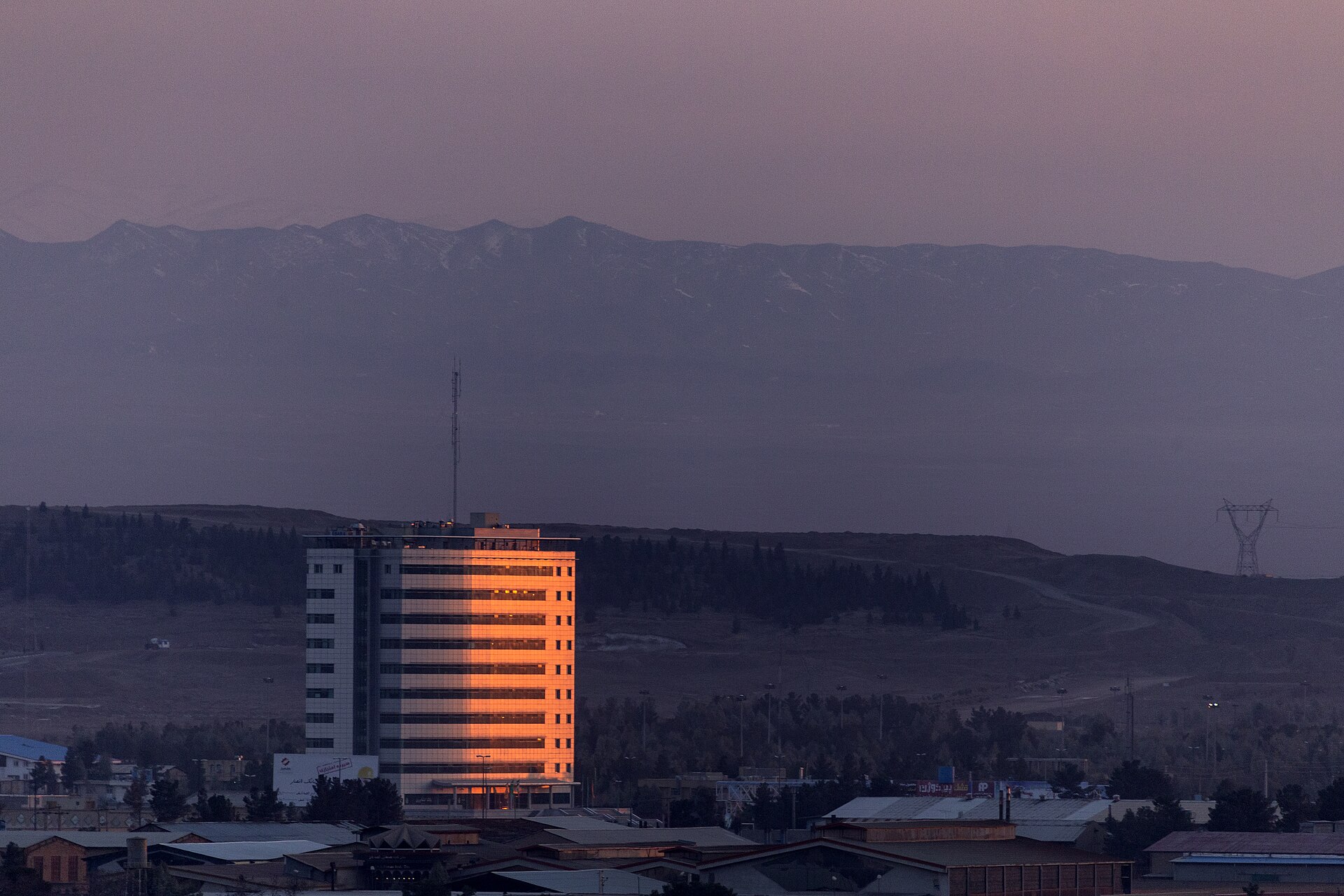
Qom is located beside the desert at 140 km south of Tehran with the height of 930 m above the sea level in an arid region. It enjoys a desert and semi-desert climate. Summer is warm and arid and winter is nearly cold in this city. Qom consists of 5 parts as "Jafarabda", "Khalajestan", "Salafchegan", "Kahak", "Markazi", one city and 9 rural districts. This city is the 8th populous city after Tehran, Mashhad, Isfahan, Tabriz, Karaj, Shiraz, Ahvaz and second religious city after Mashhad and also one of the main centers of Silk Carpet, Sweets and Sohan production in Iran and all around the world located among Iran transportation roads which connect the industrial cities to Tehran, on one hand, and link the southern provinces and cities of Iran to the northern ones, on the other hand. Qom, one of the most significant desert towns, is of the main poles of developing pilgrimage tourism in Iran.
عکس قم ایران از دریچه دوربین کلانشهرهای ایرانی مصطفی معراجی تصاویر ایران زمین با کیفیت مجوز کریتیو کامانز 02 · Mostafameraji · CC BY-SA 4.0

Preguntas frecuentes sobre cómo limpiar una alfombra persa en casa paso a paso

¿Cómo limpiar una alfombra persa en casa paso a paso sin arriesgar los colores?
Empiece aspirando sin frotar en el sentido del pelo, trate las manchas frescas únicamente con paños neutros absorbentes y muy poca agua tibia, garantice un secado completo en posición horizontal y recoloque la alfombra sobre suelo limpio usando una base antideslizante [2, 3].
¿Por qué es peligroso usar abundante agua en una alfombra de lana?
El exceso de líquido satura la urdimbre interior, tarda días en evaporarse y provoca malos olores, hongos o proliferación de ácaros, además de arriesgar el sangrado de tintes tradicionales y debilitar la firmeza del tejido [1].
¿Para qué sirve colocar una malla o base antideslizante bajo la alfombra?
La base previene caídas por desplazamientos repentinos sobre superficies pulidas y reduce sustancialmente el desgaste mecánico que provoca el roce continuado entre el reverso textil y la superficie del piso [2].
¿Cómo se corta e instala correctamente la base antideslizante?
Tras limpiar y secar por completo el suelo y el tapiz, recorte la base un par de centímetros más pequeña que el contorno de la alfombra, céntrela, presione con firmeza y compruebe su estabilidad mediante tracción suave [2].
¿Cuándo es indispensable llamar a un especialista en limpieza de alfombras?
Es recomendable contactar con profesionales cuando existan olores persistentes, plagas de ácaros, manchas secas complejas o ante alfombras de gran valor que exijan recogida a domicilio y un diagnóstico textil personalizado [1, 2].
¿Qué diferencia de cuidado presentan las alfombras pequeñas frente a las de gran formato?
Las alfombras pequeñas con largo menor a 160 cm son ligeras y fáciles de ventilar en casa, mientras que las grandes piezas de 200x300 cm demandan mayor control del secado in situ y soportes antideslizantes más extensos [2, 3].
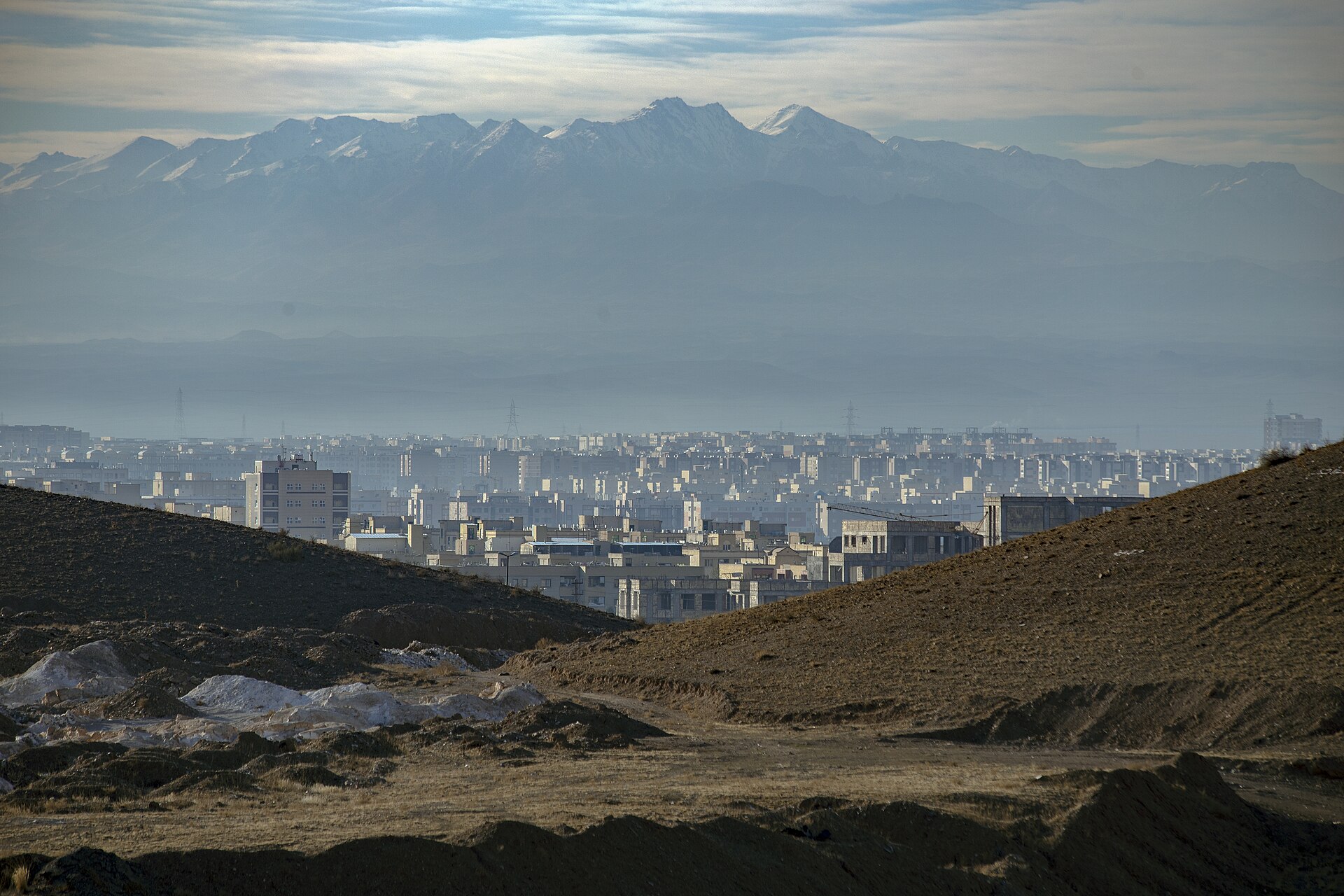
Qom is located beside the desert at 140 km south of Tehran with the height of 930 m above the sea level in an arid region. It enjoys a desert and semi-desert climate. Summer is warm and arid and winter is nearly cold in this city. Qom consists of 5 parts as "Jafarabda", "Khalajestan", "Salafchegan", "Kahak", "Markazi", one city and 9 rural districts. This city is the 8th populous city after Tehran, Mashhad, Isfahan, Tabriz, Karaj, Shiraz, Ahvaz and second religious city after Mashhad and also one of the main centers of Silk Carpet, Sweets and Sohan production in Iran and all around the world located among Iran transportation roads which connect the industrial cities to Tehran, on one hand, and link the southern provinces and cities of Iran to the northern ones, on the other hand. Qom, one of the most significant desert towns, is of the main poles of developing pilgrimage tourism in Iran.
عکس قم ایران از دریچه دوربین کلانشهرهای ایرانی مصطفی معراجی تصاویر ایران زمین با کیفیت مجوز کریتیو کامانز 03
Qom is located beside the desert at 140 km south of Tehran with the height of 930 m above the sea level in an arid region. It enjoys a desert and semi-desert climate. Summer is warm and arid and winter is nearly cold in this city. Qom consists of 5 parts as "Jafarabda", "Khalajestan", "Salafchegan", "Kahak", "Markazi", one city and 9 rural districts. This city is the 8th populous city after Tehran, Mashhad, Isfahan, Tabriz, Karaj, Shiraz, Ahvaz and second religious city after Mashhad and also one of the main centers of Silk Carpet, Sweets and Sohan production in Iran and all around the world located among Iran transportation roads which connect the industrial cities to Tehran, on one hand, and link the southern provinces and cities of Iran to the northern ones, on the other hand. Qom, one of the most significant desert towns, is of the main poles of developing pilgrimage tourism in Iran.
عکس قم ایران از دریچه دوربین کلانشهرهای ایرانی مصطفی معراجی تصاویر ایران زمین با کیفیت مجوز کریتیو کامانز 04

Sources

  1. [1]Limpieza de alfombras en Valencia segura· Tapiceros ArtDeco
  2. [2]Beneficios de usar bases antideslizantes· manoExperta
  3. [3]Alfombra Mono Handloom Rosa Empolvado y formatos· Rugvista