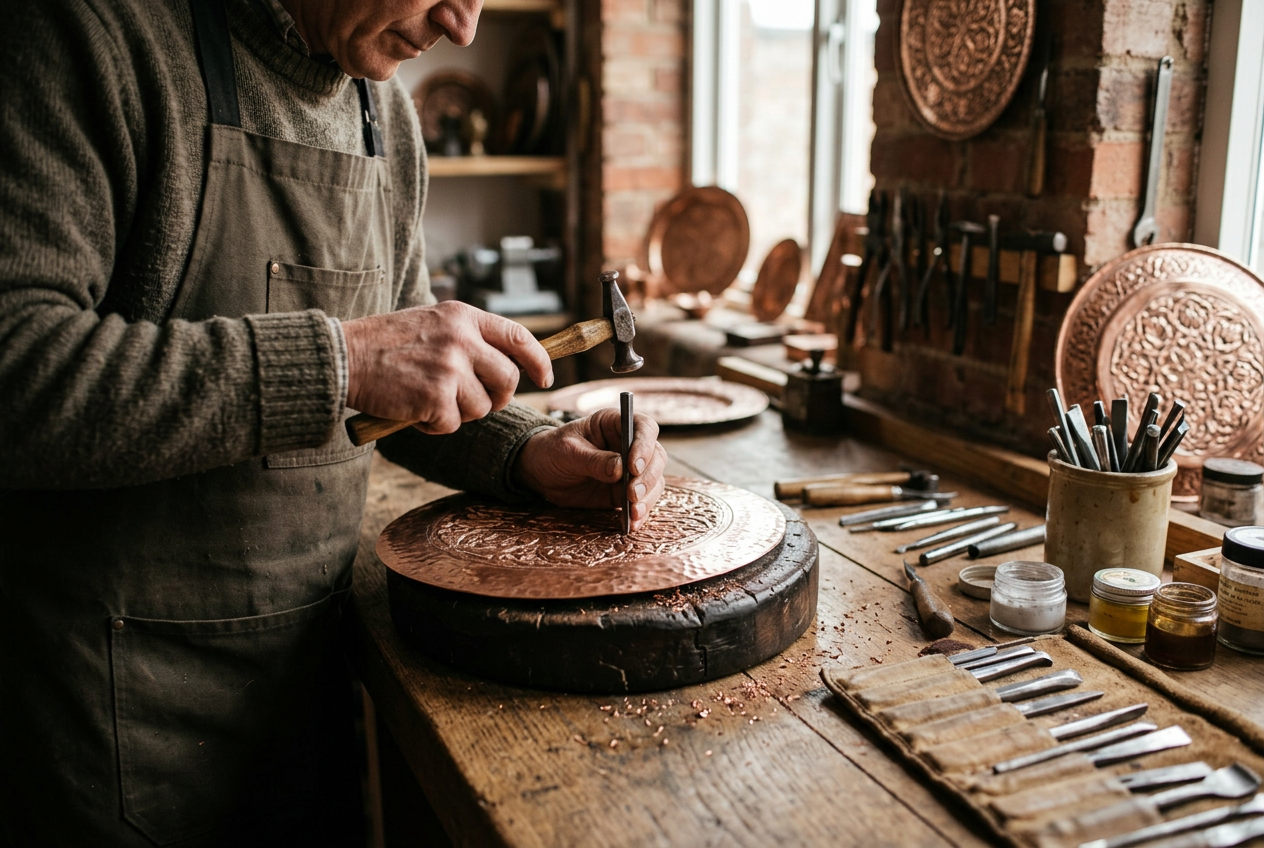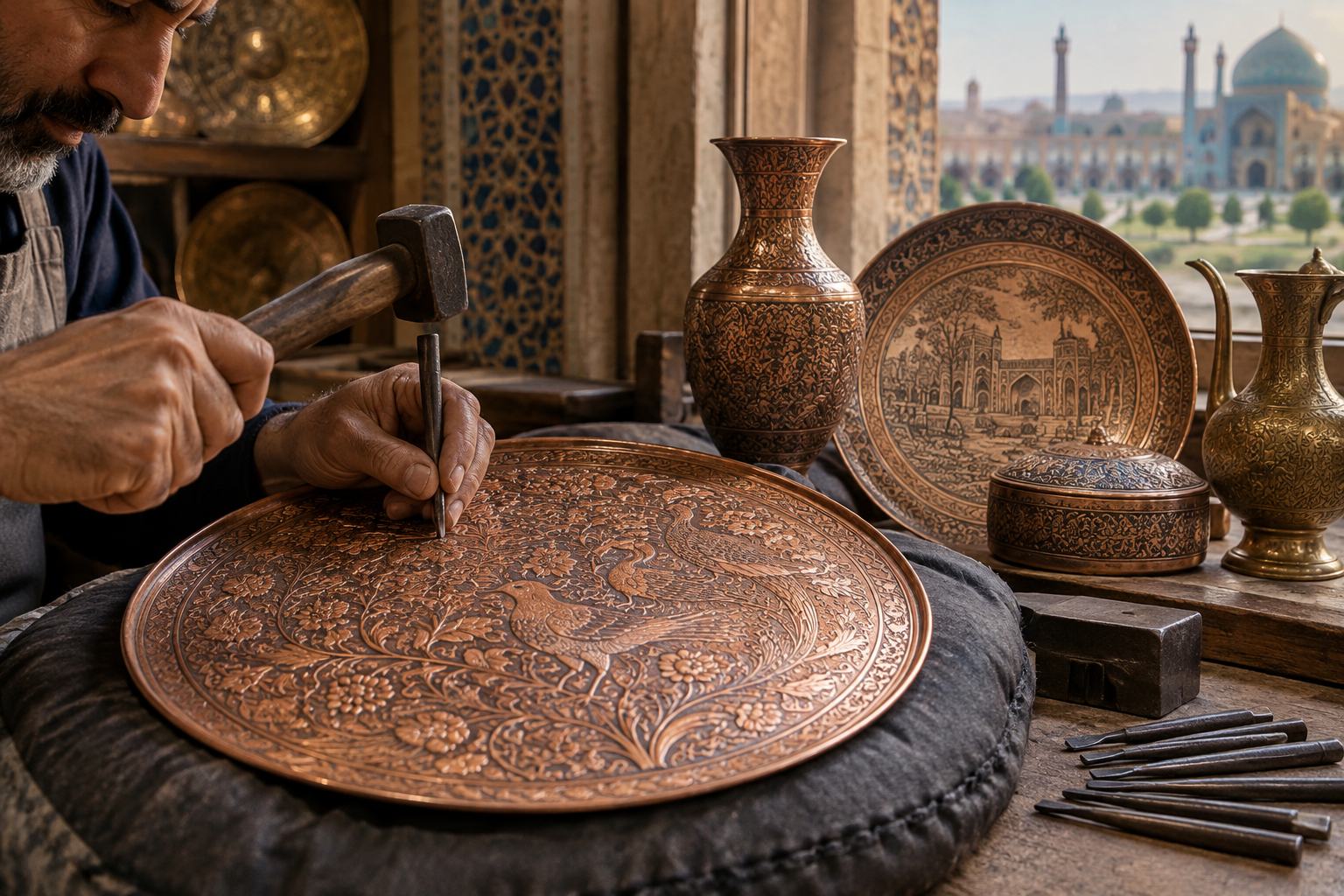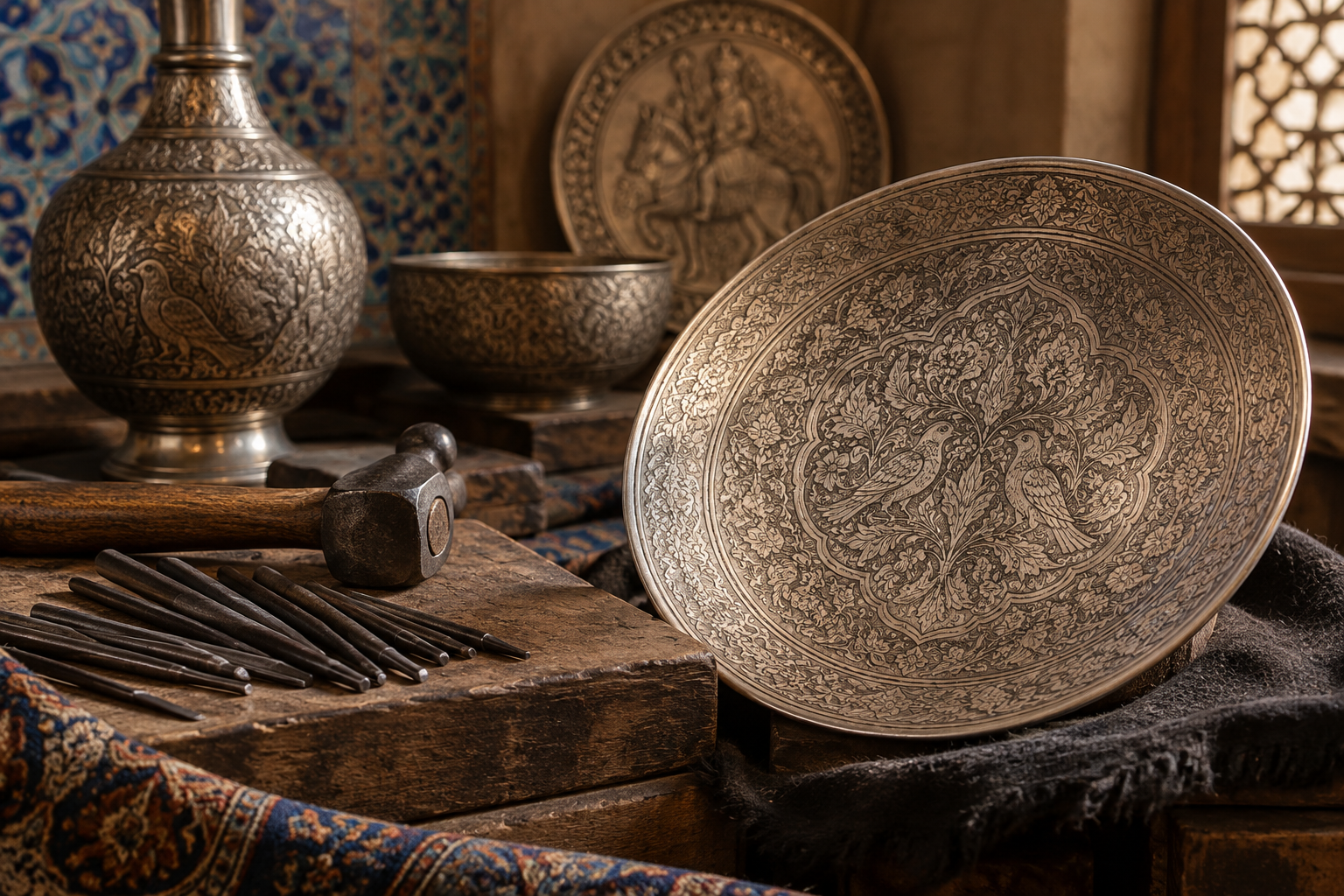
In a quiet workshop, away from the cerulean domes and bustling Grand Bazaar of Isfahan, a rhythmic tapping fills the air. It is a sound that has echoed through the city’s alleyways for centuries—the delicate, deliberate strike of a hammer on a chisel. This is the heartbeat of Qalamzani, the ancient and revered Persian art of metal engraving. Here, master artisans, heirs to a tradition passed down through generations, transform humble sheets of copper and brass into shimmering repositories of history, poetry, and staggering beauty. Every line, every swirl, every stippled texture is patiently carved by hand, a testament to a dedication that defies the pace of the modern world. To witness Qalamzani is to watch a story unfold, not in words, but in the language of metal, polished and perfected by a master's touch.
The Soul of the Craft: What is Qalamzani?
At its core, Qalamzani—also spelled Ghalamzani—is a traditional engraving technique where intricate designs are meticulously etched onto various metal surfaces, including copper, brass, and silver. A notable historical material used is Varsho (nickel silver), a non-ferrous copper-based alloy typically composed of 60% copper, 20% nickel, and 20% zinc. Within Iranian metallurgy, the specific ratio of copper to nickel in Varsho governs the alloy’s aesthetic, with higher nickel concentrations providing a bright white lustre that closely approximates pure silver.
The technique is far more than mere scratching on a surface. It is a sculptural process in miniature. The artisans of Isfahan are masters of pressure and rhythm, capable of creating a wide array of effects, from fine, hair-like lines outlining a gazelle to the deep, bold relief that gives a floral motif its vibrant, tactile presence. The process showcases an incredible level of dedication; creating even a small, 11cm hand-engraved tumbler can take countless hours of focused labor. The finished piece is then heated to melt away the internal filler, cleaned, and often treated with a dark ink-like solution that fills the engraved lines, enhancing the contrast and making the design leap from the lustrous surface. What emerges is not just a decorated object, but a piece of art that carries the very imprint of its creator’s hand and spirit.
“Every line you see is carved by hand. This is Qalamzani, a Persian metalworking tradition that's been passed down for centuries in Isfahan.”
A Lineage Forged in Metal: From Sasanian Helmets to Qajar Ewers
The roots of Persian metalwork are ancient and deep, stretching back millennia. While the specific style of Qalamzani as we know it today was perfected in the Safavid and later eras, the foundational skills of working with metals like brass and copper are an integral part of Iranian heritage. Archaeological findings have pushed back the timeline of sophisticated metalworking in the region significantly. For example, recent studies of Sasanian army helmets reveal that ancient Persian artisans worked with brass far earlier and with greater versatility than previously understood. These early craftsmen laid the groundwork, developing the metallurgical knowledge and artistic sensibilities that would later blossom into more decorative forms.
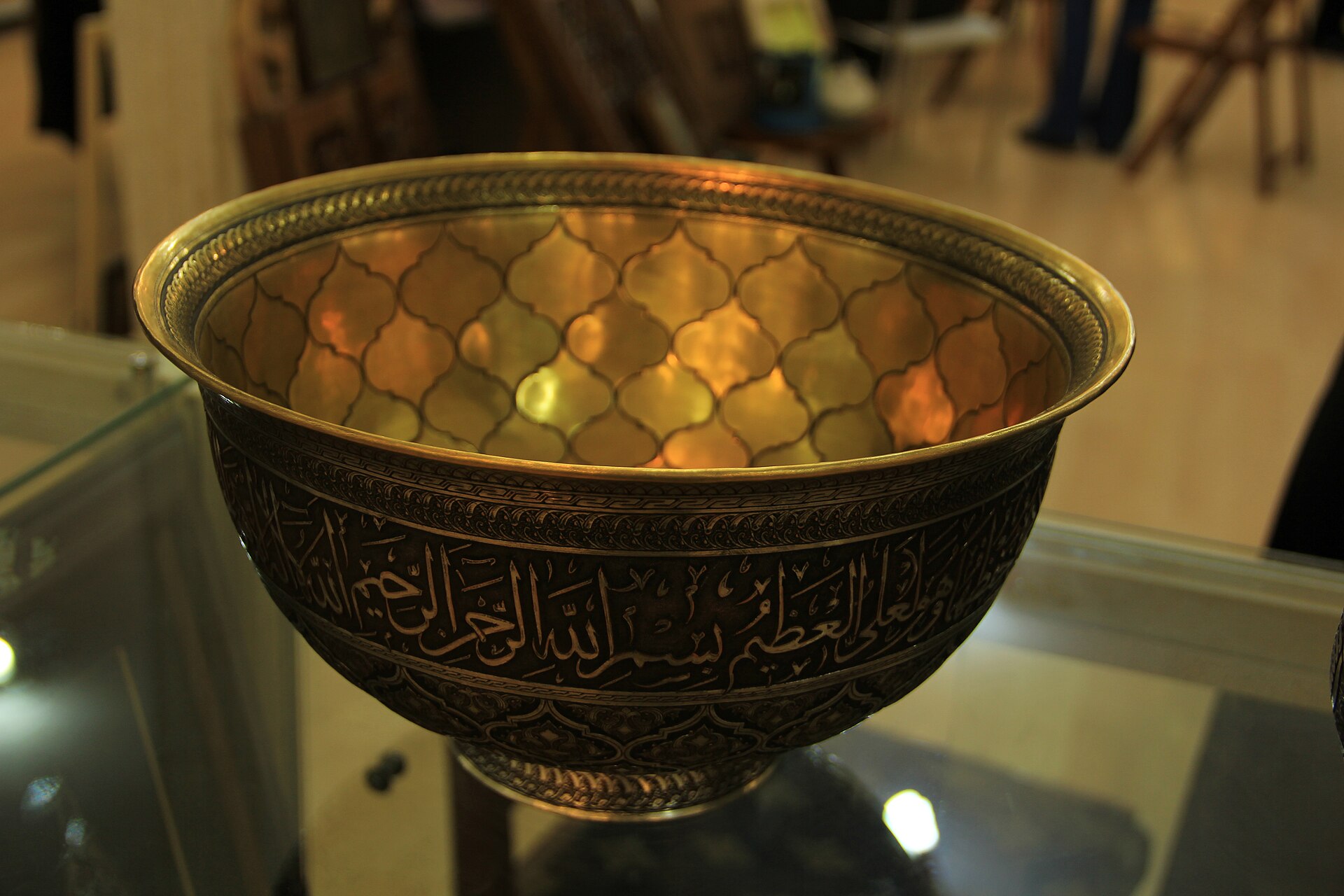
By the 19th century, during the Qajar dynasty, Qalamzani had reached a remarkable zenith of artistry and complexity. Antique pieces from this period, such as intricately engraved tinned copper ewers and vases, are prized by collectors and museums worldwide. These objects often feature dense, elaborate patterns, including floral arabesques, hunting scenes, and poetic calligraphy. Some pieces display exquisite figural work, capturing courtly life or mythological tales, sometimes combined with hand-painted details on companion tiles. An antique Persian copper vase from this era, with its deep relief engraving, stands as a powerful example of the art form's capacity for creating both functional and deeply symbolic objects. These historical artifacts are not merely decorative; they are documents of their time, reflecting the aesthetics, culture, and stories of Qajar Iran.
| Era | Notable Examples | Primary Material | Key Characteristics | Source Mention |
|---|---|---|---|---|
| Sasanian Empire | Army Helmets | Brass | Early sophisticated forming and functional design. | |
| Qajar Dynasty (19th Century) | Ewers, Vases, Figural Works | Copper, Tinned Copper | Intricate, deep relief engraving; floral and figural motifs. | |
| Contemporary (Isfahan) | Tumblers, Vases, Decorative Platters | Copper, Brass | Continuation of traditional techniques for modern and heirloom pieces. |
The metallurgical history of Iran is celebrated in exhibitions such as '7,000 Years of Persian Art,' which highlight the evolution from ancient bronze tools to the sophisticated engraving seen today. A critical component of this trajectory was the development of Varsho-Sazi. Traditional Mandaean enameling masters and Iranian metalsmiths utilized nickel silver for its durability and resistance to tarnish, making it a preferred medium for high-end household antiques and intricate jewelry.
The Masters of Isfahan: Guardians of a Fading Echo
Today, the tradition of Qalamzani is carried forward by a dedicated community of master artisans in Isfahan, a city recognized globally for its 'Crafts and Arts' designation at events like the 10th Firouzeh Award ceremony. These artisans continue to showcase their skills on international stages, such as the Iran Pavilion at the BRICS Bazaar, where brass utensils, jewelry, and sculptures represent a lineage of Persian art that spans over 7,000 years.
The act of creation is one of immense patience. An artisan can spend hundreds of hours on a single medium-sized vase, their body bent in concentration, their world shrunk to the few square inches of metal beneath their hands. This dedication is a form of cultural preservation. In an age of mass production, the handmade nature of Qalamzani is a radical act of defiance. Each piece is unique, bearing the subtle, inimitable signature of its creator—a slight variation in pressure, a particular flourish in a line. This is why the art is so deeply intertwined with storytelling. As one source poetically notes, behind every great king—or in this case, every great work of art—there is a story. In Qalamzani, that story is etched directly into the object, a permanent record of the artist’s skill, the beauty of Persian art, and the enduring heritage of Isfahan's masters.
“Behind every intricate design, there is a story hammered into the metal by a master's hand, reflecting the beauty of Persian art and the heritage of Isfahan.”
More Than Metal: A Symphony of Arts
While Qalamzani is a singular discipline, it does not exist in a vacuum. It is part of the rich tapestry of Persian arts and often intersects with other forms in breathtaking ways. The interplay between engraved metal and other media elevates the final creation to new heights. For instance, it's not uncommon to find pieces where the detailed hand-engravings of Qalamzani are combined with vibrant, hand-painted designs. A copper vase a might feature a central medallion with a meticulously engraved bird, while the surrounding area is adorned with delicate, painted blossoms, creating a dialogue between line and color, texture and smoothness. This synergy is also evident in architectural arts, such as the late Qajar Persian figural tile that works in concert with engraved metalwares, sharing motifs and narrative themes.
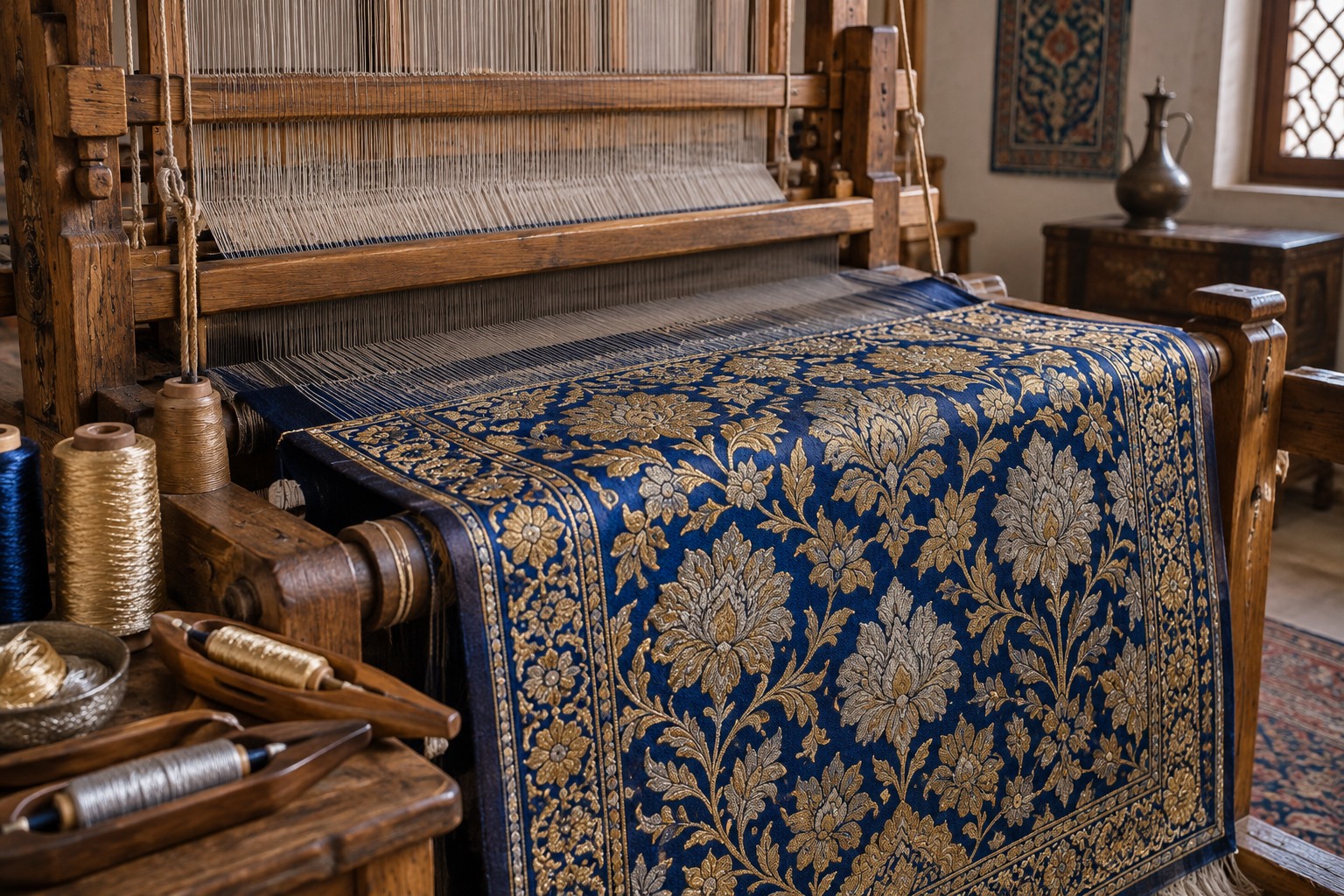
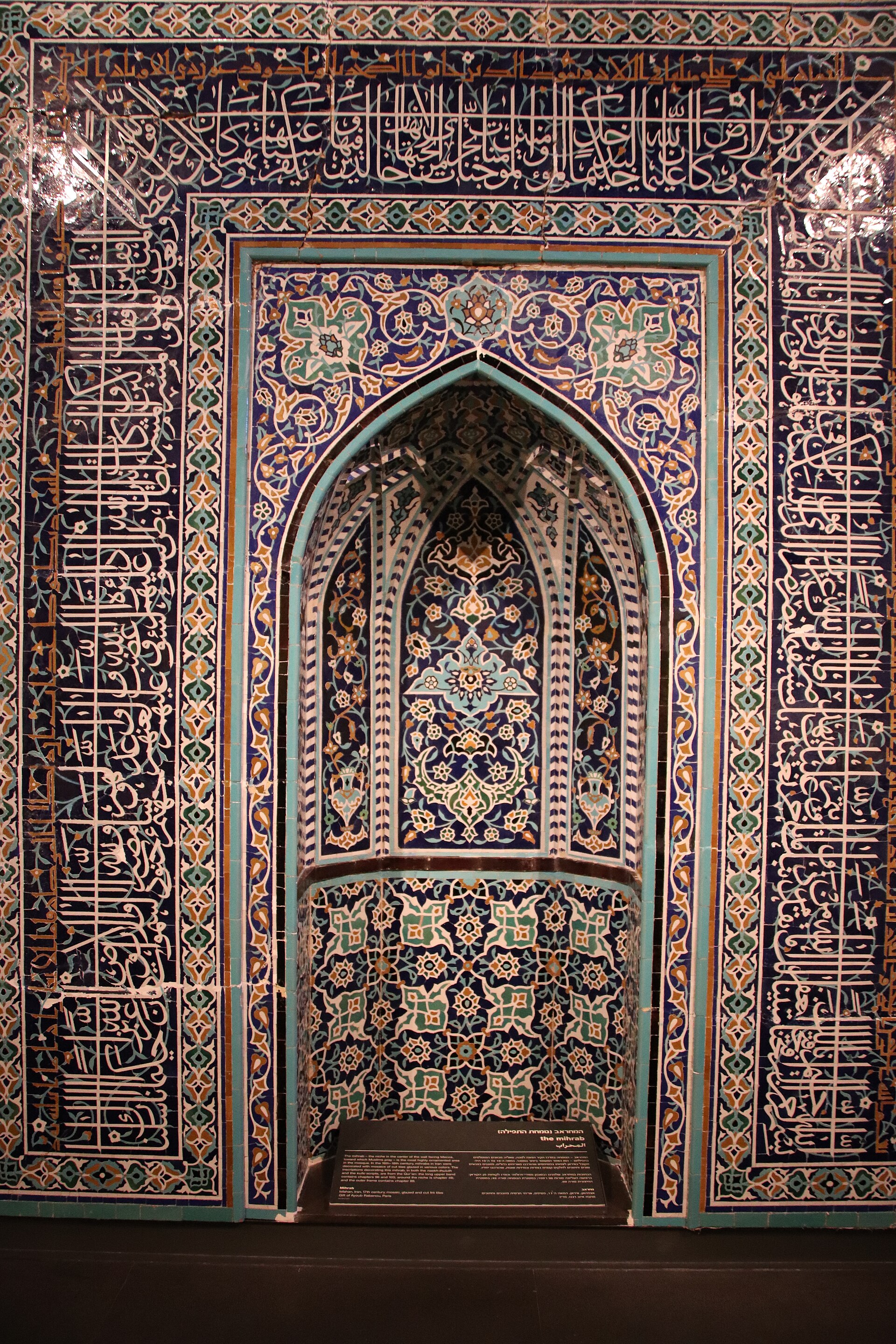
The narrative potential of Qalamzani is vast, allowing artisans to render complex figural scenes with the same fluency as abstract geometric patterns. The chisel becomes a pen, capable of drawing portraits, depicting epic tales, or capturing the quiet grace of a garden. This versatility showcases the deep integration of visual arts in Persian culture, where the boundaries between craft, design, and fine art are fluid. The same motifs found in world-renowned Persian carpets, miniature paintings, and intricate tilework (kashi) can be found masterfully transposed onto the challenging medium of metal. This makes each piece of Qalamzani not just an example of metalwork, but a microcosm of Persian aesthetic philosophy.
The Enduring Echo
The rhythmic tap of the hammer in an Isfahan workshop is more than just the sound of a craft being practiced. It is the echo of a history that spans empires, a testament to the resilience of tradition, and a celebration of the human capacity for creating beauty with simple tools and immense patience. Qalamzani is a bridge to the past, a living art form that allows us to hold centuries of Persian heritage in our hands. From the functional strength of a Sasanian helmet to the sublime elegance of a 19th-century ewer, and onto the contemporary tumblers and vases that grace homes today, the art of metal engraving remains a vital thread in the cultural fabric of Iran. As long as there are masters willing to dedicate their lives to this demanding art, and patrons who appreciate its silent stories, the echo of the hammer will continue to resonate for centuries to come.
Frequently asked questions
- What is the difference between Qalamzani and Ghalamzani?
- Qalamzani and Ghalamzani are two different transliterations of the same Persian word referring to the art of hand-engraving metal. Both terms describe the technique of using hammers and specialized chisels to create intricate designs on surfaces like copper, brass, and nickel silver (Varsho).
- What metals are commonly used in Qalamzani?
- Artisans typically work with copper, brass, silver, and gold. A traditional favorite is Varsho, or nickel silver, an alloy of copper, nickel, and zinc. Its mechanical characteristics allow for precise engraving, while its high nickel content provides a brilliant, silver-like finish favored for decorative antiques.
- Is Qalamzani still a living art form today?
- Yes, Qalamzani remains a vibrant craft, primarily centered in Isfahan. Modern masters regularly participate in international cultural exchanges, such as the BRICS Bazaar and the Firouzeh Award, ensuring that this 7,000-year-old Persian lineage continues to evolve within contemporary art and jewelry design.
- What makes Isfahan metalwork unique?
- Isfahan is considered the heart of Persian metalwork due to its historical concentration of master engravers. The city's style is characterized by extreme precision, rhythmic patterns, and a deep connection to Safavid and Qajar aesthetics, often blending geometric motifs with complex figural storytelling.
Sources
- [1]Historical Trajectory of Varsho in Iran and the Mandaean Enameling Masters· Gold and Jewelry Magazine Iran
- [2] Explore the Arts and Crafts of Andhra Pradesh and Telangana · memeraki.com