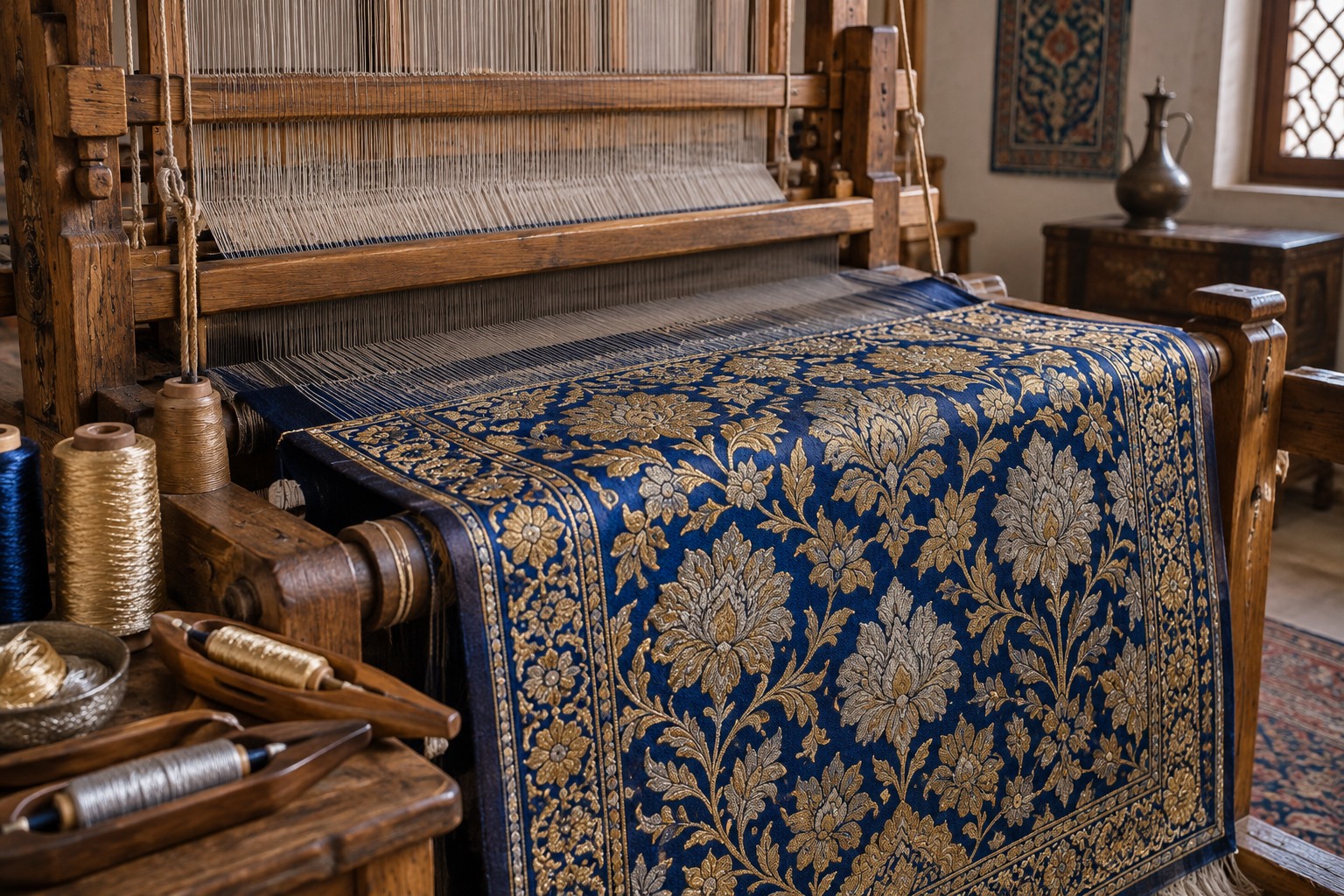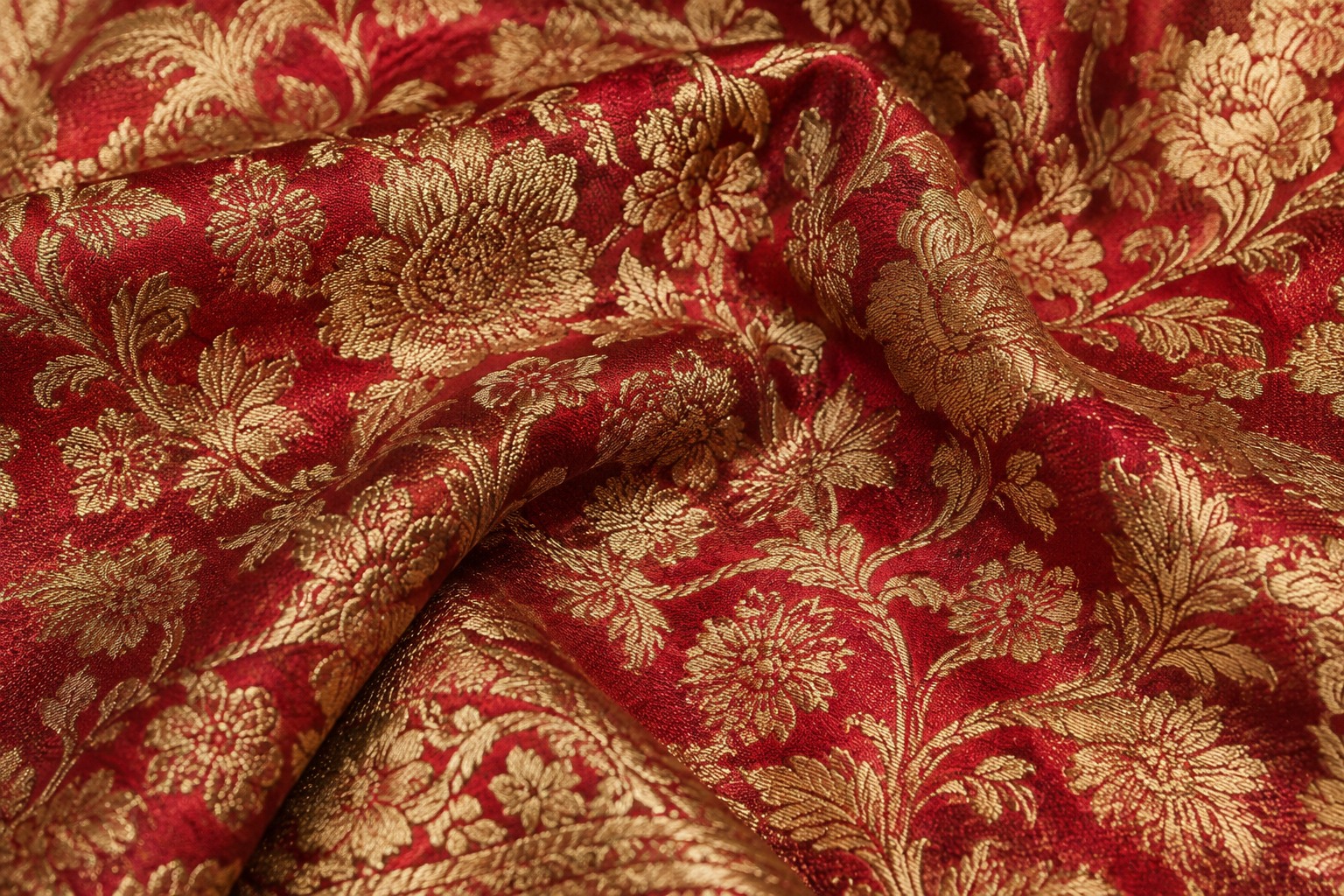
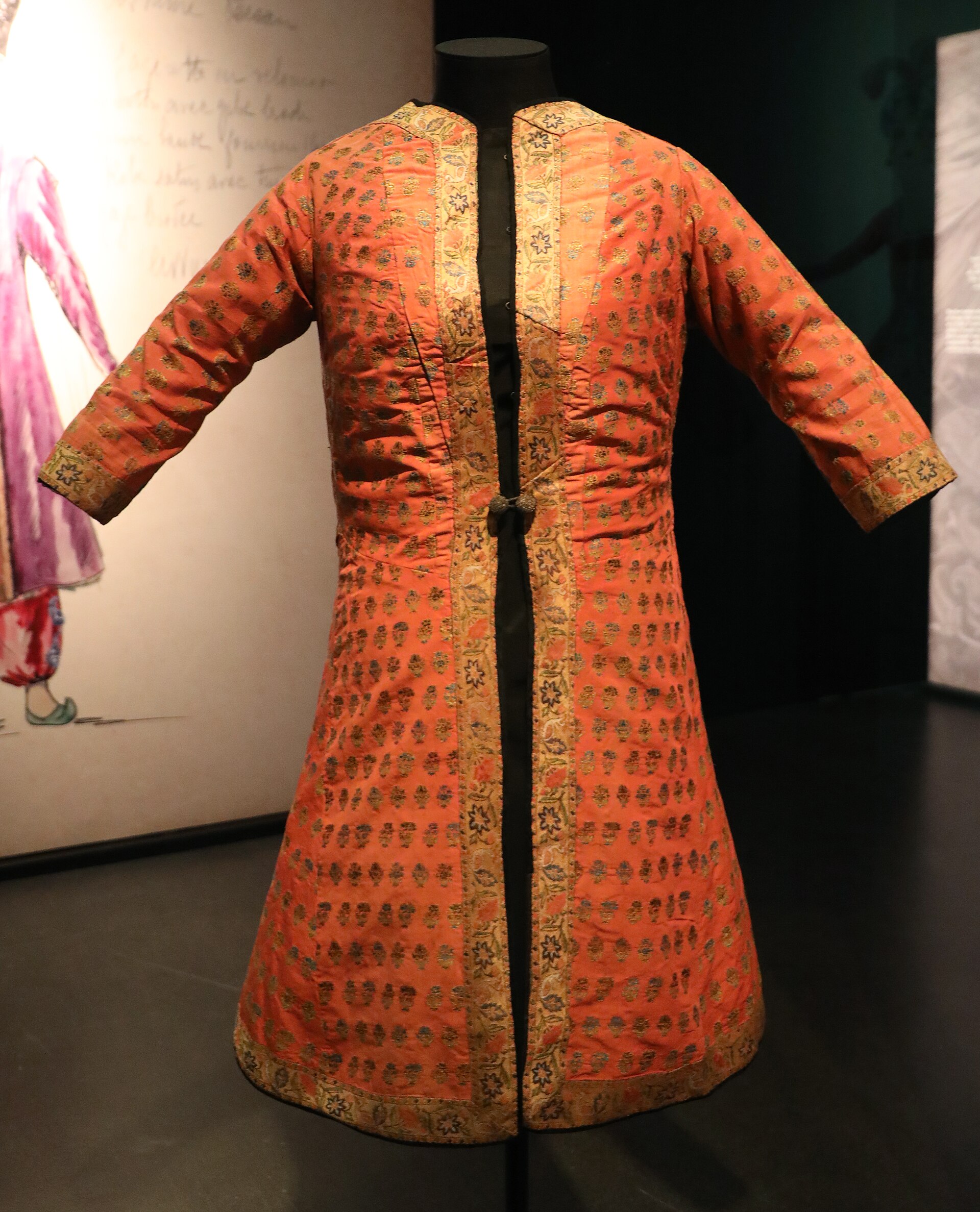
Zari brocade, known in Persian as Zari-bafi, is a revered Iranian handicraft involving the weaving of fine silk threads with genuine gold or silver filaments. This luxurious textile represents the pinnacle of zari-brocade-silk production, where precious metals are not merely applied to the surface but are integrated into the warp and weft to create shimmering, durable patterns that have defined Persian royalty for millennia.
What Exactly is Persian Zari Brocade?
In the magnificent pantheon of Iranian handicrafts, few shine as brightly as Zari-bafi. The term translates literally to 'gold weaving', a name that perfectly encapsulates its essence. This is not embroidery applied to a finished cloth; it is the art of brocade, where the gleaming metallic threads are painstakingly woven alongside silk wefts and warps on a loom to form the design. The result is a single, unified textile where the pattern is inseparable from its structure, giving it a depth and luminosity that surface decoration cannot replicate.
The craft is one among a prestigious family of Iranian textile arts that includes Termeh weaving, hand-knotted carpets, Kilim weaving, and Suzandouzi embroidery. Each holds a unique place, but Zari has historically been associated with royalty, ceremony, and supreme luxury due to its costly materials and the immense skill required for its production. Today, artisans continue this work, with masters in cities like Kashan dedicating their lives to the loom, some boasting over thirty years of experience in this demanding field.
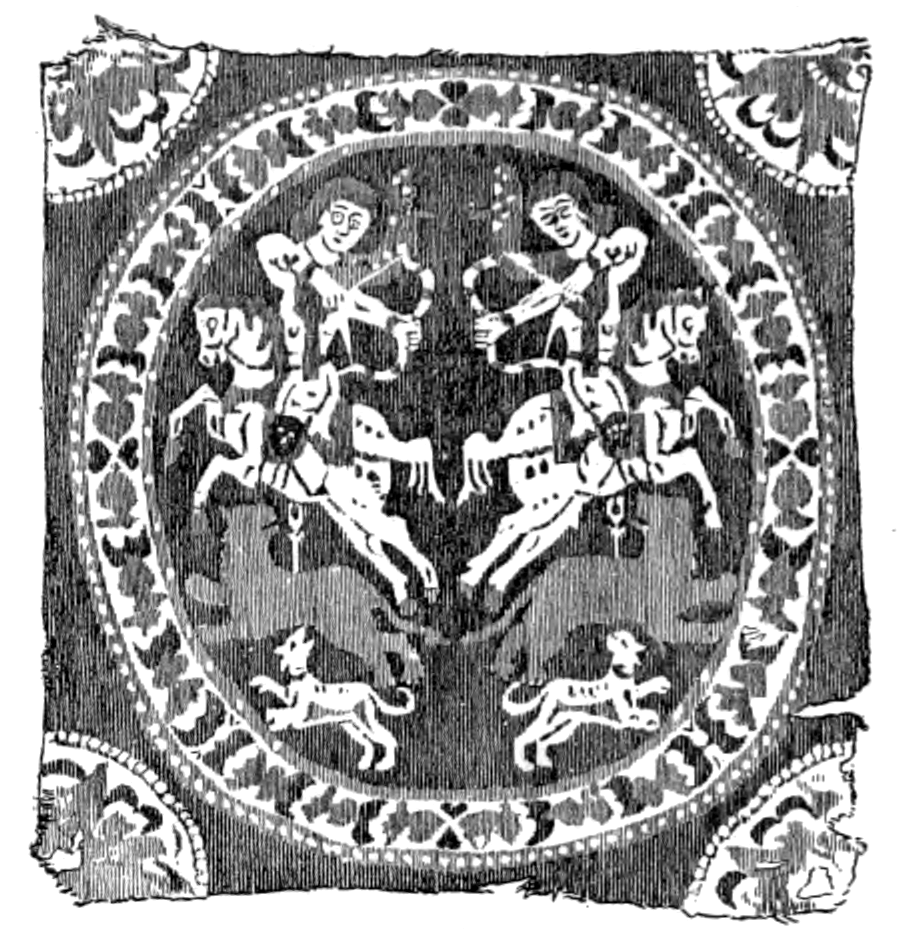
The distinction of Zari-bafi lies in its complexity compared to other zari-brocade-silk variants. While modern commercial Zari often uses synthetic metallic polyesters, authentic Persian Zari-bafi utilizes high-purity gold and silver. The density of the weave and the specific weight of the silk foundation are what separate a museum-quality Persian brocade from common decorative textiles.
A Golden Thread Through History: From Sasanian Splendor to Modern Masters
To trace the story of Zari is to journey back along the ancient Silk Road. The craft's roots are deeply entwined with the Sasanian Empire (224-651 CE), a period when Persia was a dominant force connecting East and West. The Sasanian courts were legendary for their opulence, and lustrous silk textiles were a key expression of power and wealth. Iranian Zoroastrians have been noted as crucial custodians of this Sasanian Silk Road heritage, carrying forward the traditions, stories, and skills through millennia to the present day.
“From the Sasanian Silk Road to the modern artisan's loom, Zari brocade embodies a continuous thread of Persian cultural identity and artistic excellence.”
This historical lineage elevates Zari from a mere handicraft to a cultural artifact. It represents a direct link to the artisans who clothed emperors and adorned palaces. While empires have risen and fallen, the rhythmic clatter of the Zari loom has persisted, particularly in historic weaving centers. Cities like Yazd, known for its exquisite handwoven termeh, and Kashan, which proudly celebrates its artists who pass the craft from generation to generation, remain vital hubs where this golden legacy is woven into the fabric of daily life and cultural pride.
The Weaver's Art: Materials and Techniques
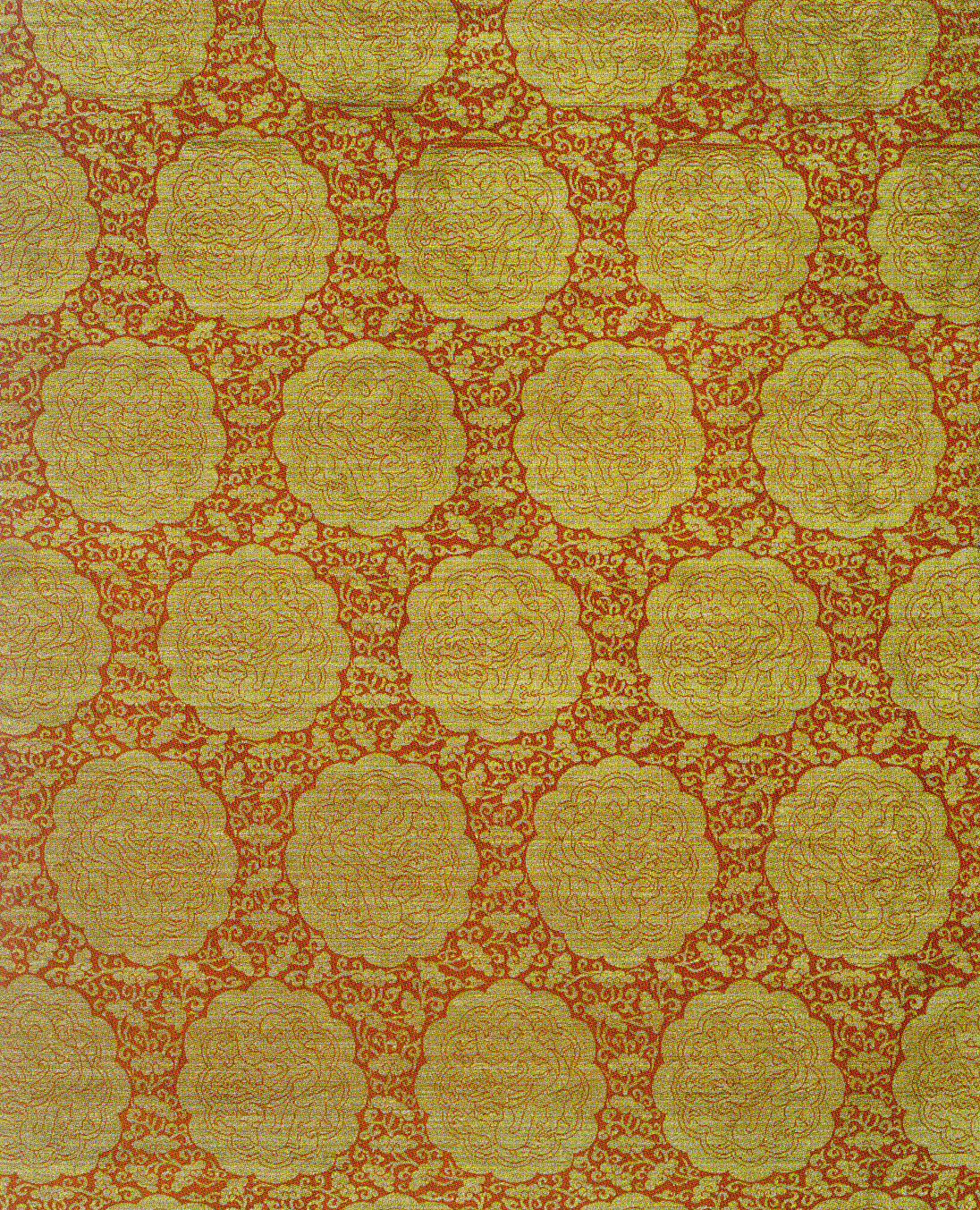
Creating Zari is a symphony of precious materials and profound skill. The foundation is typically pure silk, prized for its tensile strength, smooth texture, and ability to hold vibrant natural dyes. The 'Zari' or gold thread is crafted by winding thin strips of gold or silver around a silk core, ensuring the fabric remains flexible enough for the loom while maintaining its metallic brilliance and historical value.
- Design & Cartography: The intricate pattern, often featuring classic Persian motifs like boteh, florals, and arabesques, is first charted on graph paper.
- Warping the Loom: Hundreds, sometimes thousands, of silk threads are carefully stretched onto the hand-loom, forming the canvas of the textile.
- Preparing the Shuttles: Separate shuttles are wound with the silk background colors and the precious metallic threads.
- The Weaving Process: The weaver passes the shuttles back and forth, lifting specific warp threads according to the pattern to build the design row by meticulous row.
- Finishing: Once off the loom, the textile is inspected, and any loose threads are carefully trimmed, revealing the finished masterpiece.
| Textile | Primary Material | Defining Technique | Key Origin Center |
|---|---|---|---|
| Zari Brocade | Silk & Metallic Thread | Brocade Weaving | Kashan |
| Termeh | Silk or Linen | Handwoven (Often with 'Boteh' motifs) | Yazd |
| Persian Carpet | Wool, Silk, Viscose | Hand-knotting | Isfahan, Tabriz, etc. |
| Kilim | Wool | Flatweaving (Tapestry Weave) | Various Tribal Regions |
Where Does Zari Fit Among Iran's Famed Handicrafts?
Iran's artistic landscape is a rich mosaic of techniques passed down through generations. Zari weaving is a shining tile within this mosaic, sitting alongside other celebrated arts such as hand-knotted carpets, wood carving (Monabt-kari), and intricate embroidery (Suzandouzi). While a formal, 1,200-reed Isfahani carpet might be the piece a room is built around, a Zari textile is often the jewel within it—a shimmering symbol of refinement and deep-rooted heritage.
- Mastery in Years
- 30+
- Key Weaving Hubs
- 2+
- Core Materials
- 2
- Historical Roots
- 1500+ years
Years of experience cited by a master Zari weaver in Kashan.
Including the celebrated cities of Kashan and Yazd.
Silk and precious metallic (gold/silver) threads.
Tracing back to the Sasanian Silk Road heritage.
| name | value |
|---|---|
| Zari Brocade | 20 |
| Termeh Weaving | 20 |
| Carpet Knotting | 25 |
| Kilim Weaving | 20 |
| Suzandouzi | 15 |
How Does Zari Compare to Other Regional Silk Textiles?
Understanding Zari’s unique identity becomes clearer when compared with other celebrated silk textiles of the wider region, such as the Suzani of Central Asia. While both are treasured silk heirlooms, their construction is fundamentally different. A Suzani, from areas like Samarkand in Uzbekistan, is a form of embroidery. The base cloth—typically strips of cotton or silk—is woven first, and then the vibrant silk-thread patterns are stitched onto the surface. They were often created by women in a family for a wedding dowry and used as decorative hangings or canopies inside a yurt.
“I have been active in the field of Zari-bafi (brocade weaving) for about thirty years.”
Zari, in contrast, is a brocade. Its pattern is not an addition but an integral part of the fabric's creation on the loom. This distinction is crucial for collectors and connoisseurs. One is an art of the needle, the other an art of the loom. Both are breathtaking, but they represent different branches of the great tree of textile artistry.
| Attribute | Zari Brocade (Iran) | Suzani (Uzbekistan) |
|---|---|---|
| Technique | Brocade Weaving | Embroidery |
| Pattern Creation | Woven into the fabric's structure | Stitched onto a pre-existing base cloth |
| Key Materials | Silk & gold/silver threads | Silk threads on a cotton or silk base |
| Cultural Context | Luxury goods, courtly attire | Dowry items, wedding canopies ('bolim posh') |
The Enduring Allure and Contemporary Pulse
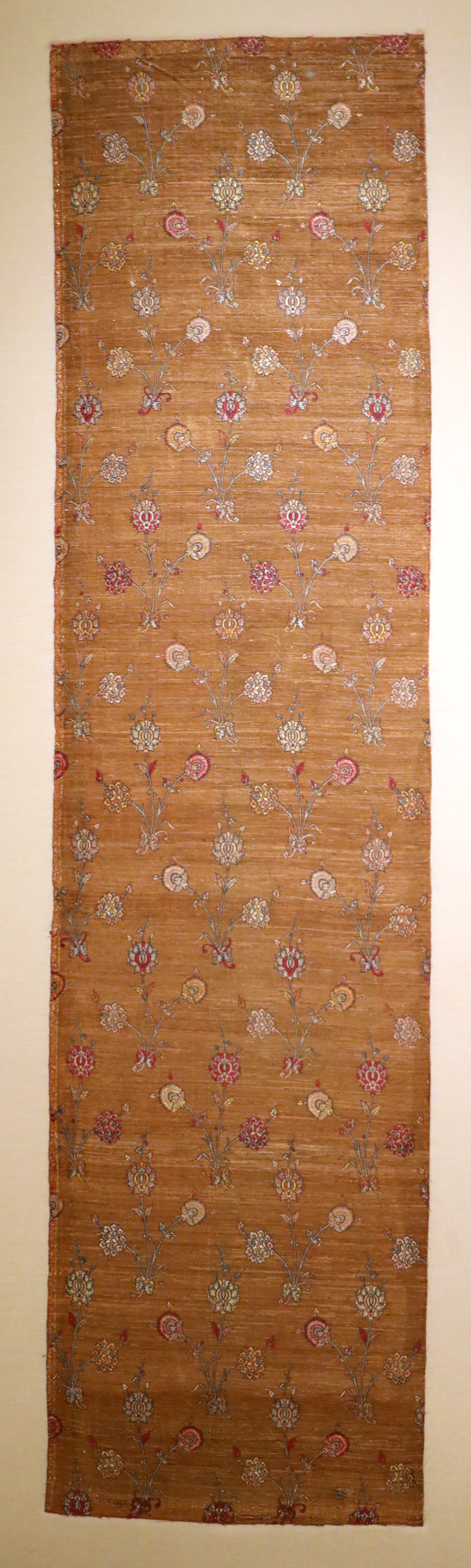
Why does an art form with ancient roots continue to captivate the modern imagination? The allure of Zari lies in its 'timeless presence'. It is a tangible connection to a history of unparalleled luxury and sophisticated artistry. In a world of fleeting trends, a piece of Zari is a statement of permanence and cultural depth. Its shimmering surface tells a story of meticulous craftsmanship, precious materials, and a heritage carefully guarded through the centuries.
Moreover, the tradition is not static. Just as designers like Shahla Dorriz create contemporary assortments of termeh, breathing new life into ancient forms, the spirit of innovation exists within the world of Zari as well. The craft's survival depends on the master artisans celebrated in Kashan and the patrons and admirers who recognize its value. By continuing to support these handicrafts, we ensure that the golden threads of Persia's past will continue to be woven into the tapestry of the future.
- Luminous Metallic Sheen: The signature characteristic, created by the woven gold or silver threads.
- Silk Foundation: A base of fine silk that provides strength and drape.
- Integral Pattern: The design is part of the fabric's structure, not printed or embroidered on top.
- Slight Irregularities: As a hand-loomed product, minor variations signal authenticity over machine production.
- Reversible Appearance: The back of the fabric often shows a 'float' or negative of the pattern, a tell-tale sign of brocade.
Frequently Asked Questions about Zari Brocade
- What is Zari-bafi?
- Zari-bafi is the traditional Persian art of gold weaving. It involves a complex process where artisans interlace fine silk threads with threads made of real gold or silver. Unlike embroidery, these metallic patterns are woven directly into the fabric on a loom, creating a prestigious textile known as Zari brocade silk.
- What is the difference between Zari and Termeh?
- While both are iconic Iranian textiles, the primary difference lies in the materials and technique. Zari-bafi specifically features gold or silver metallic threads woven into a silk base. Termeh is typically a fine wool or silk cloth featuring the 'boteh' (paisley) motif, often involving more colors but not necessarily metallic gold threads.
- Where is Persian Zari brocade silk produced today?
- The tradition of Zari-bafi is preserved in historical Iranian craft centers, most notably in Isfahan, Kashan, and Yazd. These cities host specialized workshops and heritage organizations dedicated to maintaining the ancient Sasanian weaving techniques, often supported by the Ministry of Cultural Heritage, Tourism, and Handicrafts.
- How can you identify authentic Zari-bafi?
- Authentic Persian Zari can be identified by its weight, the luster of the genuine precious metals, and the reversibility of the weave. In true Zari-bafi, the gold threads are an integral part of the structure. The metallic sheen should appear soft and deep, rather than the harsh, glittery reflection of synthetic lurex.
- What are the common motifs used in Zari-bafi?
- Zari-bafi designs often incorporate classic Persian iconography, including the 'Gol-o-Morgh' (flower and bird), 'Boteh Jegheh' (paisley), and intricate hunting scenes inspired by Safavid and Sasanian art. These motifs are mathematically mapped onto graph paper before the weaving process begins to ensure geometric precision on the loom.
Sources
- [1]Textiles-Suzani-Tapestry· knightsantiques.co.uk
- [2]Iranian Zoroastrians: Custodians of the Sasanian Silk Road Heritage to the Present· zoroastrians.net