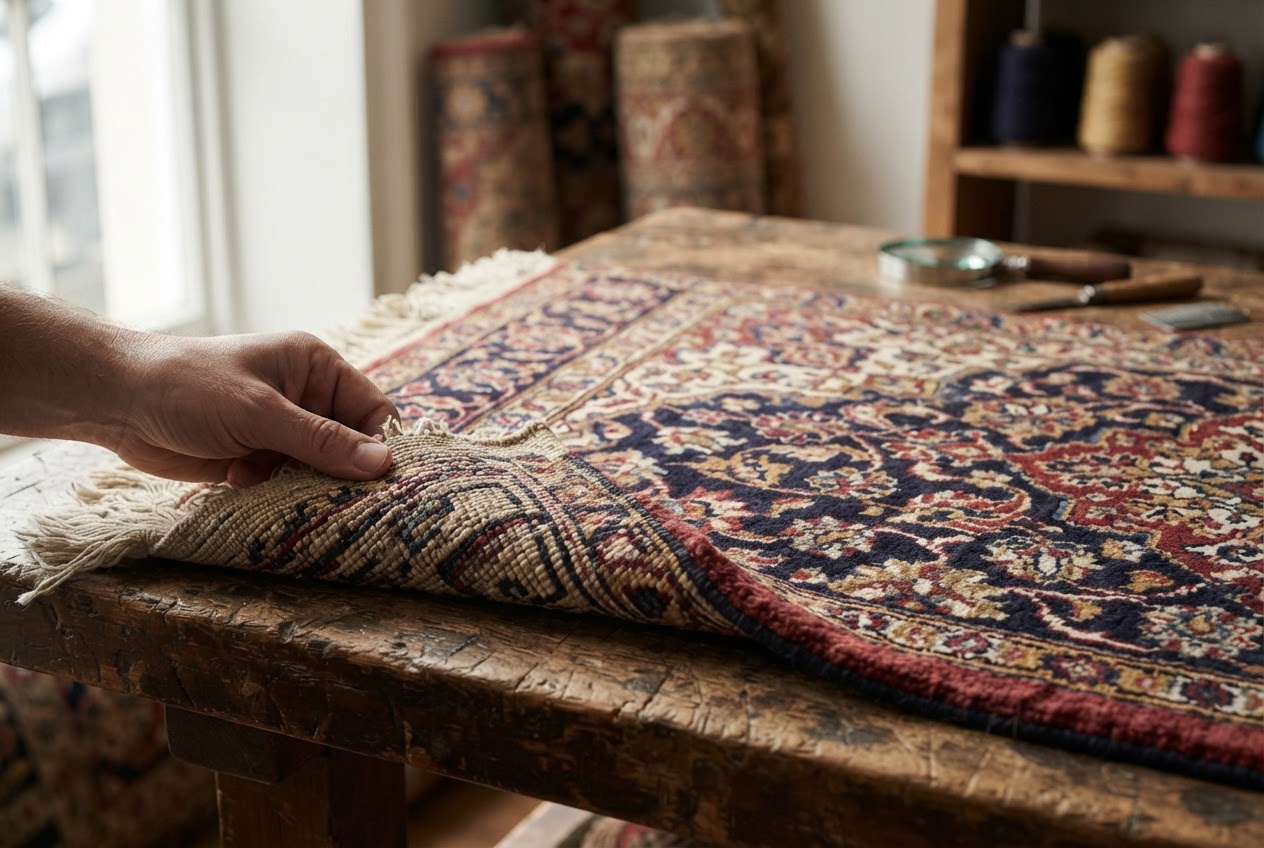
Sapere come riconoscere tappeti persiani originali richiede l'analisi comparativa di tre fattori diagnostici primari: la continuità strutturale delle frange dall'ordito, l'irregolarità microscopica dei singoli nodi visibili sul retro e la natura organica delle fibre (pura lana, seta o cotone). Un autentico manufatto dell'altopiano iranico non presenta colle, cuciture di riporto né supporti sintetici applicati.
Nel mercato internazionale dei complementi d'arte tessile, l'arte della tessitura iraniana – salvaguardata dall'UNESCO e celebrata dalle corti safavidi fin dal XVI secolo – deve costantemente difendersi dalla proliferazione di imitazioni prodotte con telai meccanici automatizzati [1]. Spesso vendute con diciture commerciali fuorvianti, le repliche industriali imitano i motivi iconografici classici dell'Iran, ma risultano prive del valore intrinseco, della durevolezza e della patina storica propri della tradizione millenaria persiana [3].
Cos'è un autentico tappeto persiano rispetto a una copia industriale?
Un autentico tappeto persiano è un'opera d'arte tessile prodotta esclusivamente entro i confini geografici e culturali dell'Iran odierno, realizzata a mano su telai orizzontali o verticali attraverso l'inserimento manuale di migliaia o milioni di singoli nodi su un reticolo di ordito e trama [3]. Al contrario, un manufatto industriale è ottenuto tramite telai meccanici moderni (come i telai Wilton o Jacquard), in cui i filati sintetici vengono pressati e incollati su una base reticolata preformata senza alcuna annodatura reale.
La differenza genealogica non risiede soltanto nel tempo di lavorazione – mesi o anni per un esemplare nobile di Kashan o Isfahan, contro pochi minuti per una pezza seriale –, ma nella conformazione microscopica della struttura tessile. Nei centri d'eccellenza iraniani, l'annodatore applica una tensione calibrata a ciascun legaccio, creando un tessuto elastico, vivo e destinato a migliorare con il calpestio e la luce naturale [2].
| Parametro d'esame | Tappeto persiano autentico (a mano) | Imitazione meccanica industriale |
|---|---|---|
| Origine delle frange | Prolungamento strutturale dei fili d'ordito | Cucite a macchina o applicate con colle viniliche |
| Definizione sul retro | Disegno netto e speculare al vello frontale | Disegno opaco, sfocato o schermato da fondo rigido |
| Uniformità dei nodi | Micro-irregolarità visibili, nodi singoli distinti | Griglia millimetricamente perfetta o assenza di nodi |
| Fibre utilizzate | Lana vergine di tosa, lana kurk, seta pura, cotone | Polipropilene, poliestere, acrilico, nylon, cascami |
| Bordi laterali (cimosa) | Affardellati e cuciti a mano con tensione variabile | Sorfilatura industriale lineare e omogenea a punto catenella |
| Flessibilità strutturale | Facilmente pieghevole e morbido lungo le linee d'ordito | Rigido, plastico, resistente alla piegatura manuale |
Come verificare il retro e la densità dei nodi sul campo?
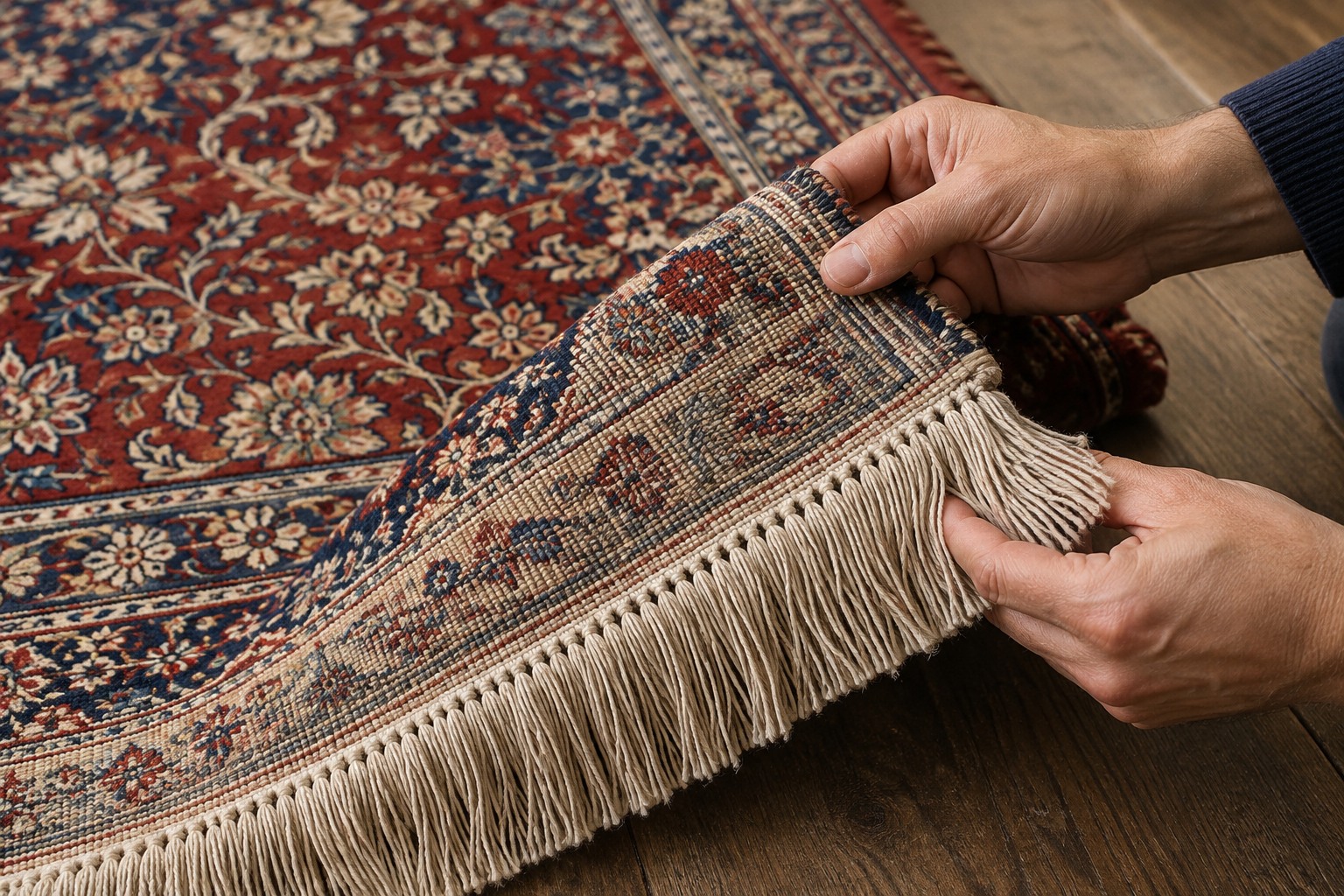
Il retro del tappeto è la vera carta d'identità dell'opera: rovesciando un angolo dell'esemplare, il disegno geometrico o floreale deve apparire con la medesima nitidezza cromatica osservabile sul dritto del vello. Se la superficie posteriore si presenta opaca, uniforme o peggio coperta da una tela sintetica incollata, ci si trova di fronte a una realizzazione seriale priva di pregio collezionistico.
Il calcolo pratico dei nodi al decimetro quadrato
Per quantificare la finezza esecutiva del tappeto, gli studiosi e i periti ricorrono al calcolo dei nodi per unità di superficie. Nella tradizione commerciale europea e anglosassone si misura il parametro KPSI (Knots Per Square Inch), mentre nella storica piazza di Tabriz si adotta il sistema del raj, che esprime il numero di nodi presenti in una lunghezza di 7 centimetri lineari.
- Munirsi di un righello di precisione millimetrata e di una lente d'ingrandimento per periti (almeno 8x).
- Posizionare il righello sul retro del tappeto lungo la direzione della trama e contare i nodi orizzontali in 10 centimetri.
- Ruotare il righello di 90 gradi lungo l'ordito e contare i nodi verticali nello stesso intervallo di 10 centimetri.
- Moltiplicare il valore orizzontale per quello verticale per ottenere la densità di nodi al decimetro quadrato (moltiplicare poi per 100 per la stima al metro quadro).
Quali materiali distinguono la pura lana e la seta dalle fibre sintetiche?
I materiali d'elezione dei maestri tessitori iraniani sono la lana vergine ovina, la lana kurk (il pregiato sottomanto pettinato dal petto e dal collo delle pecore degli altipiani) e la seta naturale coltivata nelle regioni costiere del Mar Caspio e lavorata a Yazd e Qom. I telai industriali adoperano invece polimeri sintetici derivati dal petrolio, come polipropilene, poliestere e nylon, talvolta nobilitati da trattamenti siliconici ingannevoli.
- Riflesso alla luce: la seta naturale ha una lucentezza cangiante e calda che muta intensità a seconda dell'angolo di incidenza dello sguardo; la viscosa o il poliestere presentano un riflesso bianco, uniforme e vitreo.
- Termocettività tattile: sfregando vigorosamente il palmo della mano sul vello per dieci secondi, la seta naturale e la lana pura trattengono una piacevole sensazione di calore; i filati acrilici rimangono freddi o generano micro-scariche elettrostatiche.
- Resilienza elastica del vello: comprimendo il pelo del tappeto con il pollice, la lana autentica riacquista immediatamente la sua postura eretta; la fibra chimica tende a rimanere schiacciata creando aloni antiestetici.
- Profumo organico: se leggermente inumidita, la lana persiana sprigiona una nota terrosa e animale caratteristica delle tinture vegetali naturali (radice di robbia, mallo di noce, buccia di melograno).
“Un tappeto annodato a mano respira con l'ambiente circostante: i suoi pigmenti naturali estratti da cortecce e radici maturano nel tempo senza perdere la propria armonia cromatica.”
Perché le frange e la cimosa svelano l'origine artigianale?
Le frange costituiscono l'elemento rivelatore più immediato ed evidente per smascherare un falso. In un tappeto persiano originale, le frange non sono un accessorio estetico applicato sul perimetro al termine della lavorazione, ma rappresentano i capi scoperti dell'ordito longitudinale che è stato teso sul telaio prima che il maestro iniziasse l'annodatura.
Nelle imitazioni prodotte a macchina, l'ordito è interno e sintetico: le frange decorative vengono cucite separatamente sulla testata del tappeto con punti a catenella visibili a occhio nudo, oppure vengono fissate mediante nastri adesivi industriali. Inoltre, i bordi laterali (chiamati cimose o shirazi) nei veri manufatti persiani sono arrotolati e consolidati a mano con filo di lana tono su tono, manifestando leggere variazioni di calibro che testimoniano l'intervento umano.
- Nodi minimi
- 100.000
- Eccellenza urbana
- > 800.000
- Tradizione documentata
- 2.500 anni
- Coloranti naturali
- 100%
Nodi al mq per manufatti tribali rustici
Nodi al mq per capolavori di Isfahan e Nain
Dall'era achemenide al tappeto di Pazyryk
Estratti botanici nei manufatti d'alta scuola
Quali sono le caratteristiche regionali delle città storiche della Persia?
L'Iran vanta scuole stilistiche regionali profondamente distinte, ciascuna con schemi compositivi, tavolozze cromatiche e tecniche di nodo caratteristiche [2]. Dal raffinato medaglione centrale ispirato alle cupole delle moschee di piazza Naqsh-e Jahan a Isfahan, fino alle geometrie arcaiche dei nomadi Qashqai attorno a Shiraz, ogni distretto possiede tratti univoci.
| Città / Regione | Tipologia di nodo prevalente | Composizione dell'ordito | Motivi iconografici ricorrenti |
|---|---|---|---|
| Isfahan | Senneh (asimmetrico/persiano) | Seta o cotone finissimo | Medaglioni centrali, volute floreali <em>islimi</em>, alberi della vita |
| Tabriz | Ghiordes (simmetrico/turco) | Cotone robusto o seta | Campi policromi, cacciate reali, versi poetici dei maestri |
| Kashan | Senneh (asimmetrico) | Cotone a trama ritorta | Rosone ovale safavide, bordure a palmette, rosso cupo e blu |
| Nain | Senneh (asimmetrico) | Cotone finissimo o seta | Campo avorio e blu indaco, arabeschi sottili profilati in seta |
| Shiraz / Fars | Ghiordes o Senneh rustico | Pura lana di pecora | Figure stilizzate di uccelli, rombi concentrici, motivi tribali |
“Ogni nodo impresso sul telaio verticale racconta l'eredità artistica che dalla dinastia Safavide fino all'epoca Qajar ha trasformato l'Iran nella culla insuperata dell'arte tessile mondiale.”
Dove e come acquistare un manufatto persiano con garanzia di autenticità?
L'acquisto di un tappeto d'oriente richiede la massima cautela, poiché il mercato secondario e le vendite promozionali temporanee celano frequentemente pezzi industriali turchi, indiani o cinesi etichettati erroneamente come autentica manifattura persiana [3]. Un operatore professionale serio deve essere in grado di fornire un certificato di autenticità dettagliato contenente la stima dell'epoca, la regione d'origine e la densità accertata.
Domande frequenti sul riconoscimento dei tappeti persiani autentici
- Come si riconosce se un tappeto persiano è autentico a prima vista?
- La prima verifica consiste nel sollevare il tappeto e guardare il retro: le frange devono uscire spontaneamente dalla trama dell'ordito senza cuciture sovrapposte. Il disegno sul retro deve apparire chiaro e ben definito, con nodi leggermente irregolari che testimoniano la maestria manuale dell'annodatore persiano.
- Qual è la differenza principale tra tappeto persiano e tappeto orientale?
- Il termine 'tappeto orientale' è una vasta categoria geografica che comprende manufatti provenienti da Cina, India, Turchia, Pakistan e Caucaso. Il 'tappeto persiano' designa unicamente i pezzi tessuti a mano entro i confini storici dell'Iran, rinomati per le loro tecniche di annodatura superiori e tinture naturali.
- Come capire se il vello del tappeto è in vera seta o fibra sintetica?
- La vera seta persiana offre riflessi caldi che mutano in base alla luce e trattiene il calore se strofinata rapidamente con il palmo. Le fibre sintetiche presentano una lucentezza plastica fredda, provocano elettricità statica e bruciando fondono in perle di plastica dura anziché produrre cenere friabile.
- Cosa significa il termine raj nei tappeti persiani di Tabriz?
- Il raj è l'unità di misura tradizionale della densità usata a Tabriz, corrispondente al numero di nodi contati lungo 7 centimetri. Un tappeto da 40 raj è di buona fattura media, mentre manufatti da 60 a 80 raj rappresentano vette di altissimo collezionismo con oltre un milione di nodi al metro quadro.
- Le piccole imperfezioni nel disegno svalutano il tappeto persiano?
- Tutt'altro: lievi asimmetrie nel disegno o leggere variazioni di sfumatura di colore (chiamate abrash) costituiscono la prova inconfutabile dell'annodatura manuale e dell'impiego di diversi lotti di lana tinta con bagni vegetali tradizionali, accrescendone il fascino autentico e il valore storico.
- Perché le frange non devono mai essere incollate o cucite?
- In un autentico manufatto iranico le frange costituiscono l'ossatura portante (l'ordito) su cui poggiano i nodi. Se le frange sono cucite con una macchina da cucire o fissate sul retro tramite colla sintetica, il tappeto è inequivocabilmente una replica di produzione industriale.
Sources
- [1]Under fire, Iran’s carpet weavers fight to keep an ancient art alive· The European
- [2]Persian Rug Styles Explained: Types, Patterns, and Regional Designs· Afra Rugs
- [3]Persian vs Oriental rugs: the difference· Carpeteria