Xene Gallery

波斯地毯鉴赏指南:探索伊朗手工编织艺术的千年历史与收藏价值

从大不里士的诗意图景到伊斯法罕的皇室传统,深度解析世界顶级手织艺术的精髓与选购技巧。

Tonbak, a Persian percussion instrument.
Image: https://www.flickr.com/photos/dynamosquito · CC BY-SA 2.0

波斯地毯是一种起源于古代波斯(现伊朗)的手工编织纺织品,其历史可追溯至两千多年前[7]。这些杰出的艺术品不仅通过游牧部落、乡村作坊以及皇室工场在世界各地流传[4],更以其复杂的手工打结技术、天然染料以及融合波斯诗歌与历史的精美图案而闻名于世[1]。每一条正宗的波斯地毯都承载着工匠数月甚至数年的心血,是波斯艺术、工艺与文化遗产的持久表现[7]。

波斯地毯的起源与核心价值是什么?

波斯地毯的艺术性深深扎根于伊朗的土地与历史中。这种手织艺术被公认为最精致的室内元素之一,广泛应用于皇室宫殿、博物馆及杰出的私人住所[7]。不同于工厂大规模生产的廉价替代品,正宗的波斯地毯是天然纤维(如优质羊毛和丝绸)与古老技艺的结晶。正如研究指出,一些地毯甚至改变了世界艺术的进程[3]。


探索波斯地毯的主要产地与风格差异

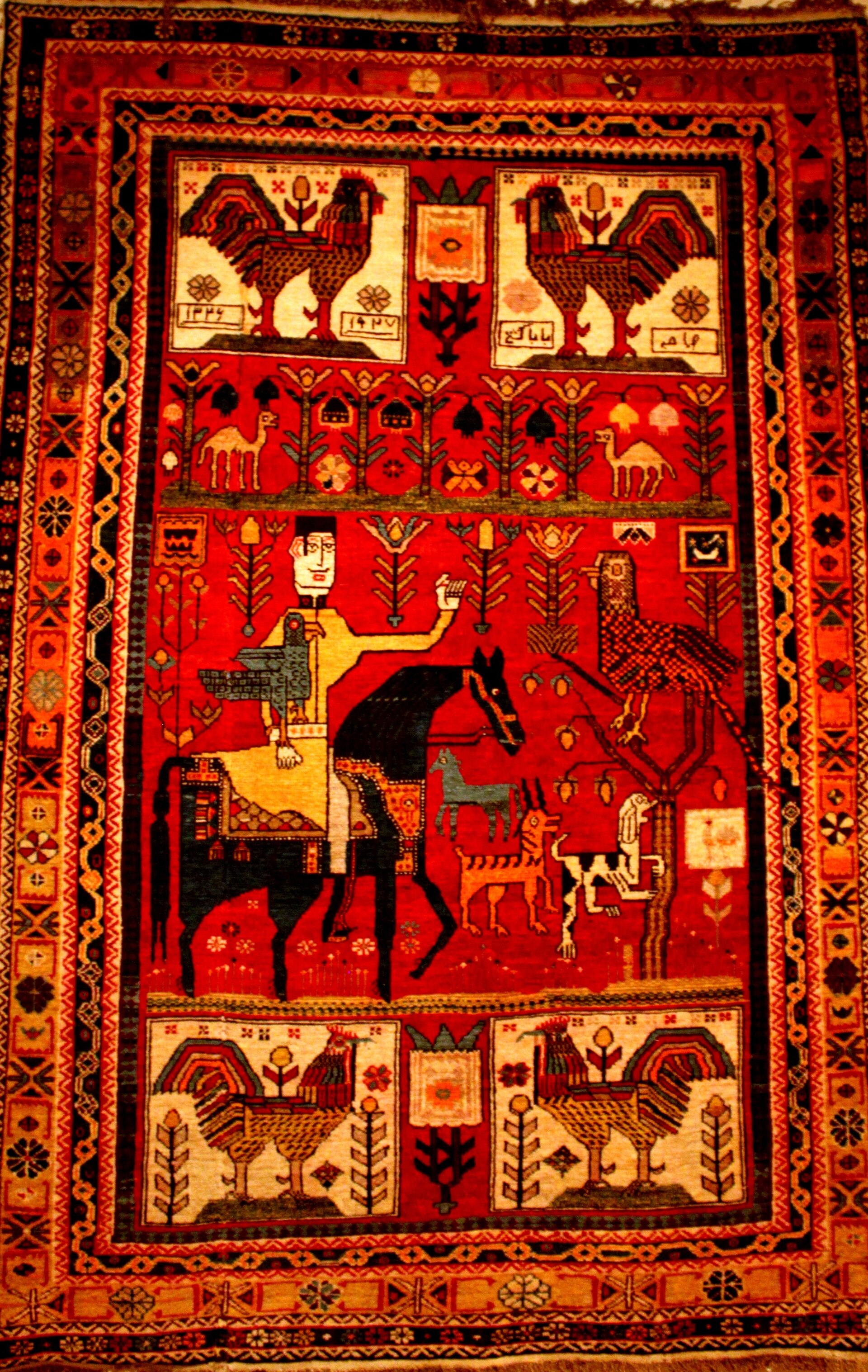
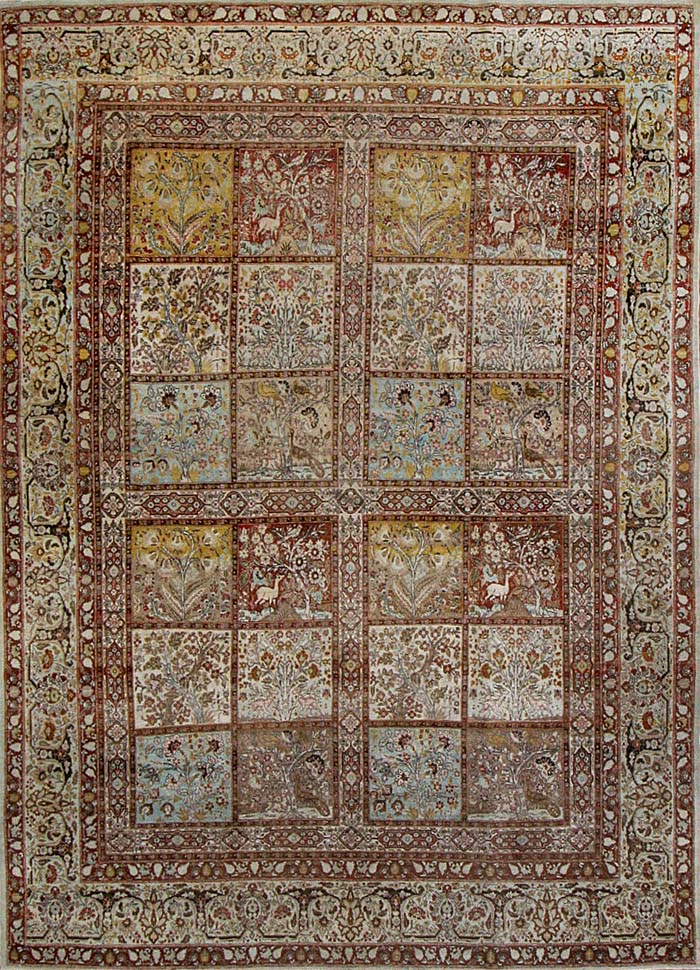
在波斯地毯的长卷中,地理环境决定了审美的表达方式。大不里士 (Tabriz) 是其中最古老且最负盛名的编织中心之一,其传统可追溯至500多年前[3]。大不里士的设计往往从波斯诗歌和历史英雄故事中汲取灵感,常见精细的人物肖像和叙事场景[1]。

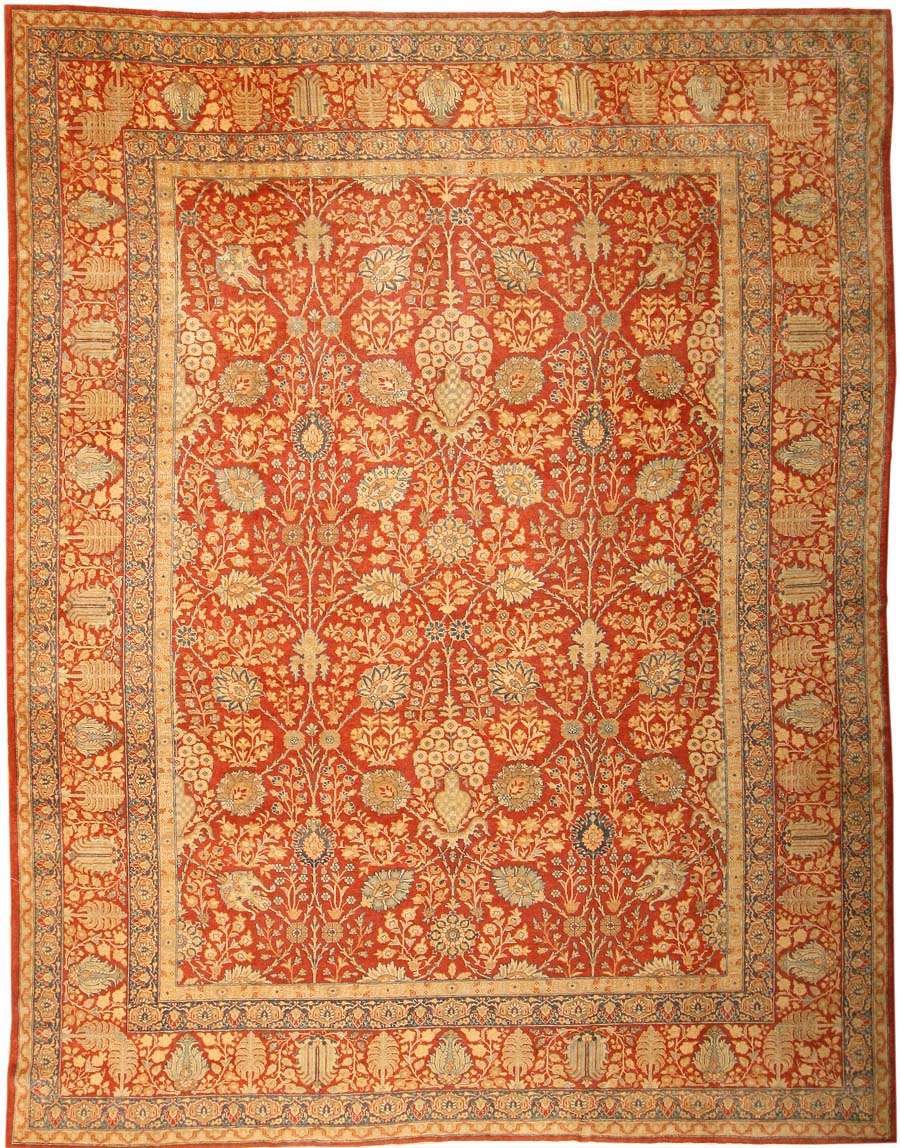
与此同时,伊斯法罕 (Isfahan) 的作品以其平衡感和皇室气度著称。这类地毯常使用复杂的奖章图案(Medallions)以及受萨法维王朝建筑启发的阿巴斯大帝 (Shah Abbasi) 花卉图案[5]。

波斯地毯的标志性产地
  • 大不里士 (Tabriz):以高精度的打结和文学叙事图案闻名[3]。
  • 伊斯法罕 (Isfahan):追求完美的对称与极为细致的线条设计[2]。
  • 卡尚 (Kashan):经典的奖章风格与深红色的标志性运用[2]。
  • 库姆 (Qom):以纯丝绸制造闻名,现代感强且光泽夺目[2]。
  • 赫里斯 (Heris):图案更具几何感,风格粗犷且极其耐用[2]。
  • 比贾尔 (Bidjar):被称为波斯的“铁毯”,编织紧密,结实程度无与伦比[2]。
主要产地工艺与特征对比表
产地 (Region)常见材质核心图案风格典型特征
大不里士羊毛 / 丝绸叙事场景、猎场图案500多年历史,文学性强
伊斯法罕高等级羊毛 + 丝绸经纬奖章 (Medallion)、Shah Abbasi皇室风范,对称完美
库姆纯丝绸花卉、生命之树质地极薄,适合壁挂收藏
比贾尔粗羊毛几何、微型画极高密度,被称为“铁毯”
基于历史传承与产地分布的波斯地毯特征对比[2][3][5]

为什么图案设计在波斯地毯中至关重要?

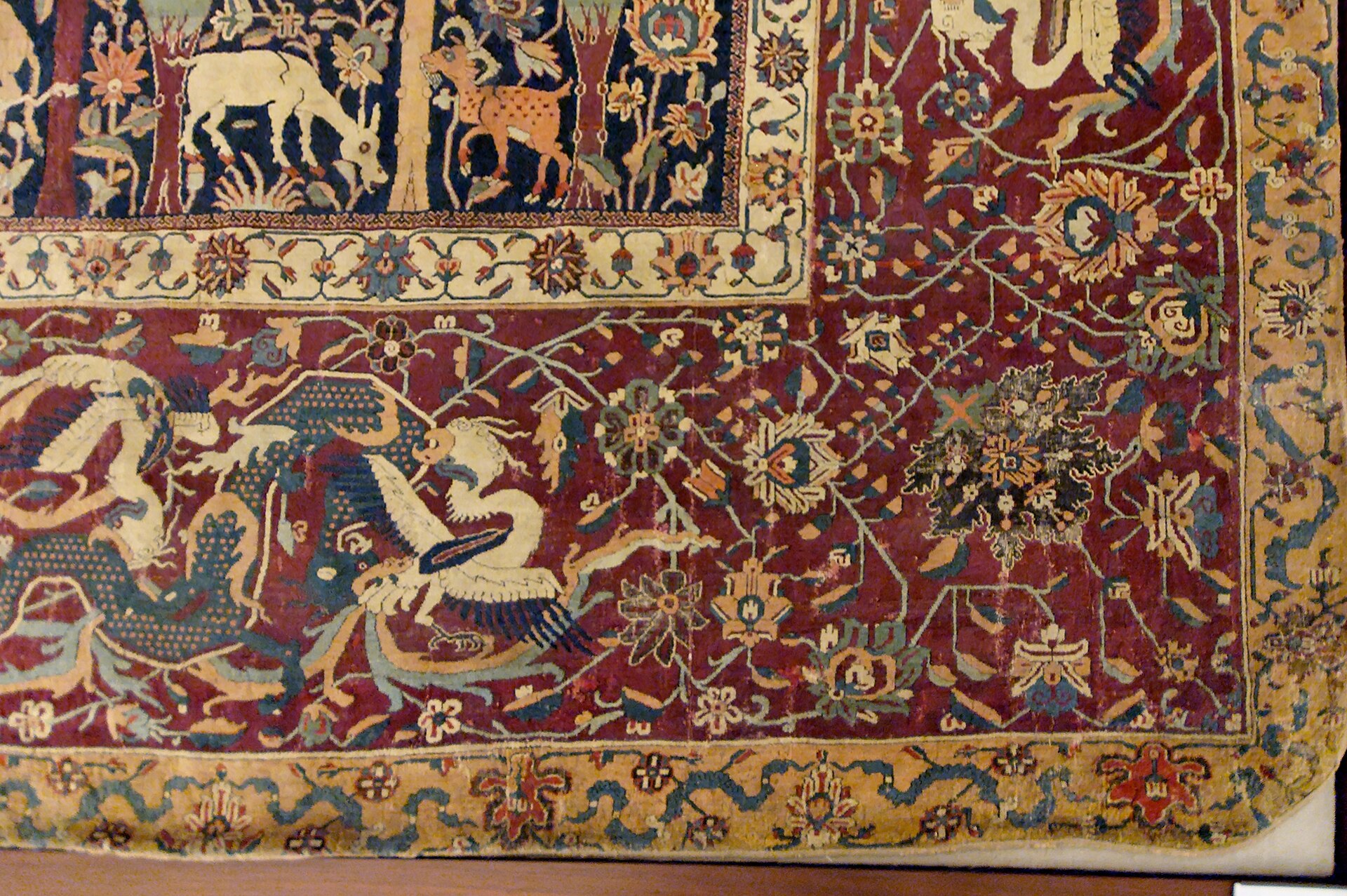
波斯地毯的图案并非随机的排列,而是富有深意的视觉语言。最著名的阿巴斯大帝 (Shah Abbasi) 图案代表了波斯艺术的高峰,它以优雅的棕榈叶和蔓藤花卉为特色[5]。此外,设计本身也在进化。例如,著名匠人 Mohammad Ali Seirafian 在1955年访问伊拉克和黎巴嫩后,开发出了全新的艺术设计,推动了伊斯法罕地毯的现代变革[2]。

Tonbak, a Persian percussion instrument.
TOM.BAK · https://www.flickr.com/photos/dynamosquito · CC BY-SA 2.0

每一根线条都在讲述一个故事,每一块颜色都承载着一段历史。

iFILM English 关于波斯艺术的评论 [4]

如何鉴别正宗的手工波斯地毯?

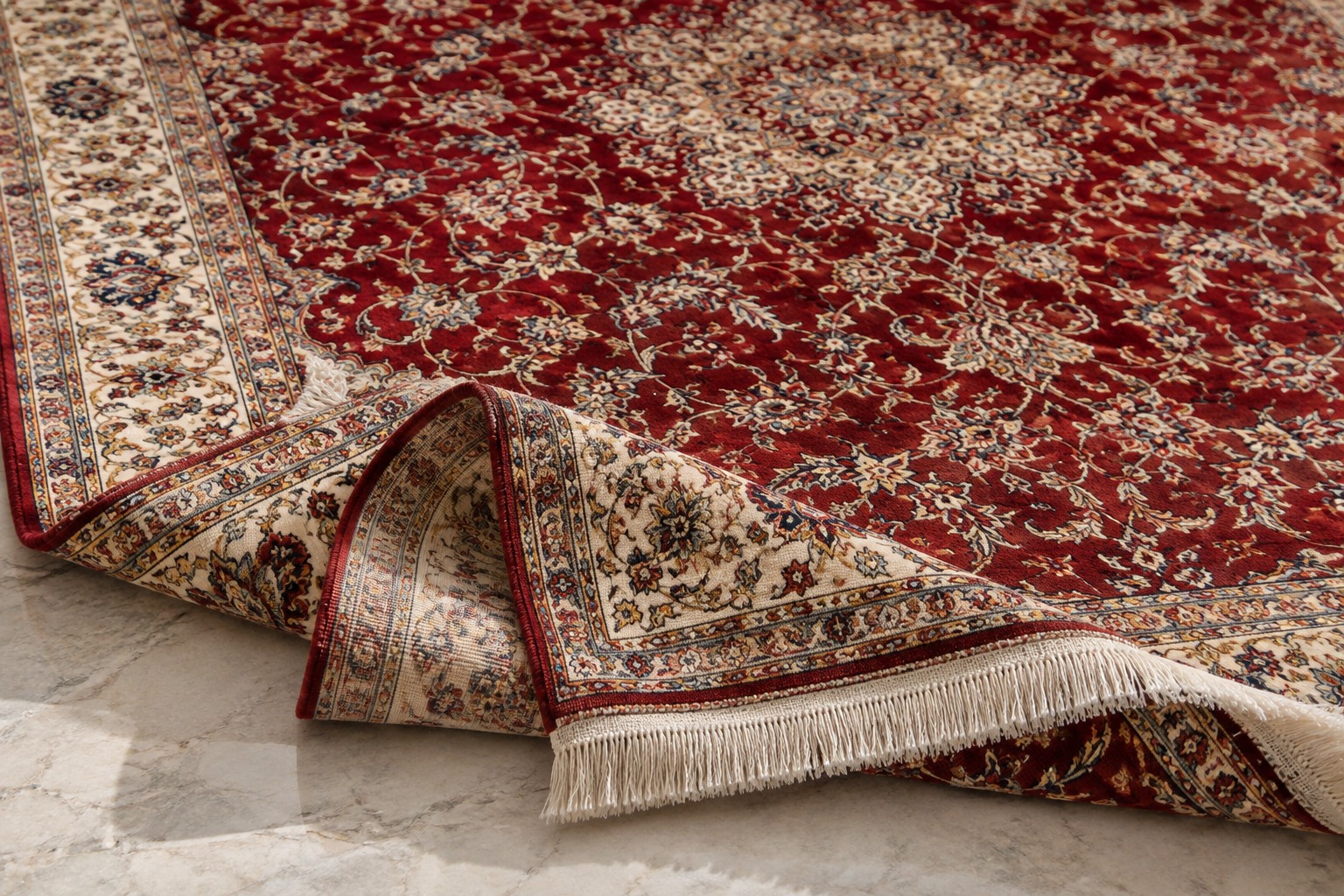
对于新手收藏者来说,分辨正宗波斯地毯与机织地毯至关重要。首先观察地毯背面:手工地毯的结通常会有微小的不规则性,这是人手的痕迹,而机器编织的背面则完美得近乎呆板[7]。其次,检查边缘。正宗地毯的流苏是经线(竖向纤维)的延伸,而非后期缝合上去的[7]。

波斯地毯行业关键数据
大不里士中心历史
500+

单一地毯制作时长
数年

视复杂程度而定

经典产地数量
10+

主要知名核心产区

收藏退换保障
31

天(国际主流标准)

判别年份与价值的要素

判别波斯地毯的年龄是收藏家最关心的问题之一[8]。古董地毯的色彩往往更加柔和,这是天然染料经过数十年光照自然氧化的结果。随着时间的推移,优质的手工毯不仅不会损耗,反而会因为“踏光”效应产生迷人的光泽,增加其长期收藏价值[7]。

Soudeh asked me to generate portraits mosaic of attendants of 3rd Iranian Flickr Gathering in Hamadan. I know, I'm too late ;) We were 33 persons, from 7 to 58 years, from Tehran, Isfahan, Mashhad, Hamadan, Tabriz, Paris (France), and Vienna (Austria). My other photos of this gathering can be found here and all gathering photos can be found here. This photo was added to flickr explore (interestingness) of 27 August 2006. About Hamadan (from this sorce by HORIZON, originally from WikiPedia): more information: en.wikipedia.org/wiki/Hamedan Hamedan is the capital city of Hamadan Province of Iran. It had an estimated population of 550,284 in 2005. Hamadan is believed to be amongst the oldest Iranian cities and one of the OLDEST in the world. Hamadan is a green mountainous area on the foothills of the 3574-meter Alwand Mountain,in the mid west of Iran. The city is 1850 meters above sea level. The special nature of this old city and its historic sites attract tourists during the summer to this city, located approximately 400km southwest of Tehran. History Golden Rhyton from Iran's Achaemenid period from Ecbatana. National Museum of Iran.Hamadan has a distinguished place among all historical cities of Iran and geographically located at 34°51'N 48°31'E.Some historians believe that Hamadan's construction dates back to 3000 BC and according to an inscribtion from the first Assyrian king , it is aributed to 1100 BC. Hamadan was established by the Medes, and was the capital of the Median empire. It became then one of the multiple capital cities of the Achaemenid Dynasty and it has been referred to by several name variations throughout its long history, namely: Ecbatana (Median), Ecbatana (classical Greek rendition of Hagmatana) and several corruptions or mispronunciations of the previous two in subsequent centuries. During the Parthian era, Ctesiphon was the capital of the country, and Hamadan the summer capital and residence of the Parthian rulers. After the Parthians, the Sassanids constructed their summer palaces in Hamadan. In the year 633 the war of Nahavand took place and Hamadan came into the hands of the muslim Arabs, at times it thrived and at times it witnessed poverty. During the Buwayhids , it suffered much damage. In the 11th century, the Seljuks shifted their capital from Baghdad to Hamadan. The city of Hamadan which was always assaulted by the rise and fall of powers, was completely destroyed during the Timurid invasion. During the Safavid era the city thrived. Thereafter, in the year 18th century, Hamadan was surrendered to the Ottomans, but due to the courage and chivalry of Nadir Shah Afshar, Hamadan was cleared off the invaders and according to the peace treaty between Iran and the Ottomans , it was returned to Iran. The city of Hamadan lay on the Silk Road and even in the last centuries enjoyed good prospects in commerce and trade being on the main road network in the western region of the country. Climate Hamadan province lies in a temperate mountainous region to the east of Zagros. The vast plains of the north and northeast of the province are influenced by strong winds, that almost last throughout the year. The various air currents of this region are: the north and north west winds of the spring and winter seasons, which are usually humid and bring about rainfall. The west-east air currents that blow in the autumn, and the local winds that develop due to difference in air-pressure between the elevated areas and the plains, like the blind wind of the Asad Abad region. Hamadan being in the vicinity of the Alvand mountains has a cold, mountainous climate, with snowy winters. In fact it is one of the coldest cities in Iran. The temperature may drop below -30 °C on the coldest days. Heavy snowfalls are common during winter. Summer is short , and the weather is mild and pleasant and mostly sunny. Culture An example of a traditional Rug of Hamedan.Hamadan is also home to many poets and cultural celebrities. The city is also said to be among the world's oldest continuously inhabited cities. Handicrafts Hamadan has always been well-known for handicrafts like leather and ceramic work as well as for its beautiful carpets. Iran's Cultural Heritage Organization lists 207 sites of historical and cultural significance in the city of Hamedan alone. Legend has it that the biblical Esther is buried in Hamedan. The scientist and writer known in the west as Avicenna (Abu Ali Sina) is buried in Hamedan. The 11th century Persian poet Baba Taher is also interred in Hamedan. Contemporary Culture People of Hamedan are very proud of their old history. Another source of their pride is Avicenna (aka Bouali, Buali, Ebn-e-sina, Pur-e-Sina) who is buried in Hamedan. In Hamedan, you can find primary schools, secondary schools, high schools, colleges, and the main city's university names after him. Also, there are many shops and businesses named after him. The main street of Hamedan is also named Bouali. Bouali Street is a very busy one and in fact, a favorite pastime of Hamedanians is to troll up and down the street where they frequently bump into their acquaintances. Attractions Avicenna (Abu Ali Sina) Ibn Sina mausoleum Baba Tahir Mausleum Ali Sadr Cave Gonbad-e Alavian Ganj Nameh Hamedan Stone Lion Estakhr e Abbas Abad (an over-the-hill lake with a magnificent view to the city Nazari House Hamedan Museum of Natural History Excavated Ancient Ecbatana City Sister cities: Kulyab, Tajikestan
Mosaic of Hamadan Gathering · Hamed Saber · CC BY 2.0
波斯地毯不同流派的艺术关注点
各流派在艺术维度上的侧重对比(数值基于工艺特征评分)

波斯地毯常见的传统图案有哪些?

图案是识别波斯地毯身份的关键。以下是几个最具代表性的视觉元素:

核心视觉元素
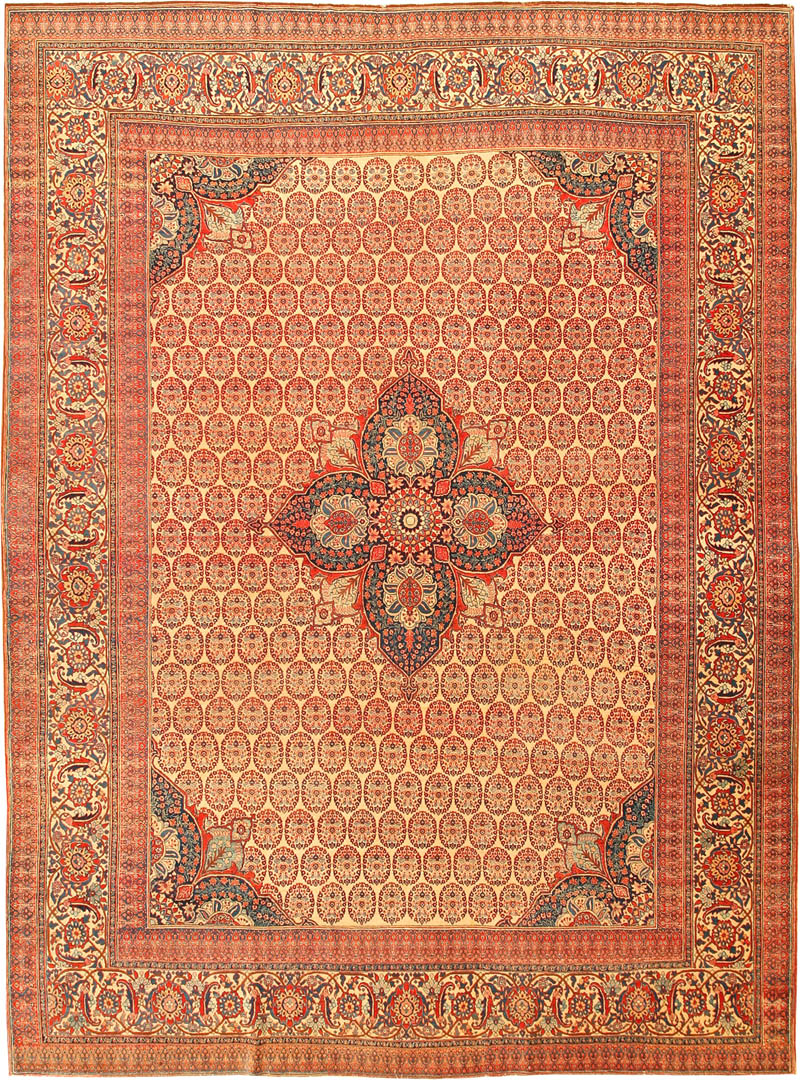
  • 奖章 (Medallions):位于中心的大型装饰性图案,通常象征着穹顶或宇宙中心[5]。
  • Shah Abbasi:以棕榈叶、莲花和葡萄藤为主要元素的优雅图案[5]。
  • 生命之树:象征着永生与人类与天堂的连接。
  • 博泰 (Boteh):形似水滴或梨的经典图案,是现代腰果花纹的鼻祖。
  • 猎场场景:描绘萨法维王朝时期贵族狩猎的生动画面[1]。

为什么收藏家愿意为波斯地毯支付高价?

波斯地毯的溢价来源于其唯一性。由于是全手工制作,世界上不存在完全相同的两张波斯地毯[7]。从原材料的筛选(如冬天采集的高山羊毛)到极其复杂的染色工艺,每一个环节都不可复制。此外,作为一种可以传承的资产,古董地毯的历史底蕴和文化连接感也是其魅力所在[8]。

Qom is located beside the desert at 140 km south of Tehran with the height of 930 m above the sea level in an arid region. It enjoys a desert and semi-desert climate. Summer is warm and arid and winter is nearly cold in this city. Qom consists of 5 parts as "Jafarabda", "Khalajestan", "Salafchegan", "Kahak", "Markazi", one city and 9 rural districts. This city is the 8th populous city after Tehran, Mashhad, Isfahan, Tabriz, Karaj, Shiraz, Ahvaz and second religious city after Mashhad and also one of the main centers of Silk Carpet, Sweets and Sohan production in Iran and all around the world located among Iran transportation roads which connect the industrial cities to Tehran, on one hand, and link the southern provinces and cities of Iran to the northern ones, on the other hand. Qom, one of the most significant desert towns, is of the main poles of developing pilgrimage tourism in Iran.
عکس قم ایران از دریچه دوربین کلانشهرهای ایرانی مصطفی معراجی تصاویر ایران زمین با کیفیت مجوز کریتیو کامانز 02 · Mostafameraji · CC BY-SA 4.0

有些地毯很美,而另一些则改变了地毯的编织历史。

Instagram 艺术评论家 [3]

关于波斯地毯的常见问题解答

手工编织地毯和机器制造地毯有什么区别?
最核心的区别在于地毯背面的结构和边缘。手工地毯的背面结节略显不规则,体现了人工的精细度,且流苏由经线自然延伸。机织地毯背面完美整齐,流苏通常是额外缝合的,材质也多为合成纤维而非天然羊毛或丝绸。
大不里士地毯为什么在收藏界地位如此之高?
大不里士拥有超过500年的编织传统,是波斯艺术的摇篮。其设计不仅限于几何图案,更多地融入了波斯文学、诗歌和历史人物,这种极高的叙事性和精密的打结技术使其成为拍卖场上的宠儿。
天然染料和合成染料对地毯价值有何影响?
天然染料源自植物、矿物或昆虫,虽然色泽随时间微调,但具有迷人的层次感和稳定性。合成染料在地毯使用几十年后可能出现渗色或色彩干枯。天然染料是高价值波斯地毯的标配,也是古董地毯价值的来源。
如何确定一张波斯地毯的年龄?
判断年龄通常依据染料的类型、图案的演变以及羊毛的磨损状态。古董地毯通常呈现出一种经过时间洗礼的柔和色调,且织造技艺往往带有特定时代的艺术倾向。专业的评估师会通过背面的氧化程度和纤维磨损来判断其大致年份。
波斯地毯日常应该如何保养?
建议避免阳光直射以防褪色,定期进行温和的除尘处理。如果有液体倾倒,应立即用吸水纸巾吸干,避免揉搓,并交由专业的波斯地毯清洗专家处理,以免损坏天然纤维和染料。
Qom is located beside the desert at 140 km south of Tehran with the height of 930 m above the sea level in an arid region. It enjoys a desert and semi-desert climate. Summer is warm and arid and winter is nearly cold in this city. Qom consists of 5 parts as "Jafarabda", "Khalajestan", "Salafchegan", "Kahak", "Markazi", one city and 9 rural districts. This city is the 8th populous city after Tehran, Mashhad, Isfahan, Tabriz, Karaj, Shiraz, Ahvaz and second religious city after Mashhad and also one of the main centers of Silk Carpet, Sweets and Sohan production in Iran and all around the world located among Iran transportation roads which connect the industrial cities to Tehran, on one hand, and link the southern provinces and cities of Iran to the northern ones, on the other hand. Qom, one of the most significant desert towns, is of the main poles of developing pilgrimage tourism in Iran.
عکس قم ایران از دریچه دوربین کلانشهرهای ایرانی مصطفی معراجی تصاویر ایران زمین با کیفیت مجوز کریتیو کامانز 03
Qom is located beside the desert at 140 km south of Tehran with the height of 930 m above the sea level in an arid region. It enjoys a desert and semi-desert climate. Summer is warm and arid and winter is nearly cold in this city. Qom consists of 5 parts as "Jafarabda", "Khalajestan", "Salafchegan", "Kahak", "Markazi", one city and 9 rural districts. This city is the 8th populous city after Tehran, Mashhad, Isfahan, Tabriz, Karaj, Shiraz, Ahvaz and second religious city after Mashhad and also one of the main centers of Silk Carpet, Sweets and Sohan production in Iran and all around the world located among Iran transportation roads which connect the industrial cities to Tehran, on one hand, and link the southern provinces and cities of Iran to the northern ones, on the other hand. Qom, one of the most significant desert towns, is of the main poles of developing pilgrimage tourism in Iran.
عکس قم ایران از دریچه دوربین کلانشهرهای ایرانی مصطفی معراجی تصاویر ایران زمین با کیفیت مجوز کریتیو کامانز 04

Sources

  1. [1]What is the origin and composition of this Persian· RugHub Facebook Community
  2. [2]Regional Styles: Heris, Tabriz, Isfahan, Qom· Instagram Arts
  3. [3]History of Tabriz Carpet Weaving· Instagram Art History
  4. [4]Every Thread Tells a Story: The Weaving Traditions· iFILM English
  5. [5]Persian Rug Motifs: Shah Abbasi and Medallions· Beautiful Rugs
  6. [6]How to Identify an Authentic Persian Rug: Complete Buyer’s Guide· Persian Royal Rug
  7. [7]How to Tell the Age of a Persian Rug - Complete Guide· Rugeast