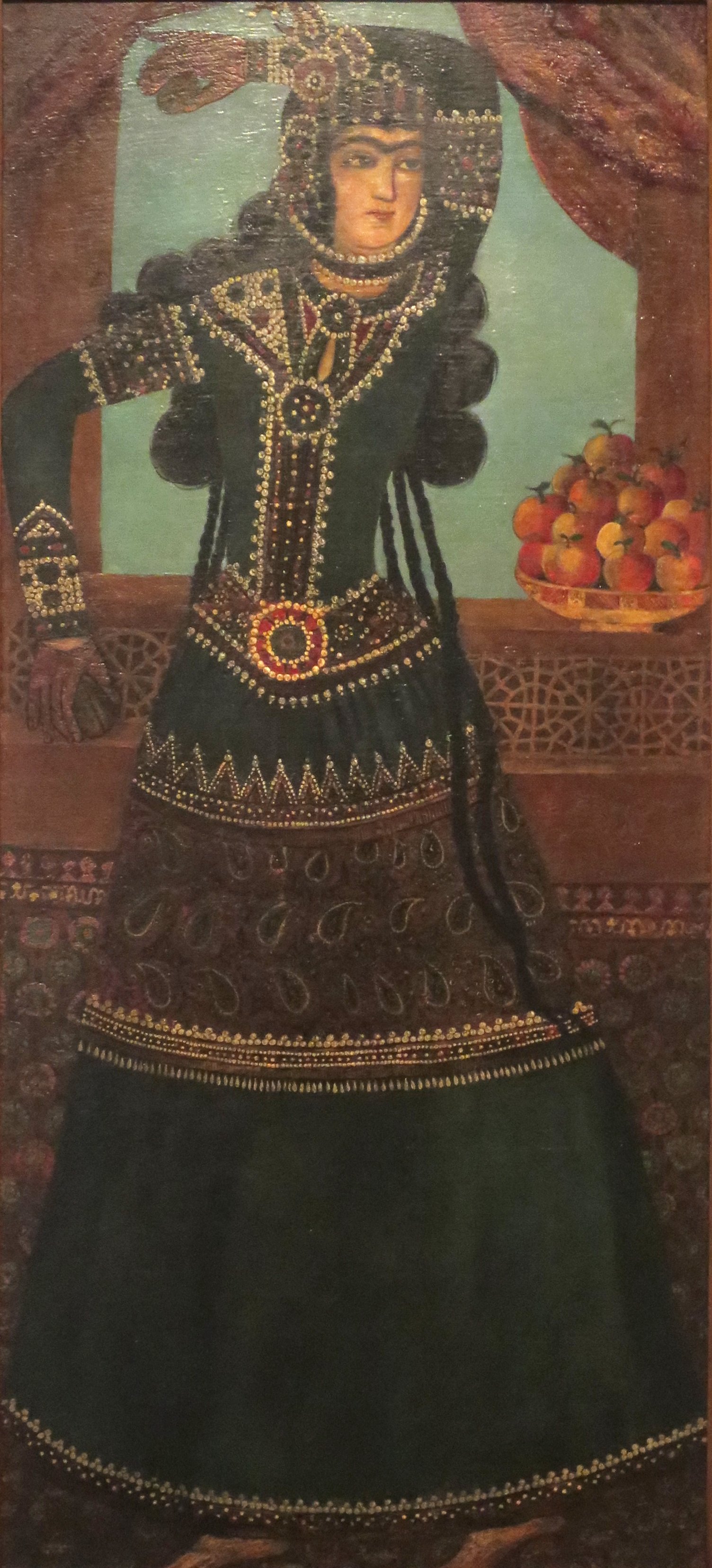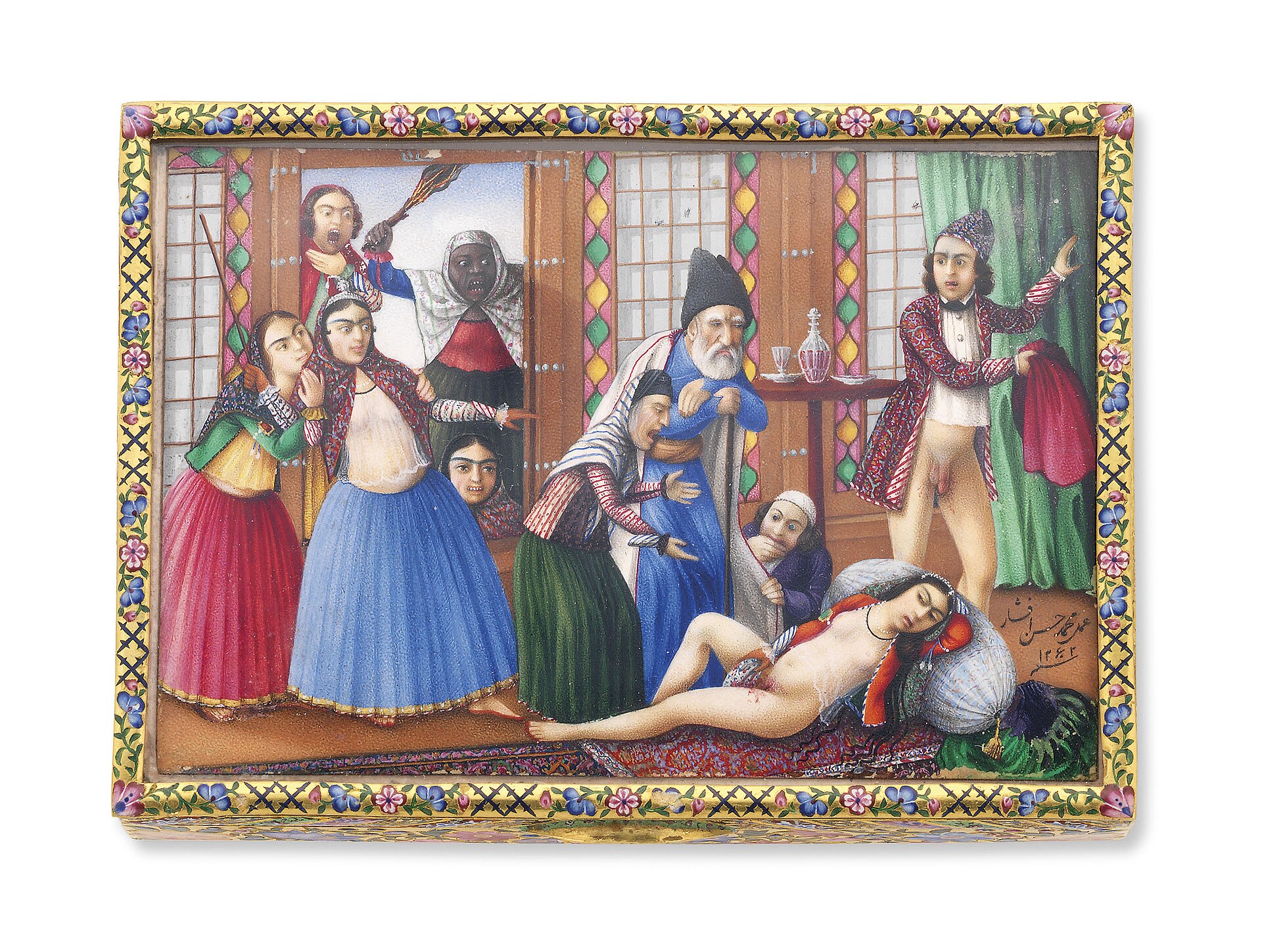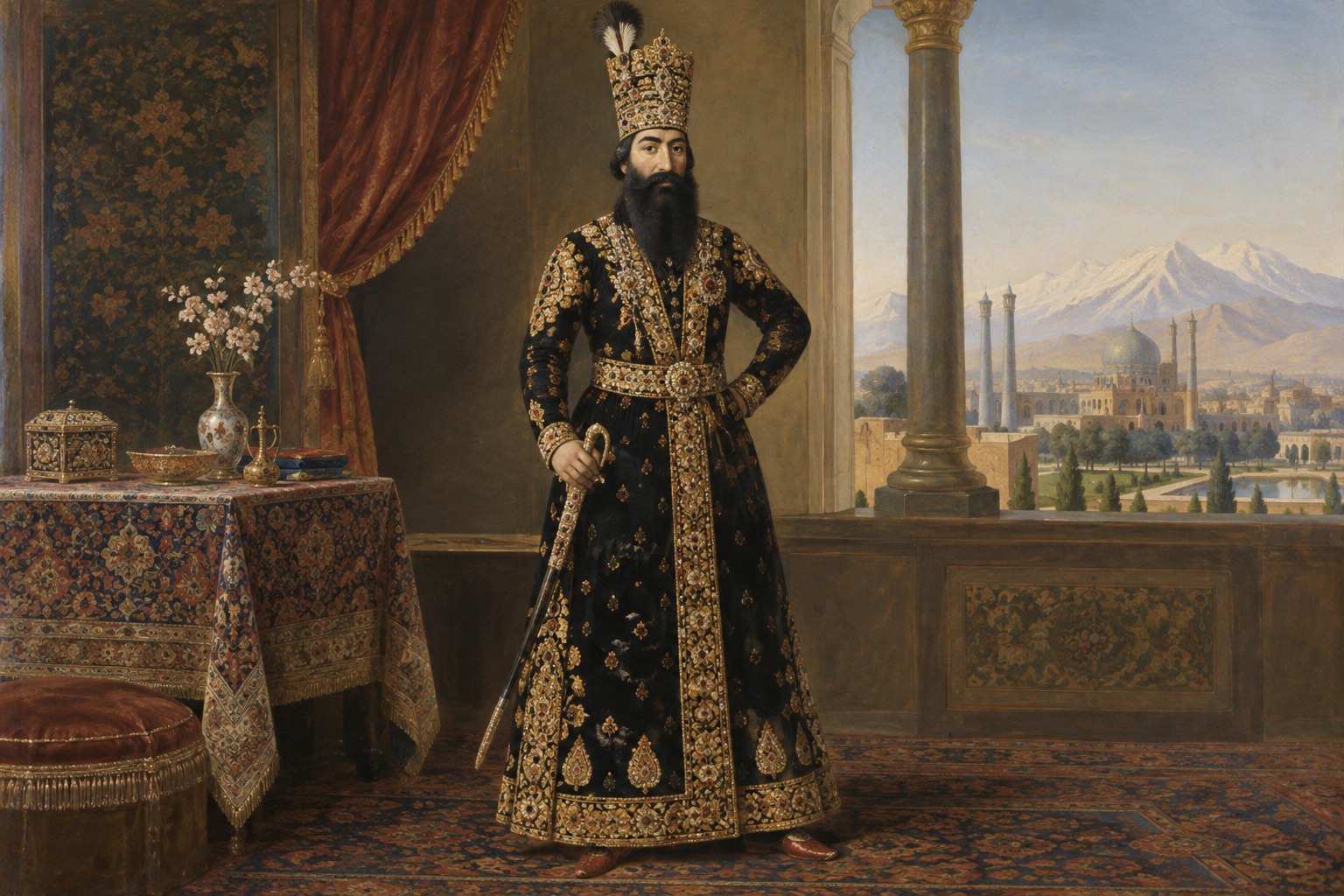
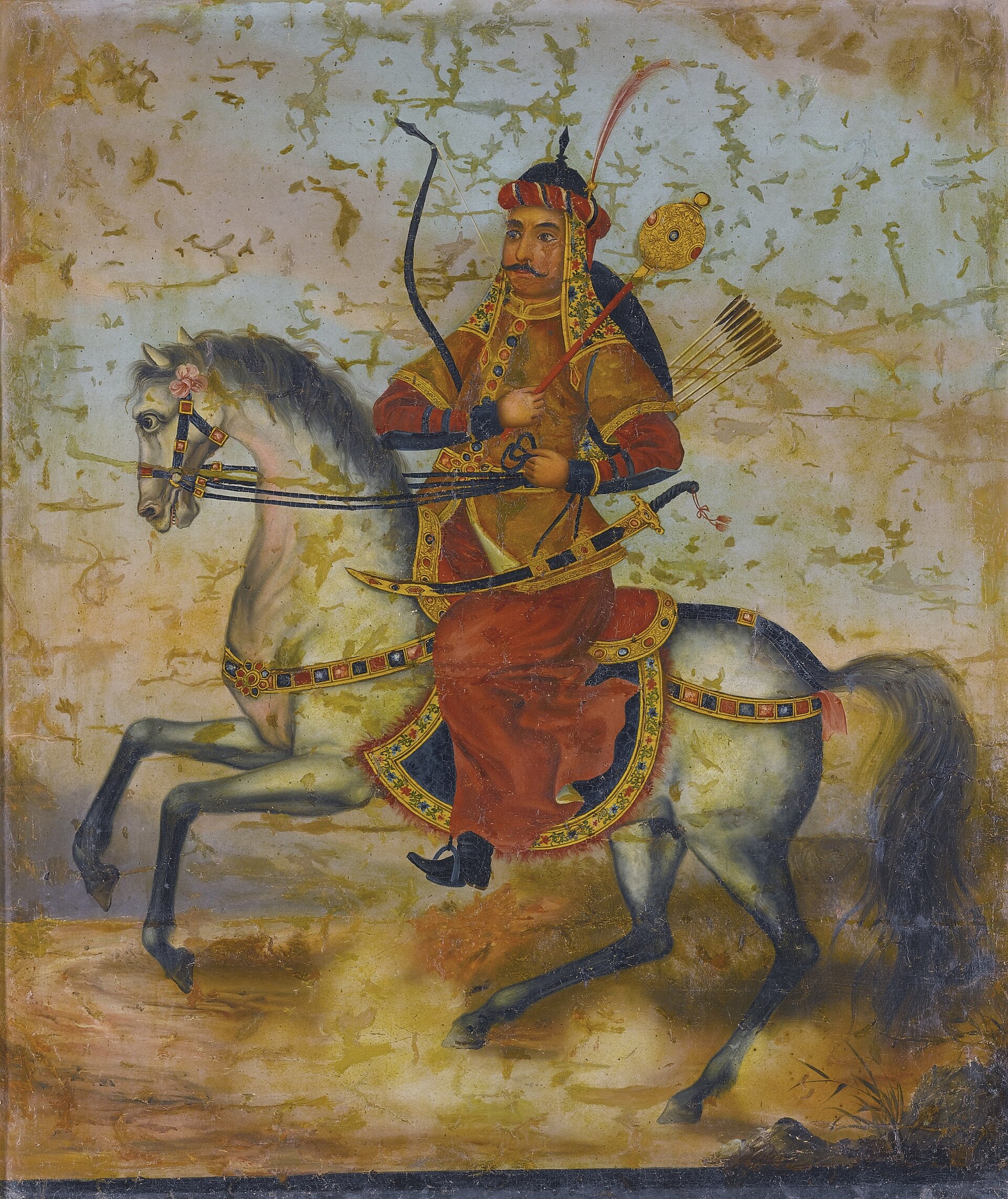
恺加王朝人像艺术是指在1789年至1925年间,即伊朗恺加王朝(Mamâlek-e Mahruse-ye Irân)统治时期发展出的独特视觉艺术形式 [3]。这一时期的艺术以大型布面油画为核心,融合了萨非王朝的装饰传统与西方绘画的透视概念,创造出一种既强调权力威严又注重细节写实的“凯加风格”。代表作包括法特赫·阿里·沙的御像以及描绘波斯与俄罗斯交战的宏大历史场景 [2]。
恺加王朝的肖像画在当时具有怎样的功能?
在恺加时期,肖像画并非孤立的艺术品,而是统一建筑体验的组成部分 [1]。在德黑兰、伊斯法罕或大不里士的宫殿中,壁画与油画共同决定了空间的节奏与等级制度。大型油画通常被嵌入建筑立面或墙龛中,用以塑造访客对君主权威的敬畏感。
法特赫·阿里·沙:视觉权力的缔造者
法特赫·阿里·沙(Fath Ali Shah)是恺加艺术最坚定的赞助者。他深知图像传播的力量,因此下令创作了大量描绘他本人审阅军队或接见外国使节的巨幅画作 [2]。这些创作于1815-1816年左右的油画,现已成为研究19世纪早期伊朗军事、服饰和宫廷礼仪的最重要视觉档案。
- 统治年份
- 1789–1925
- 现存重要油画数量
- 35+
- 主要画布高度
- 1.2米以上
- 合约武器产量
- 3000支
恺加王朝总跨度
主要拍卖及馆藏活跃记录
对比传统微缩模型画
1934年波斯合同版卢格手枪数量
阿布·卡西姆风格与宫廷美学
在恺加后期,以阿布·卡西姆(Abul Qasim)为代表的画家进一步发展了肖像画的细腻度。他们的作品常以深色背景衬托出人物华丽的服饰。这些人物往往有着连接的眉毛、杏仁般的双眼和纤细的手指,体现了当时波斯社会对美的理想化定义 [4]。
“恺加时期的壁画并非独立的装饰,而是建筑灵魂的延伸,界定了空间的等级与神圣感。”
为什么社交媒体上的“恺加公主”照片引发热议?
在现代互联网文化中,所谓的“恺加公主”形象经常走红,但历史事实往往被简化。实际上,这些图像并非指向单一女性,而是展示了19世纪波斯王室的两位姐妹,其中包括著名的泰姬·萨尔塔纳(Taj al-Saltaneh) [6][8]。这些照片不仅记录了当时的审美潮流,也反映了摄影术传入伊朗早期,王室女性在身份表达上的大胆尝试。
| 属性 | 萨非王朝 (1501-1736) | 恺加王朝 (1789-1925) |
|---|---|---|
| 主要媒介 | 纸本水彩/微型画 | 布面油画/大型壁画 |
| 空间视角 | 平面、多焦点 | 引入西方单点透视 |
| 人物特征 | 柔和、程式化 | 写实特征与理想美结合 |
| 建筑关系 | 书籍插图为主 | 作为建筑构件的一部分 |
恺加时代的物质文化:从画作到金属制品
恺加艺术的魅力不仅限于画布。在画作中频繁出现的精美兵器和金属制品,在现实中也极具收藏价值。例如,印有波斯纹章(Persian crest)并带有法尔西语标记的特殊合同版卢格手枪,虽然是20世纪初的产物,但其设计哲学深深扎根于恺加时期的视觉符号系统 [5]。
如何鉴定恺加肖像画的艺术价值?
鉴定一幅恺加时期的作品需要从多个维度入手。首先是人物的服饰细节,恺加贵族阶层对珍珠装饰、丝绸纹理和腰带扣头的描绘极尽奢华。其次是画作的起源,尤其是是否属于法特赫·阿里·沙或纳赛尔丁·沙时期的宫廷订制 [2]。

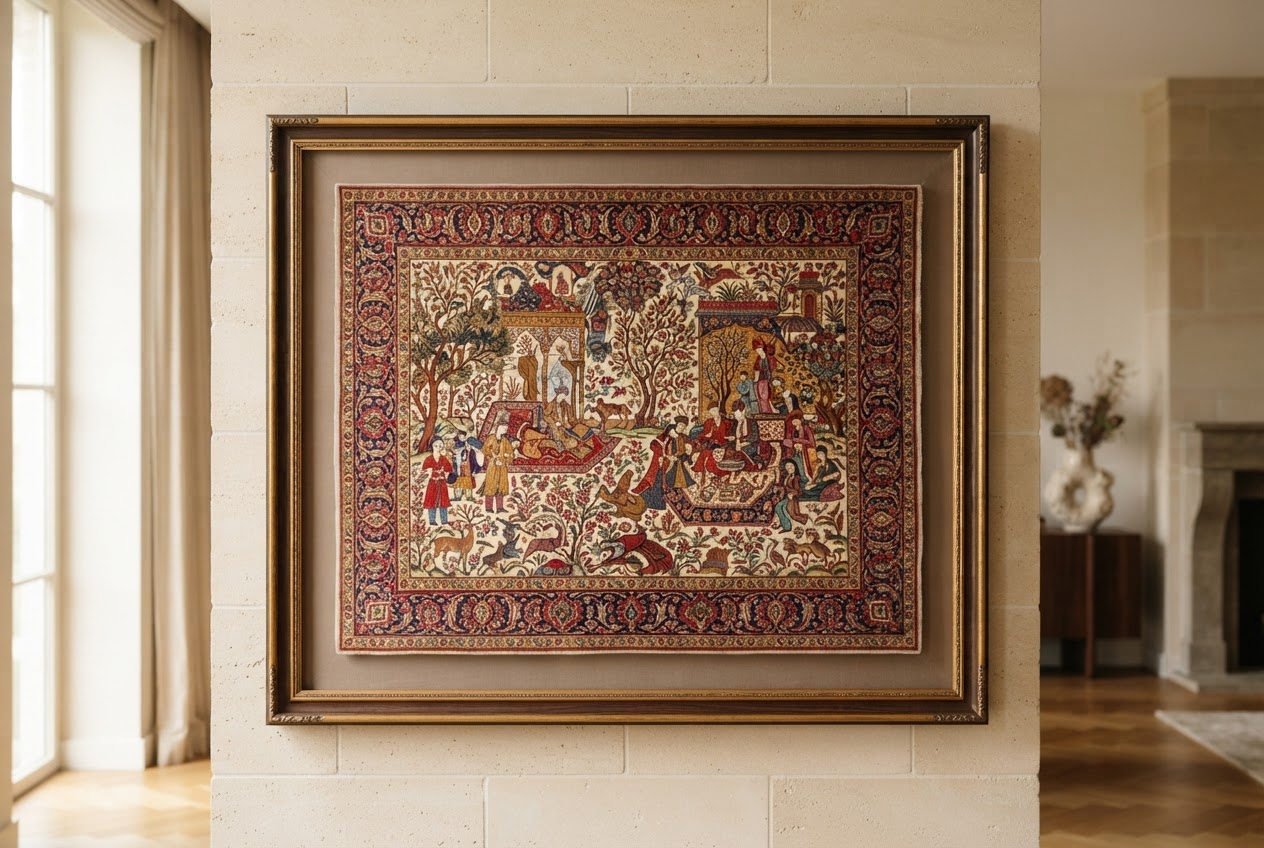
- 高度装饰性:背景常见华丽的波斯地毯和花卉图案。
- 皇室纹章:画面显眼位置常有太阳与狮子(Lion and Sun)的符号 [3]。
- 静态仪式感:人物姿势稳重,通常呈现三分之二侧面或正面对视。
- 文化融合:服装剪裁结合了波斯传统袍服与欧洲宫廷的排扣元素。
- 色彩饱和度:大量使用昂贵的深红色、孔雀蓝和真金金箔。
恺加人像艺术的国际遗产
今天,恺加肖像画不仅保存在德黑兰的古勒斯坦宫(Golestan Palace),也广泛分布在伦敦的大英博物馆和巴黎的卢浮宫。这些作品是伊朗从传统封建社会向现代国家转型的关键见证,它们用画笔记录了一个在古老荣誉与现代变革之间挣扎的帝国形象。

- 建筑与绘画的共生关系:理解画作如何塑造室内空间的律动 [1]。
- 性别角色的视觉呈现:从后宫乐师到具有政治影响力的公主肖像 [6]。
- 西方技法的本土化适配:油画颜料在干燥波斯高原环境下的应用历史。
关于恺加人像艺术的常见问题
- 什么是恺加王朝肖像画最显著的风格?
- 恺加肖像画最显著的特点是将宏大的欧洲油画比例与波斯传统微缩画的精细装饰相结合。它强调人物的仪式感,通过极为详尽的珠宝、织物纹理描绘来展现人物的社会地位,常用于宫殿建筑的装饰性嵌入。
- 法特赫·阿里·沙为什么对肖像画如此痴迷?
- 法特赫·阿里·沙利用肖像画作为外交和权力的工具。他通过分发自己的精美油画像给外国君主和地方官员,来强化其“万王之王”的合法性。这些画作通常描绘他留着浓密黑长髯、佩戴巨型珠宝的形象。
- 网络上的“恺加公主”照片是真的吗?
- 是的,但存在误读。网络流行的照片通常展示的是泰姬·萨尔塔纳等王室女性。她们在19世纪末期是伊朗女权的先驱,其服饰融合了芭蕾舞裙风格与波斯传统,体现了当时宫廷对西方时尚的独特吸收。
- 恺加时期的油画尺寸通常有多大?
- 典型的恺加宫廷油画尺寸约为 127 x 102 厘米。由于它们最初是为宫殿的墙龛(arch-shaped niches)设计的,因此许多画作的顶部呈现弧形,以便完美嵌入建筑结构中。
- 恺加艺术中如何体现与西方的接触?
- 主要体现在技法和器物上。技法上引入了明暗对比法(Chiaroscuro)和写实的肌肉结构;器物上则出现了如波斯合同版卢格手枪等西方现代武器的描绘,反映了王朝在军事和科技上的引援。

![AN ENAMELLED PORTRAIT OF FATH 'ALI SHAH QAJAR SIGNED [MUHAMMAD] BAQIR, QAJAR IRAN, LATE 18TH/EARLY 19TH CENTURY Fath 'Ali Shah is depicted wearing pink robes and seated on a jewelled throne, identifying inscription to the upper right-hand corner inside a cusped oval cartouche and signature of the artist in the lower right-hand corner, raqm ghulam khanah-zad Baqir, both in black nasta'liq, the portrait set in silver-gilt mount in wooden frame, with old owner's label partially visible to the front side of the frame, 19th Century owner's inscription on the back of the frame Portrait 3¾ x 2 5/8in. (9.5 x 6.8cm.); with frame 6 x 5in. (15.3 x 12.7cm.) The inscription in the upper cartouche reads, al-Sultan Fath 'Ali Shah Qajar, 'the Sultan Fath 'Ali Shah Qajar'. Below this is the signature, which reads, raqam-e ghulam khanah-zad Baqir, 'Drawing of the slave born of the household, Baqir', Fath 'Ali Shah (r. 1797-1834), was probably the most frequently depicted of the Qajar Kings. Splendid portraits were produced of him by a number of court artists. B.W. Robinson suggests that one reason for this was no doubt that "he was inordinately handsome, and his fine eyes, wasp-like waist, luxuriant beard and dazzling jewels [were] unfailingly noted by travellers and envoys who had the privilege of an audience" (B.W.Robinson, 'Persian Royal Portraiture', in Edmond Bosworth and Carole Hillenbrand (eds.), Qajar Iran. Political, Social and Cultural Change 1800-1925, Edinburgh, 1983, p.297). The portraits known are mostly oils, although there are a number of published enamel portraits, such as that offered here. The monarch's love for self-portraiture led to his being the first Persian ruler since the Arab conquest to have his portrait on the coin of the realm. He even imitated the Achaemenid and Sasanian practice of having himself portrayed on rock reliefs (Robinson, op.cit., p.298). Muhamamd Baqir (active between 1740 and 1800) produced a number of portraits for Fath 'Ali Shah - many probably commissioned as diplomatic gifts - like the present example. A similar portrait is in the Nasser D. Khalili Collection (Stephen Vernoit, Occidentalism, London, 1997, no.53, pp.96-97). Amongst the artist's other works are a splendid covered bowl, saucer and spoon, now in the Ashmolean Museum, which is decorated with the signs of the zodiac, the planets and astrological figures and inscribed with dedicatory verses to Fath 'Ali Shah (Layla Diba, Royal Persian Paintings. The Qajar Epoch 785-1925, no.62, pp.211-212). He also decorated a teapot enameled with busts portraits of Fath 'Ali Shah and floral swags, now amongst the Persian Crown Jewels in the Central Bank of Iran, Tehran ('Qajar Painted Enamels', in B.W.Robinson, Studies in Persian Art, vol.I, London, 1993, fig.122, p.309). B.W.Robinson describes Baqir as "one of Fath 'Ali Shah's ablest court artists in enamel" and his work as "meticulous and highly accomplished" (Robinson, op.cit., p.300). On the Ashmolean set, the Tehran teapot, and both our portrait and that in the Khalili collection, Baqir signs in the same manner, ghulam khanah-zad Baqir, 'the slave born in the household Baqir'. Vernoit writes that this signature reflects the fact that Baqir was a craftsman in the royal workshop. Although he signs differently on other media, our Baqir is also identifiable with Muhammad Baqir the lacquer painter who produced the back cover of a binding for Fath 'Ali Shah, made to cover the copy of the Khamsa copied for Shah Tahmasp between 1539-43 (now in the British Library, Vernoit, op.cit., p.96). He is also believed to be an illuminator, and amongst his known work in this discipline counts a number of the borders in the St. Petersburg muraqqa. He was still at work in 1829-30 when he drew a Gul o Bulbul study signed 'Muhammad Baqir ibn Muhammad 'Ali Minasaz', or 'the enameller' (sold in Paris, Palais d'Orsay, 16 June 1977, lot 165). As an aside, there are works by Muhammad Baqir signed 'Muhammad Baqir ibn Muhammad 'Ali', suggesting that he thought his parentage a source of prestige. It has been suggested that he was in fact the son of Muhammad 'Ali Naqqashbashi, who was the grandson of 'Ali Quli Jabbadar, who is the artist responsible for lot 163 in this sale (Khalili et.al, op.cit., p.76). Sir Henry Willock (1790-1858) was a Lieutenant-Colonel and the British Envoy to Iran from 1815-1826. In 1826 Fath 'Ali Shah presented him with the 'Order of the Lion and the Sun', which was instituted by the Shah to honour foreign officials who had rendered distinguished services to Iran. He later became chairman of the East India Company, between 1844-45. An unsigned enamelled portrait medallion of Fath 'Ali Shah sold at Sotheby's, 19 October 1995, lot 119.](https://upload.wikimedia.org/wikipedia/commons/thumb/6/64/An_enamelled_portrait_of_Fath_%27Ali_Shah_Qajar%2C_signed_%28Muhammad%29_Baqir%2C_Qajar_Iran%2C_late_18th_-_early_19th_century.jpg/1920px-An_enamelled_portrait_of_Fath_%27Ali_Shah_Qajar%2C_signed_%28Muhammad%29_Baqir%2C_Qajar_Iran%2C_late_18th_-_early_19th_century.jpg?utm_source=commons.wikimedia.org&utm_campaign=imageinfo&utm_content=thumbnail)
Sources
- [1]Qajar-period murals in Iran· International Institute for Conservation
- [2]Military Review before Fath Ali Shah· Persian Art Archive
- [3]Qajar Iran - Historical Overview· Wikipedia
- [4]Kamancheh player in a harem, Qajar Iran· Me Salute Project
- [5]Persian contract DWM P.08 & Shah of Iran Items· LiveAuctioneers
- [6]Iranian Princess 1800s - The Qajar Sisters· TikTok Discover