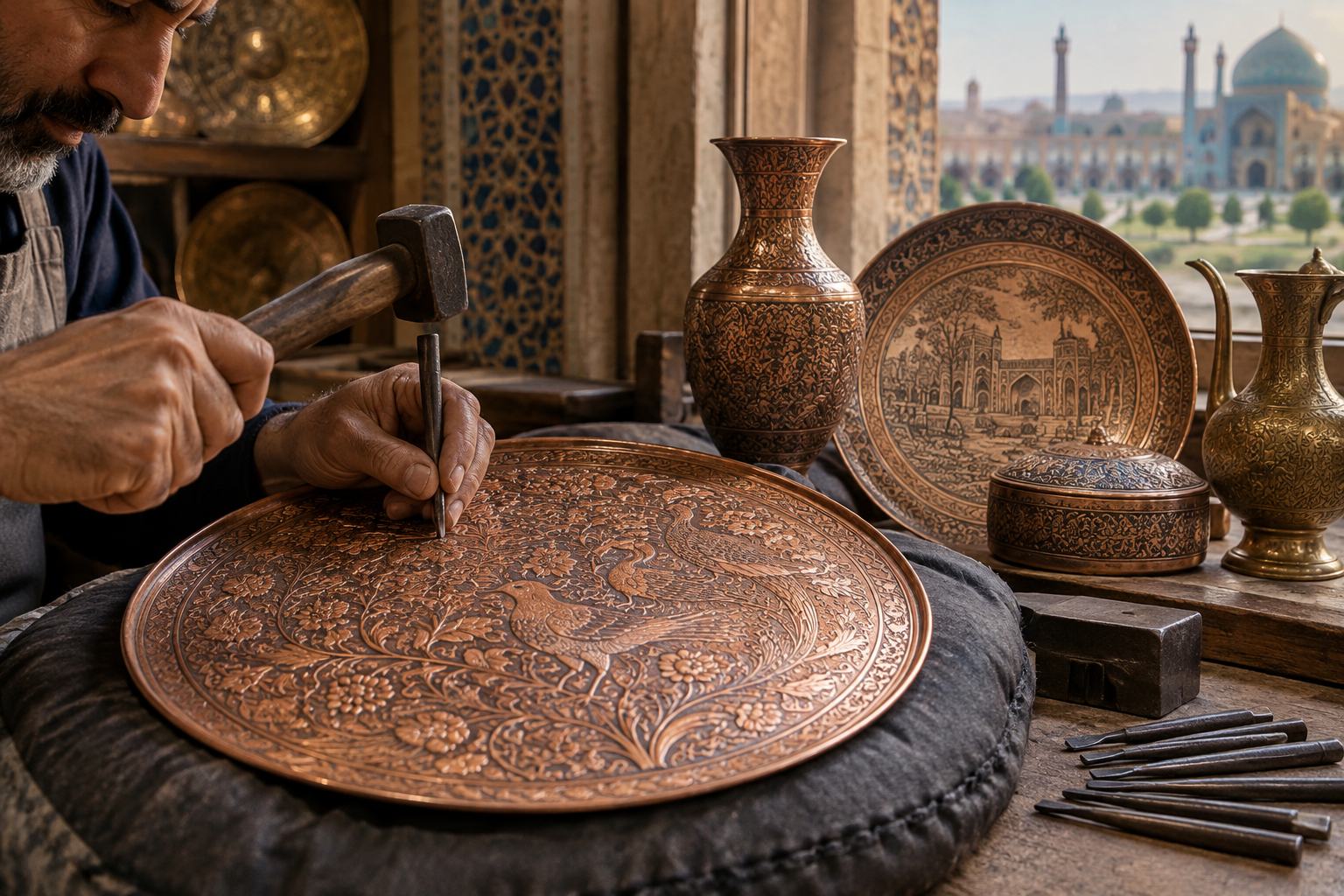
Persian metalwork is an ancient Iranian handicraft defined by the meticulous art of Ghalamzani, which involves hand-engraving, carving, and embossing patterns onto metals such as copper, brass, silver, and gold. Originating over 1,000 years ago, this artistic tradition utilizes techniques like repoussé and chasing to create intricate floral motifs and geometric borders on everything from ceremonial mirrors to everyday vessels, primarily centered in the cultural hubs of Isfahan and Shiraz.
What is Ghalamzani and how is it performed?
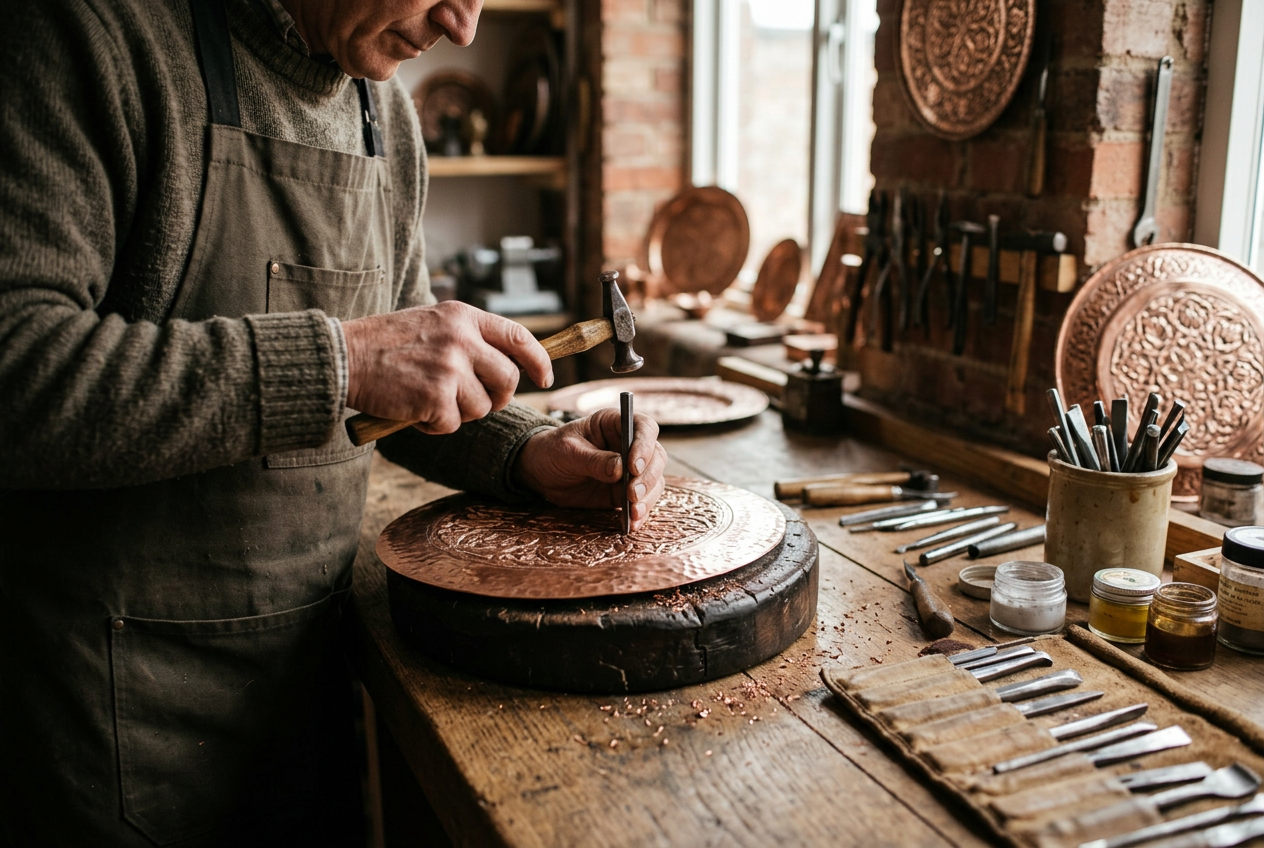
The term Ghalamzani refers to the traditional Persian handicraft of engraving metalwork. The process is a testament to human patience and physical precision. Before a single hammer blow lands, artisans often fill or coat the metal vessel with a layer of hardened tar. This internal support prevents the metal from deforming or puncturing under the intense pressure of the engraving tools, allowing the craftsman to achieve deep, high-relief details without compromising the structural integrity of the piece.
- Preparation: The metal surface is cleaned, and a layer of tar is applied to provide resistance.
- Sketching: Traditional motifs, often inspired by Persian literature or nature, are traced onto the surface.
- Engraving (Chasing): Using a variety of steel punches and a small hammer, the artist carves the design.
- Repoussé: Working from the reverse side to create three-dimensional relief patterns.
- Polishing: The tar is melted away, and the piece is cleaned to reveal the natural glow of the metal.
Where is the center of Persian metalwork located?
While traditional Persian arts are spread across the plateau, Isfahan stands as the undisputed capital of metal engraving. Within the heart of the historic Naqsh-e Jahan Bazaar, generations of craftsmen have preserved this painstaking form of metalwork. The rhythmic sound of hammers hitting metal echoes through the vaulted brick corridors, where master artisans with 'weathered hands' continue to turn plain copper bowls into bespoke masterpieces.
- Tradition Age
- 1,000+ Years
- Hammer Strikes
- Thousands
- Primary Centers
- 4 Cities
Continuous practice
Per single vessel
Isfahan, Shiraz, Tabriz, Neyshabur
Materials and Motifs: The Visual Language of Iranian Metal
The choice of metal often dictates the final utility and aesthetic of the piece. Copper and brass are favored for their malleability and the way they develop a 'naturally aged finish,' which adds a distinctive antique character to the work. In contrast, silver and gold are reserved for high-end decorative items, such as Handmade Silver Mirrors or ceremonial trays, which are often showcased in global galleries as symbols of Iranian luxury.
| Material | Typical Use | Key Artistic Quality |
|---|---|---|
| Copper | Bowls, Trays, Vases | High malleability; rich warm patina |
| Brass | Ornamental boxes, Lamps | Durability; bright gold-like luster |
| Silver | Mirrors, Jewelry, Luxury décor | Prestigious; enables ultra-fine detail |
| Gold | Royal artifacts, Inlays | Symbol of status; immune to tarnish |
“With weathered hands and simple tools, the craftsman slowly turns plain copper into a bespoke masterpiece—a story of tradition, patience, and a lifetime of craftsmanship.”
Common Decorative Motifs
The aesthetic identity of Iranian metalwork is rooted in its motifs. Artisans rarely work from static templates; instead, they draw from a mental library of traditional designs passed down through apprenticeship. These include:
- Intricate Floral Motifs: Representing the 'Paradise Garden' concept central to Persian culture.
- Geometric Borders: Providing mathematical balance and framing the central narrative of the piece.
- Calligraphy: Often featuring verses from Hafez or Rumi engraved in elegant scripts.
- Wildlife Imagery: Birds and nightingales nestled among foliage, a staple of the Isfahan style.
Why is this 1,000-year-old craft considered a vanishing art?
Despite its beauty, Persian metalwork faces significant challenges in the modern era. The 'slow' nature of the craft—where a single bowl can take weeks of manual labor—struggles to compete with mass-produced industrial goods. Younger generations are increasingly drawn to digital industries, leaving fewer apprentices to learn the 'rhythmic fire' of blacksmithing and casting. However, the rising global interest in bespoke, handmade heritage pieces offers a glimmer of hope for the artisans of the Naqsh-e Jahan Bazaar.
| name | value |
|---|---|
| Ghalamzani (Engraving) | 95 |
| Turquoise Inlaying | 80 |
| Brass Smithing | 65 |
| Silver Casting | 50 |
Beyond Engraving: Complementary Metal Arts
Metalwork in Iran is not limited to engraving alone. The broader ecosystem of Iranian handicrafts includes specialized niches that often overlap with metal base layers. For example, Turquoise Inlaying (Firuzeh-Kubi) involves setting small pieces of turquoise into the surface of copper vessels, creating a stunning contrast between the reddish metal and the sky-blue stone.
| Technique | Base Metal | Key Characteristic |
|---|---|---|
| Blacksmithing | Iron/Steel | Forged tools and architectural elements |
| Turquoise Inlay | Copper | Mosaic-style gemstone setting |
| Casting | Bronze/Brass | Molten metal poured into molds |
As we look toward 2026 and beyond, these crafts represent more than just commerce; they are 'living crafts' that turn everyday materials into expressions of beauty and heritage. Whether it is a deeply carved antique copper plate or a modern silver mirror, these objects carry the soul of the Iranian plateau into homes worldwide.
“The tradition is passed down through generations as artists learn how to carve the very history of their land into the skin of the metal.”
Frequently Asked Questions About Persian Metalwork
- What is the primary difference between Ghalamzani and standard engraving?
- Ghalamzani is specifically a Persian tradition that emphasizes the use of hammers and various steel punches on a tar-backed surface. Unlike modern machine engraving, it produces deep relief (repoussé) and chasing that gives the metal a three-dimensional, sculptural quality rooted in 1,000 years of Iranian history.
- Which Iranian city is best for buying authentic copper and brass art?
- Isfahan is the global center for Persian metalwork. Specifically, the Naqsh-e Jahan Bazaar is home to the most skilled master artisans who still practice traditional hand-engraving. Other notable regions include Shiraz for its unique motifs and Tabriz for its diverse handicraft traditions.
- Why do artisans use tar when engraving metal?
- Artisans use hardened tar to fill or support the metal vessel from the inside. This provides a solid yet slightly yielding base that absorbs the shock of the hammer blows, preventing the thin metal sheets of copper or silver from cracking or losing their shape during the intense carving process.
- How can you tell if a Persian copper piece is truly handmade?
- Check the depth and precision of the carvings. Hand-engraved pieces (Ghalamzani) feature deep, varying textures and subtle human imperfections that machine-stamped items lack. Additionally, authentic pieces often have a heavier weight due to the quality of the metal and the presence of handcrafted details on the underside.
- What are the most common motifs found in Persian metal art?
- The most common designs include 'Gol-o-Morgh' (flower and bird), complex geometric patterns, scenes from ancient Persian mythology, and intricate floral borders. These motifs are designed to reflect the beauty of nature and the mathematical precision of Islamic art.
Sources
- [1]Iranian Handicrafts 2026 | Traditional Persian Arts & Crafts· ImmersiveIran